


Ceremonial Grade- 1.+ 2. Ernte
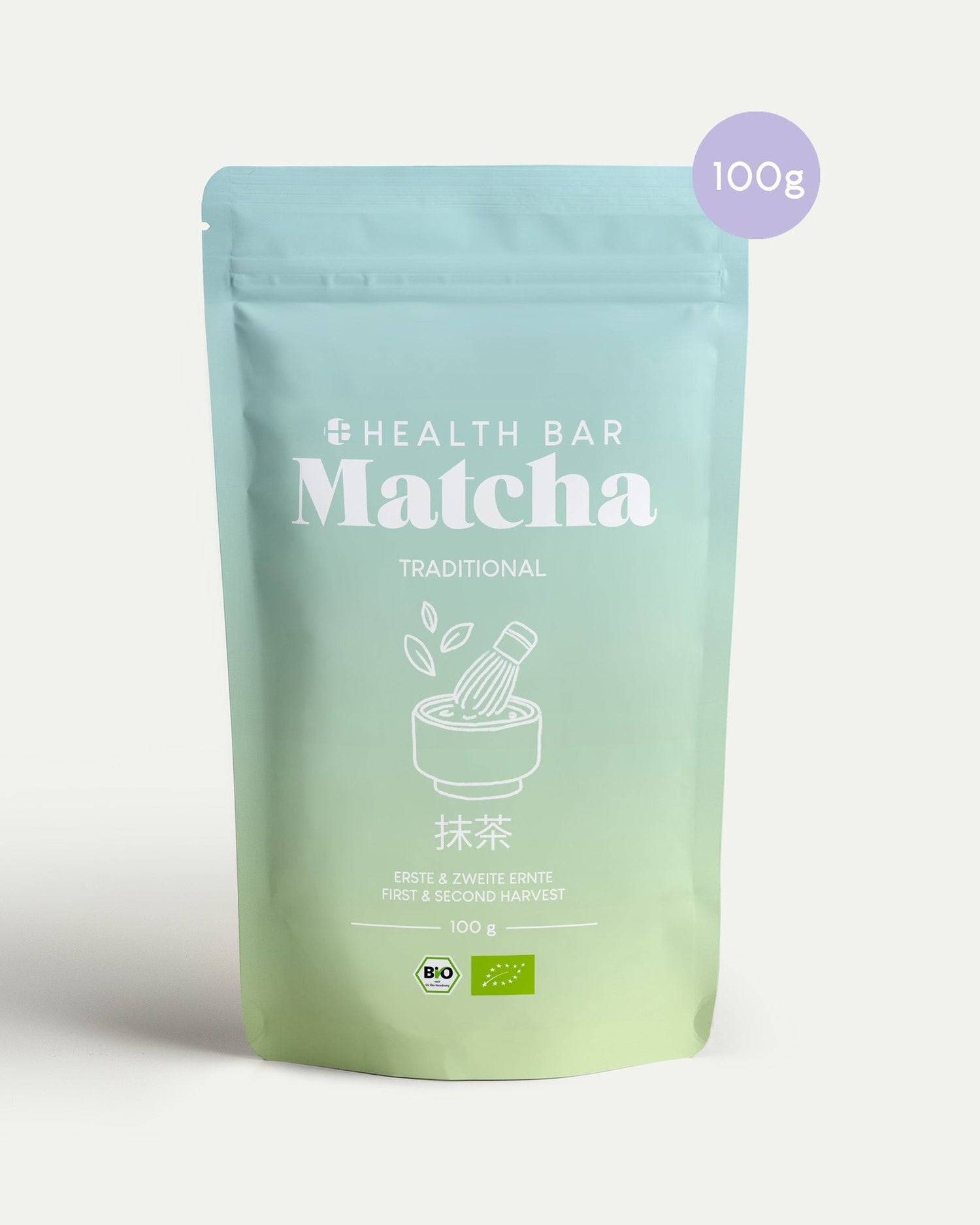
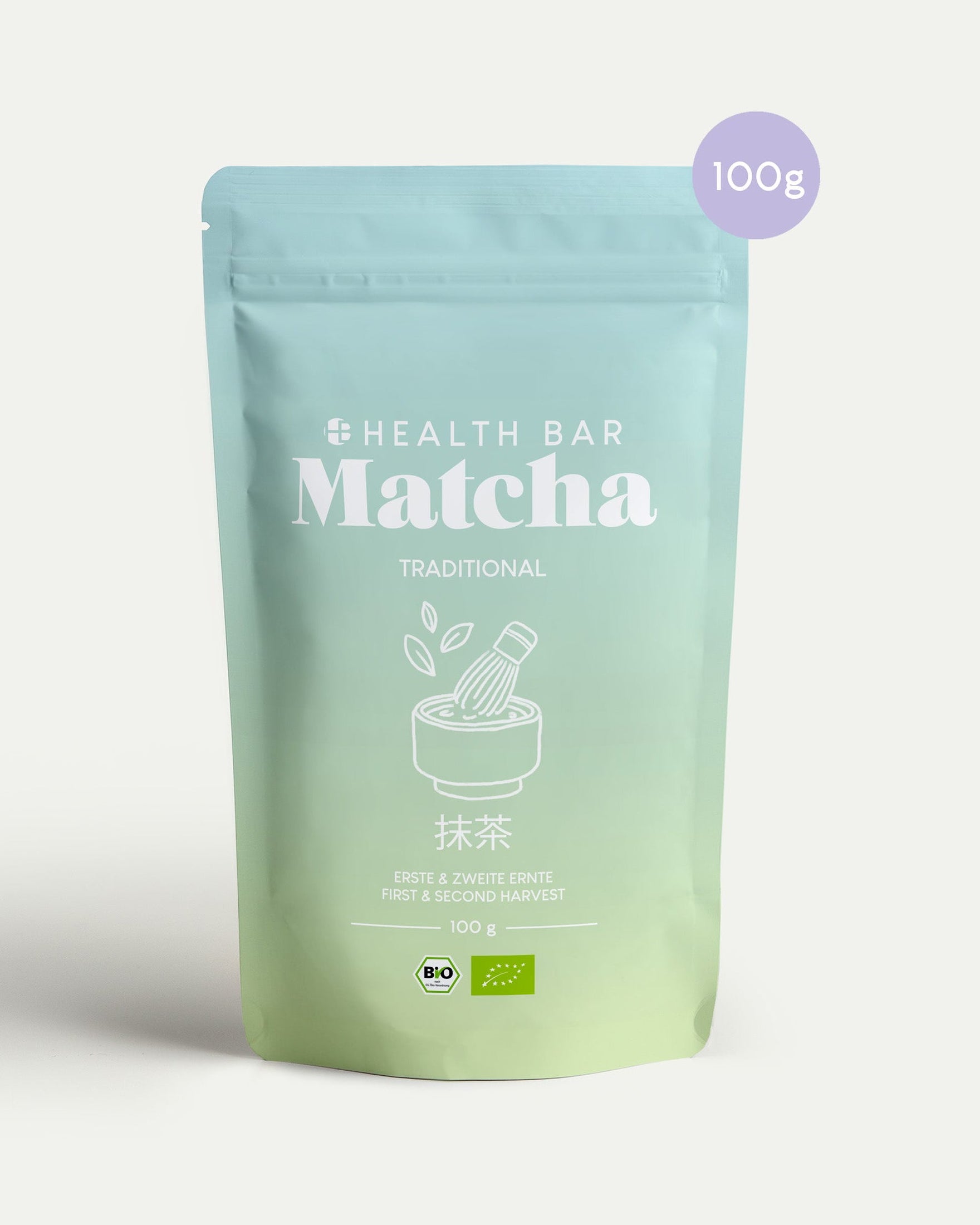
Bio - Matcha Tee Traditional 100g
- Regular price
-
59,88€ DU SPARST - Regular price
-
- Selling price
-
59,88€
In 2 Wochen wieder auf Lager
Pickup availability could not be loaded
description


Ingredients: 100% Organic Matcha Traditional, 1st & 2nd Harvest
Cultivar: Oshii Blend consisting of Seamidori, Okumidori and Yabukita
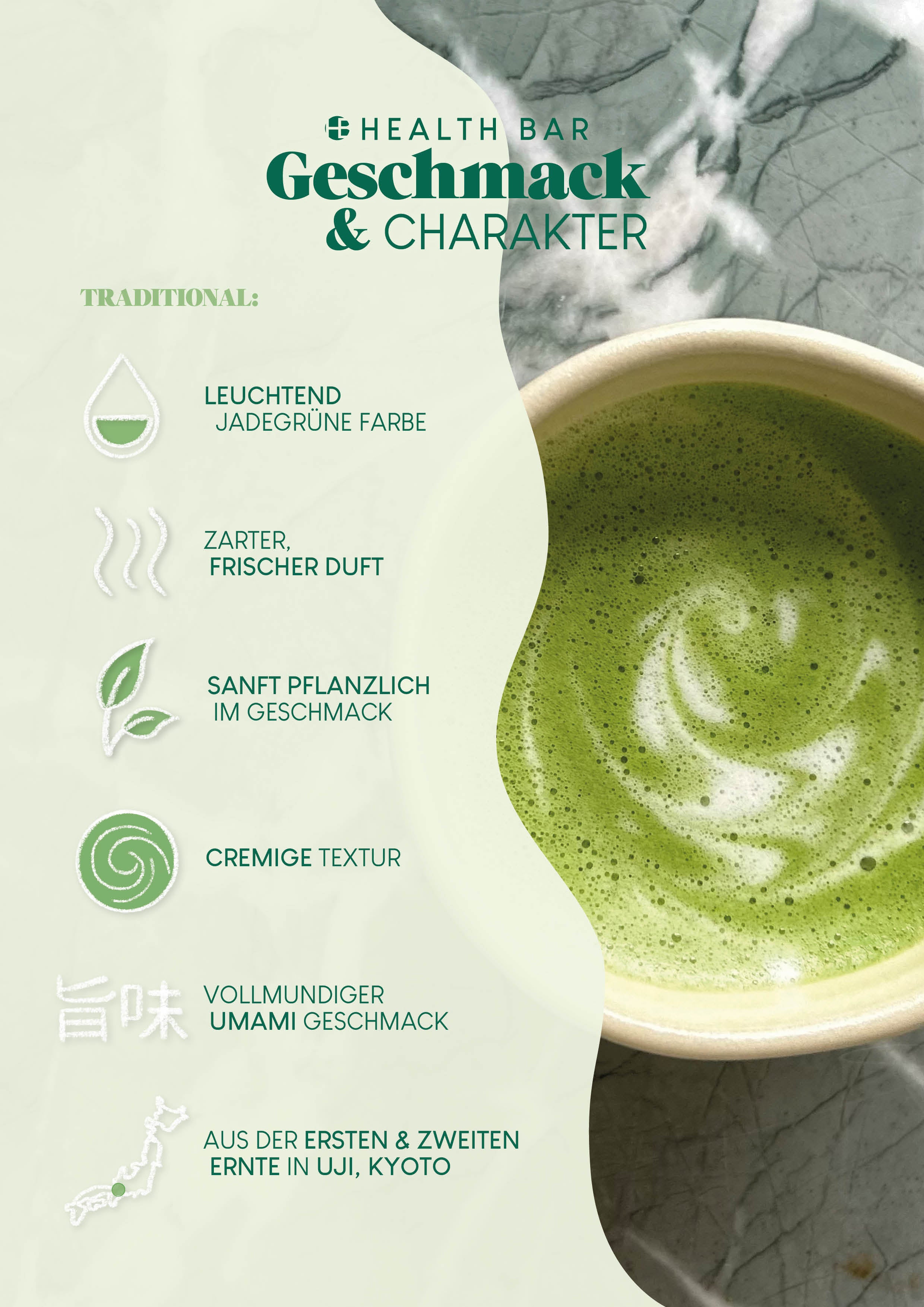
Character: This matcha blend combines sweet umami and smooth creaminess in the first harvest, while the second harvest emphasizes stronger, fresh, and slightly bitter green tea notes – ideal for high-quality enjoyment and everyday preparations, such as matcha latte.
Gebiet: Uji Kyoto, Japan
Harvest: 2025
Vermahlung: traditionelle Granit-Steinmühle in Uji (30g Matcha pro Std.)
Damping: short (approx. 20 seconds)
Shading: ua Full shading, up to 32 days before harvest
Was: EU-Organic, JAS Organic, FSSC Japan
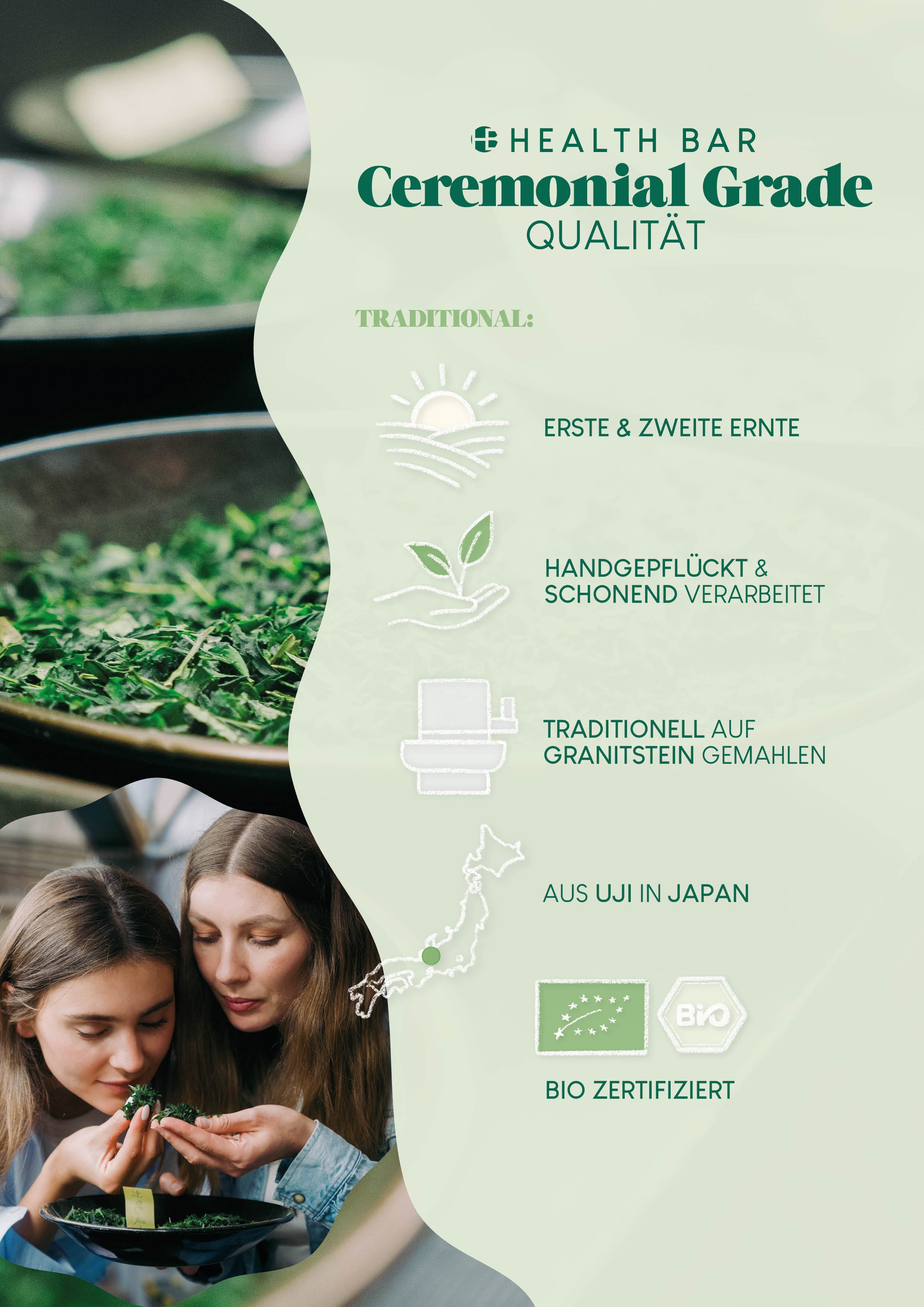
Quality: Ceremonial Grade, as the leaves are predominantly from the first harvest.
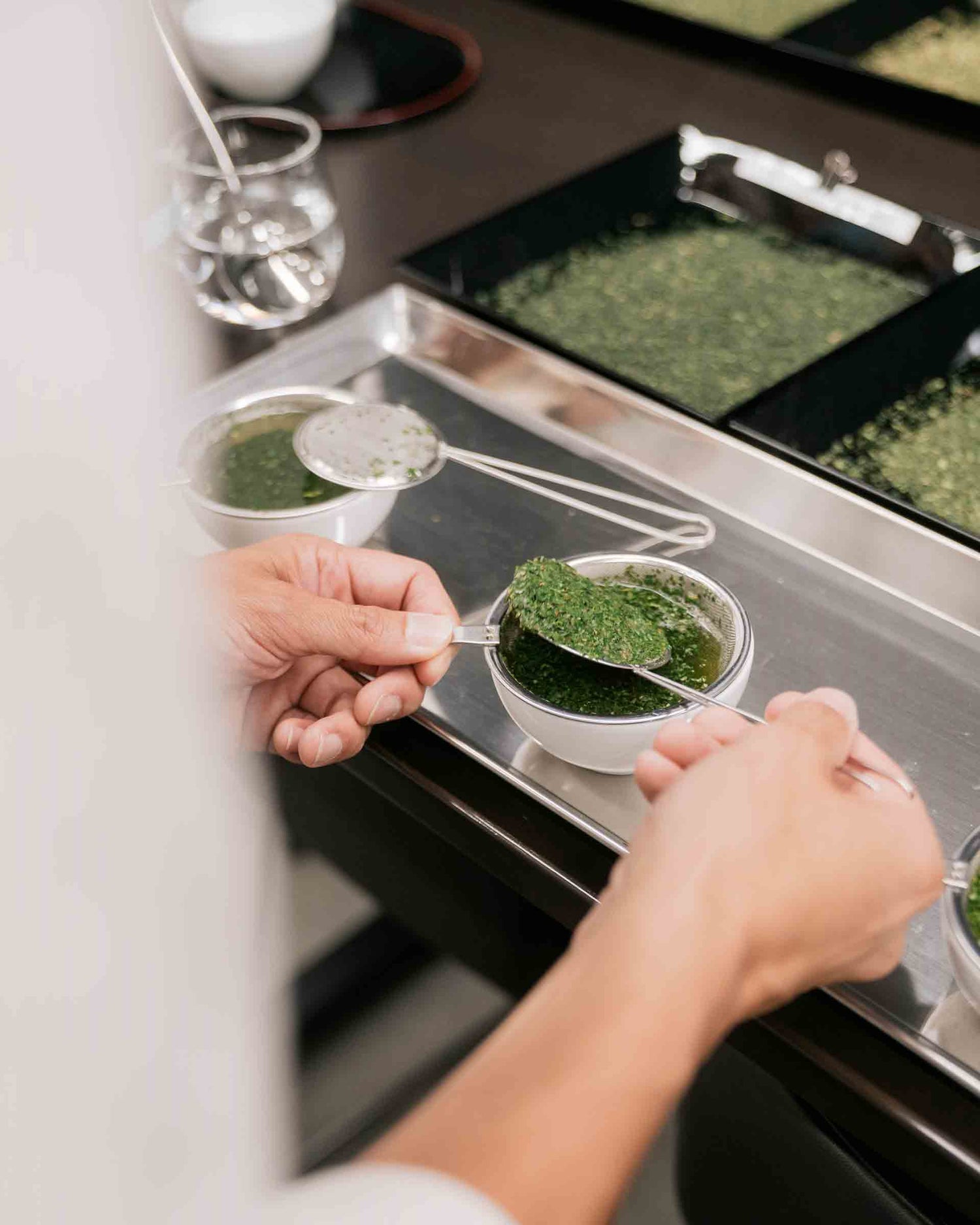
This ground, traditional green tea of ceremonial grade is grown in Uji, Japan. It comes from the first and second harvests of the year and has a slightly more intense flavor than our ceremonial matcha. The region is known for its clean water and nutrient-rich soil, free of pesticides. The Tencha tea leaves are hand-picked, gently steamed, and then ground with granite stones.
Our organically certified matcha impresses with its almost neon green color and its intense, creamy umami flavor—free of any bitterness!
Note: Please store in a cool, dry place!
What is Matcha?
quality guarantee
packaging
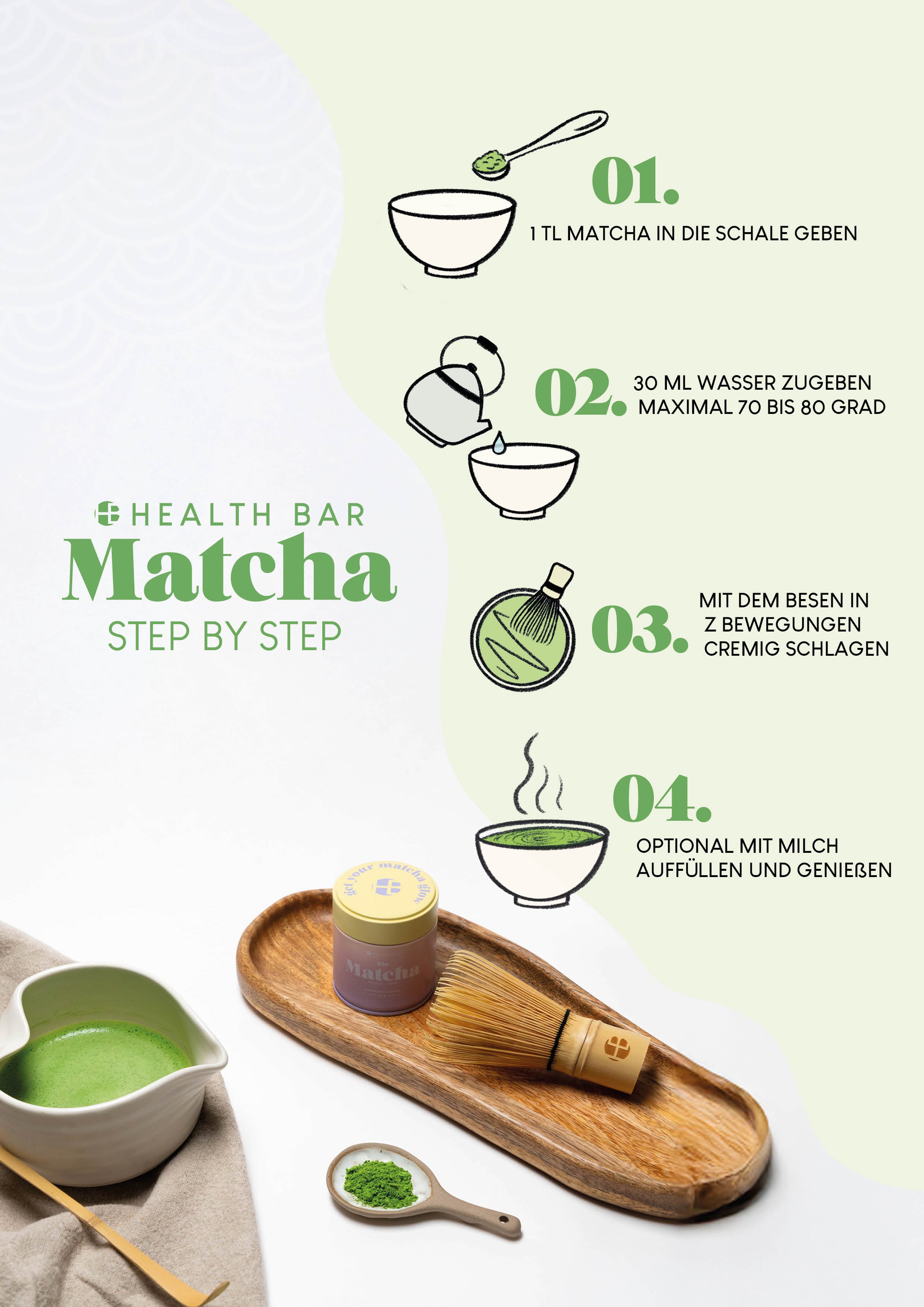
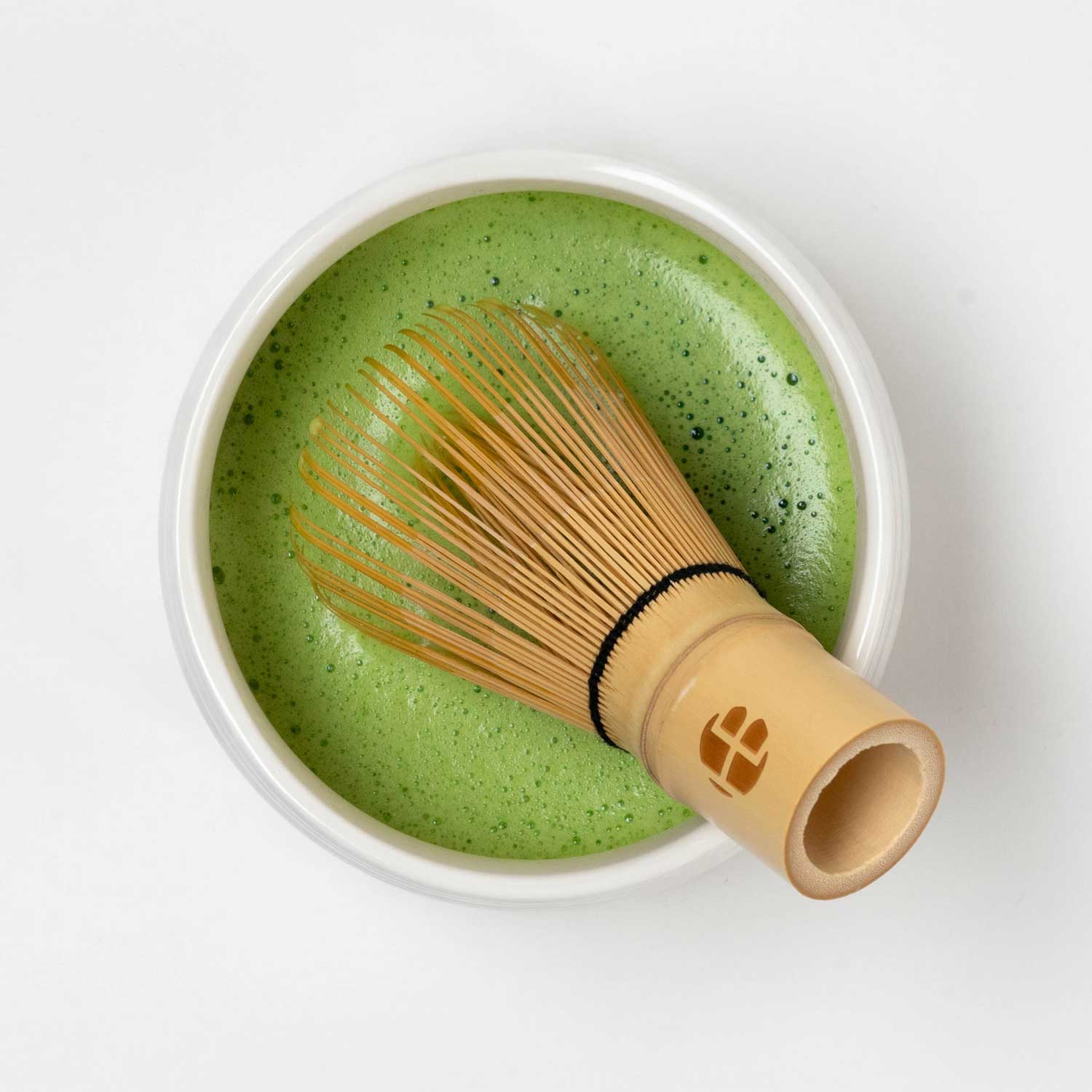
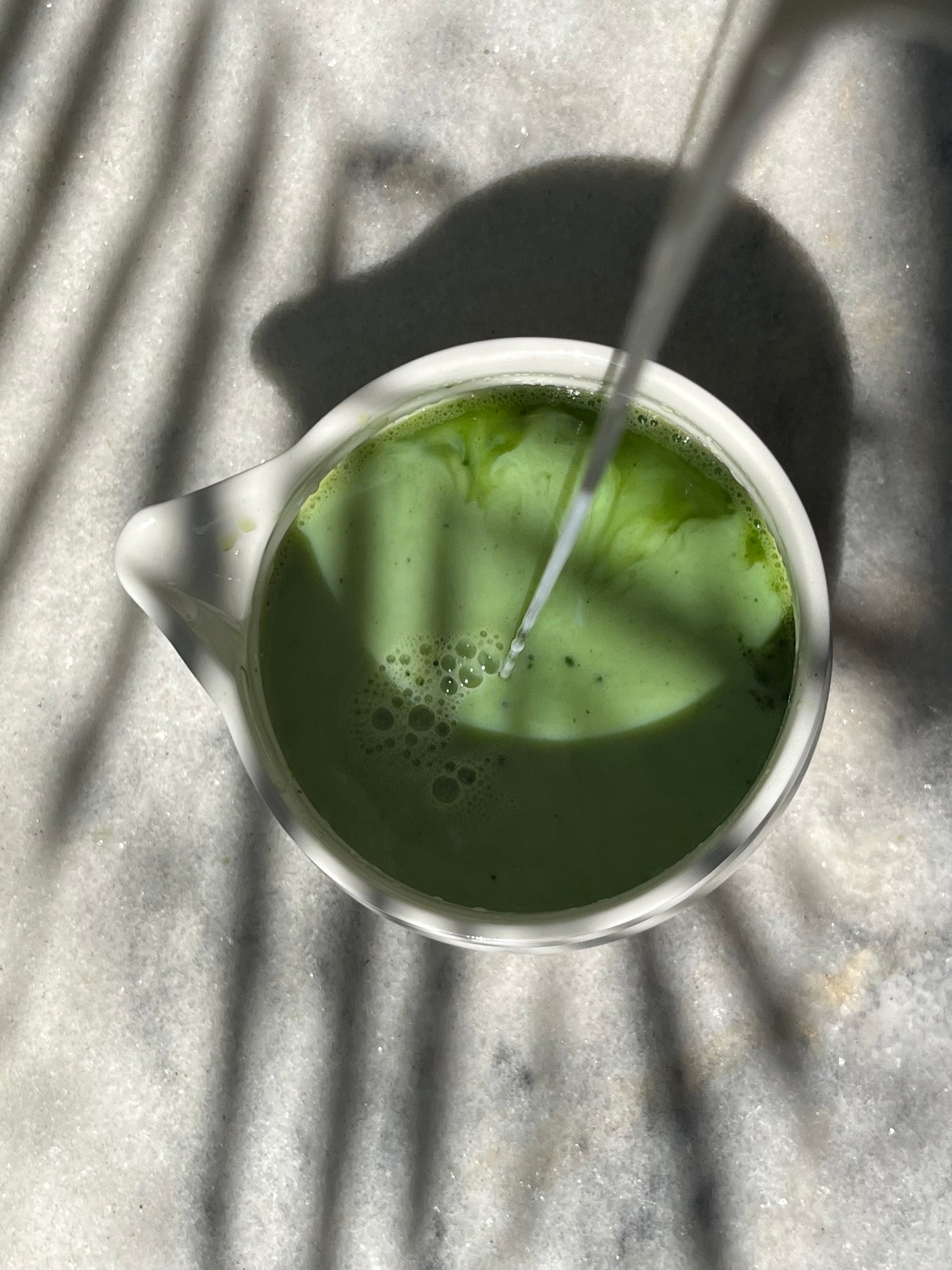
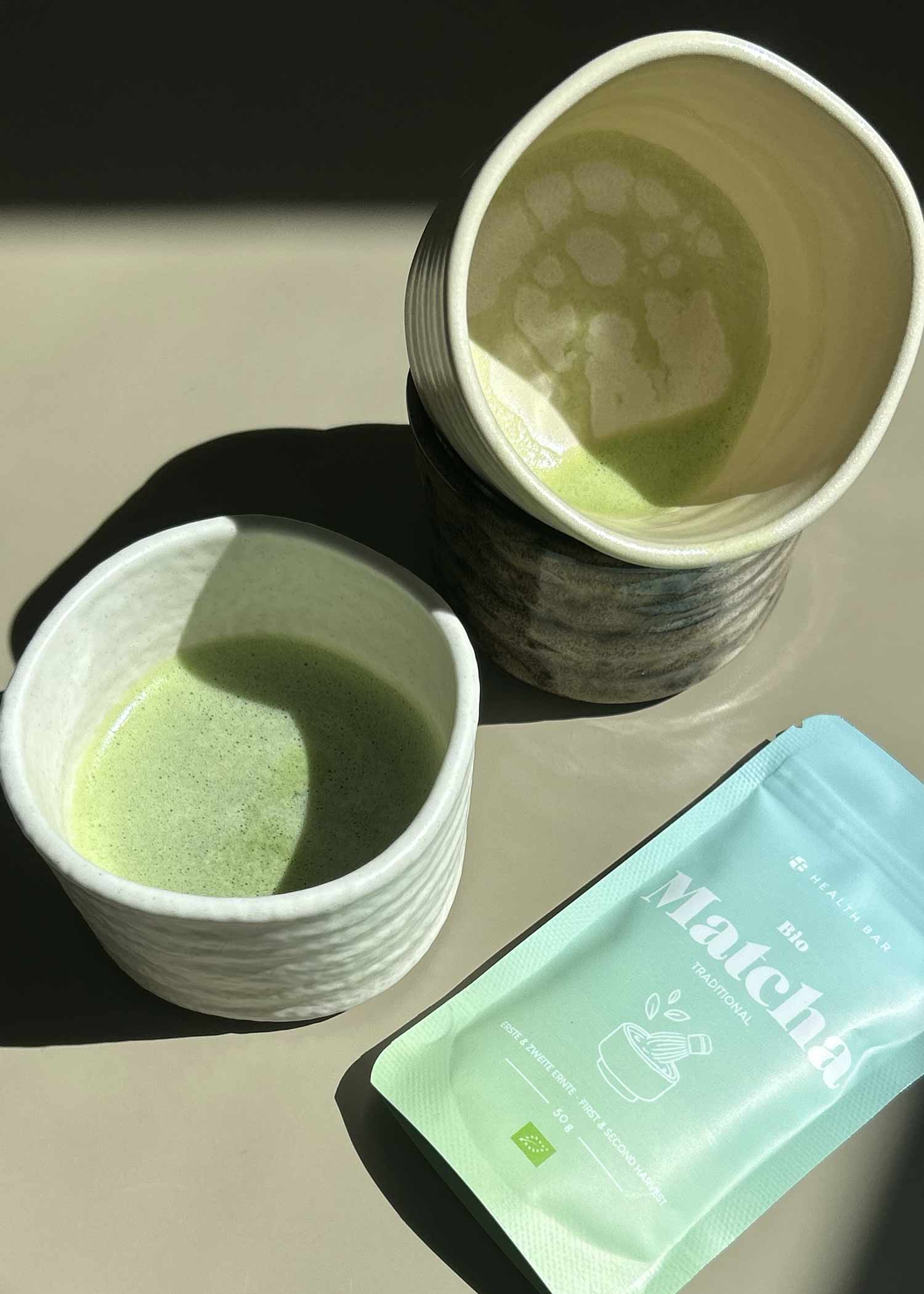
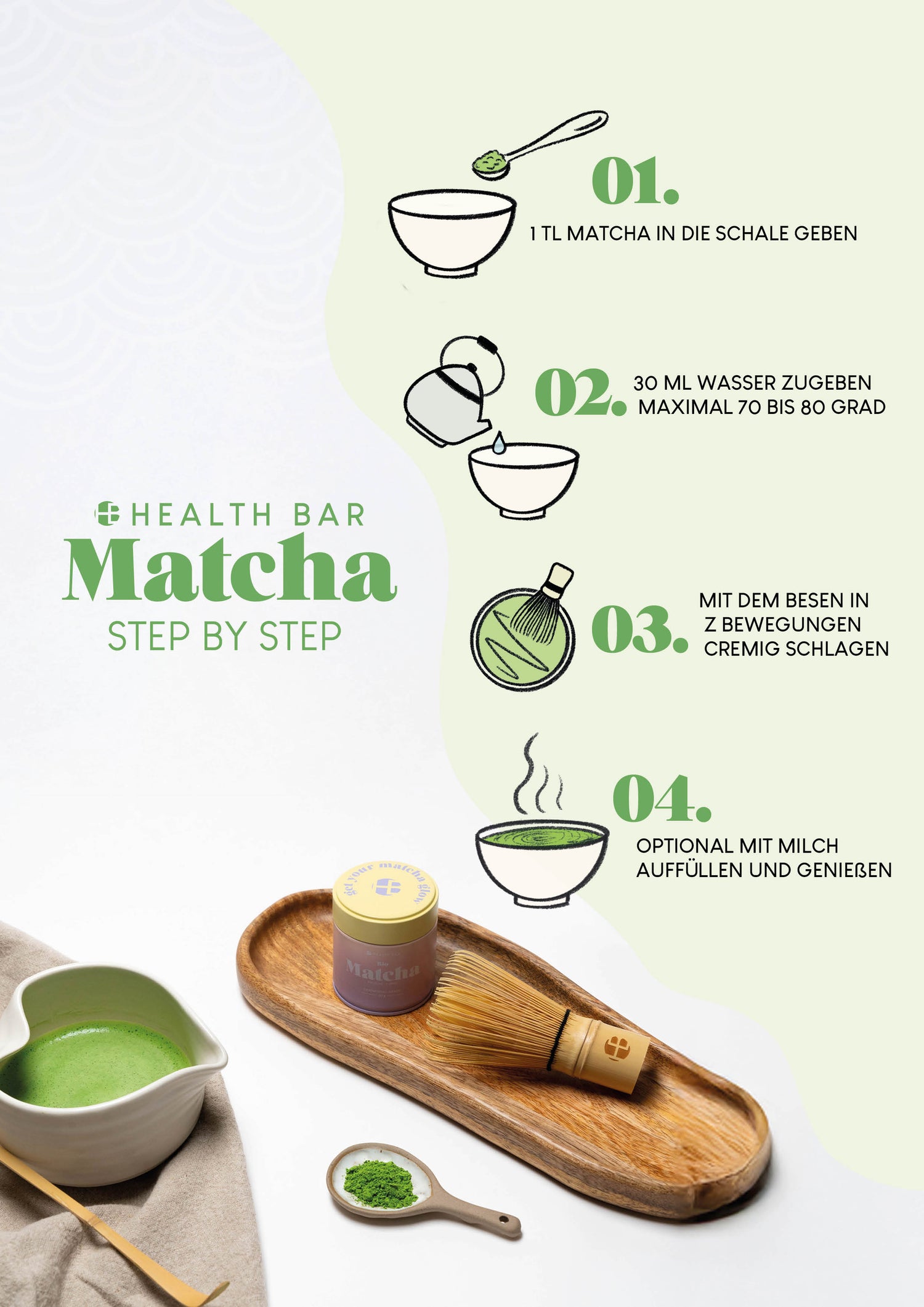
Matcha - easy to prepare
-

Organic Certified
Health Bar Matcha is one of the few on the market with organic certification.


Stefanie GiesingerThe Traditional Matcha has a slightly more intense flavor than the Ceremonial Matcha. I actually enjoy drinking both neat, but I still prefer the Ceremonial Matcha.
Nancy TabillionIn the summer, I like to drink an Iced Matcha Latte with our Traditional Matcha and a splash of rice and coconut milk. On colder days, it has to be our Ceremonial Matcha – pure with warm water, with no additives!
Thuha NguyenOne of my favorite matcha brands I’ve tried! It’s very smooth, has a good flavor, and is an overall good matcha for a reasonable price. I will def buy it again!
Slide stripsMy absolute favorite matcha 💚
I've tried many varieties, but this one is my undisputed favorite. Whether warm with oat milk or iced with mango puree, it's the perfect energy booster and exactly what I like to start my morning with.
production
Our tea farm is a traditional family business that has been in operation for several generations and has been producing organic matcha for several decades.
Our quality is confirmed by the strict standards of the organic certificate from the Japanese certification body JONA and the German organic certification.
Cultivation
The tea farmers protect the plants from the sun with black textile sheets or, traditionally, straw. Solar panels are also used. This increases the chlorophyll content in the leaves and softens the flavor. Cultivation is carried out without pesticides. Annual soil samples are taken, as well as laboratory tests for heavy metal and radiation contamination, to ensure the highest possible quality. Furthermore, each batch is carefully tested for its mineral content.
origin
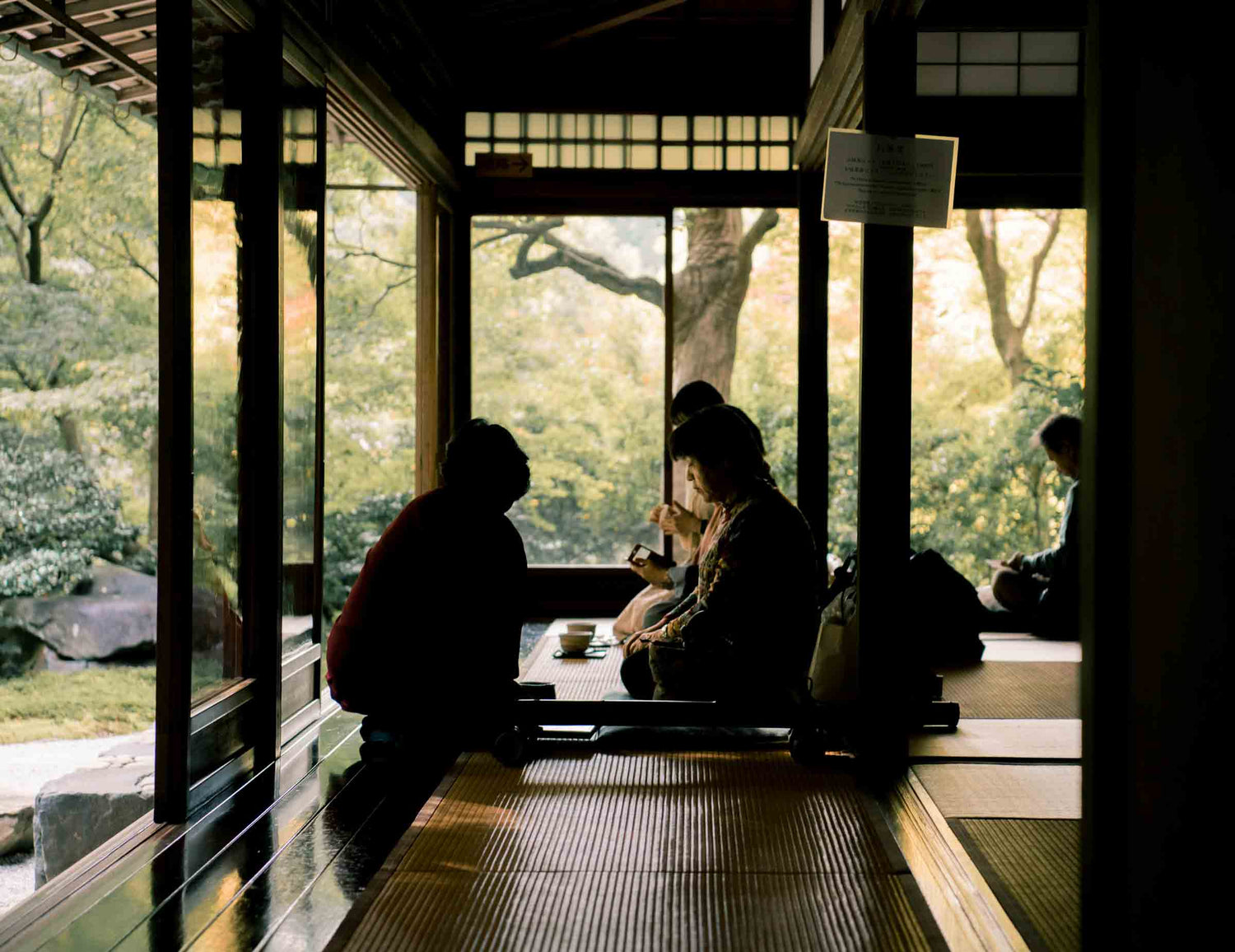
The Matcha tea growing region is one of the best and oldest in Japan: the Uji region, west of Osaka. The region is known for its clean water and nutrient-rich soil, free of pesticides. The climate is ideal: mist from the Uji and Kizu rivers keeps the tea plants moist and reduces the risk of frost damage.