

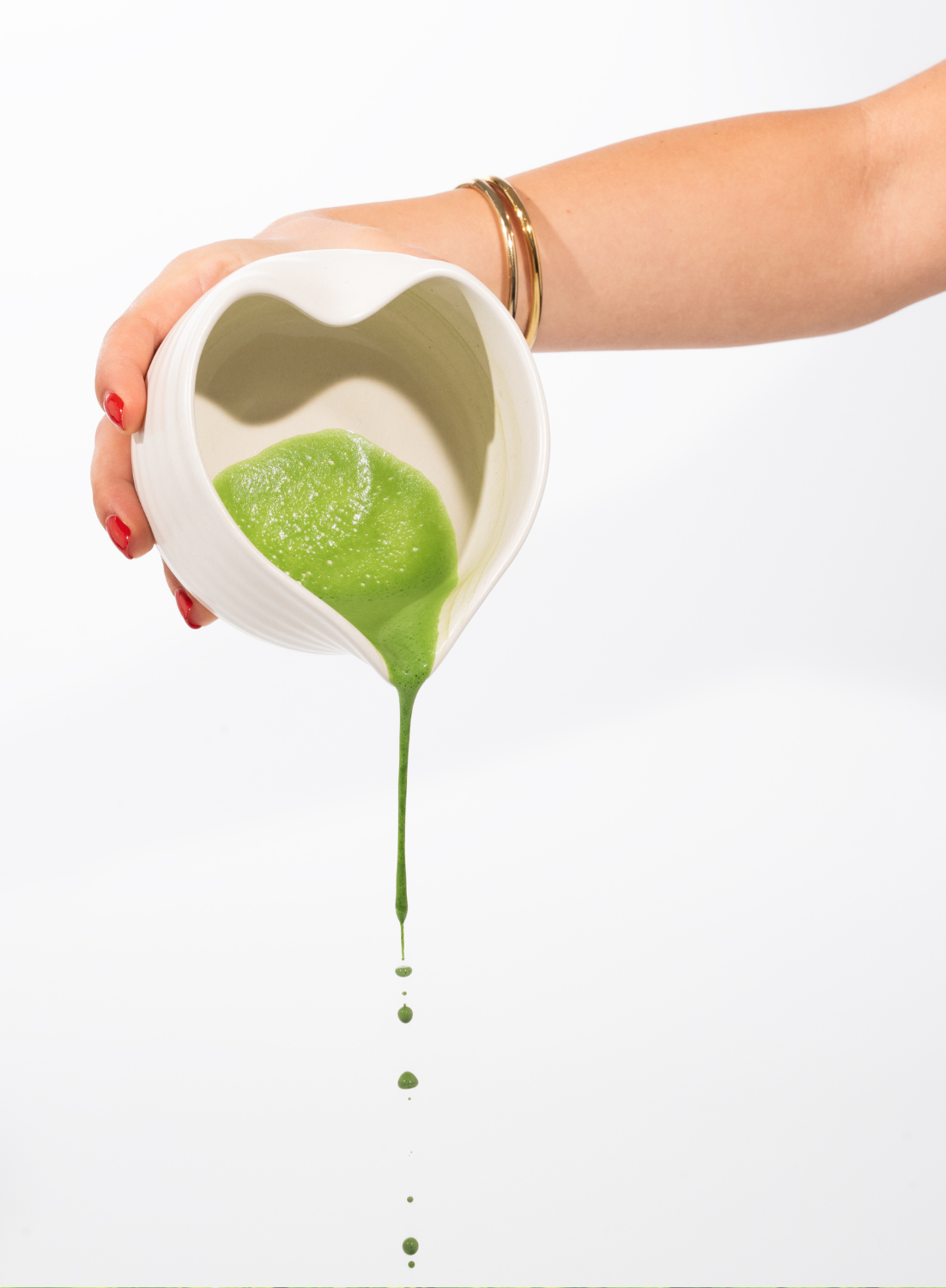
Matcha latte without lumps – how to get it right every time
If you're making matcha for the first time, you know the problem: the powder clumps, floats on top, doesn't dissolve properly – and the latte looks like a failed experiment. Usually it's not the matcha's fault, but one of three things.
Why does matcha clump in the first place?
Matcha is ground extremely finely. That's exactly what makes it so creamy – and exactly what makes lower-quality matcha prone to clumping. Many matchas don't dissolve in cold water and need to be whisked – not dissolved. That's the key difference from instant powders.
Our Organic Ceremonial Matcha is stone-ground so finely that it disperses well even in cold water.
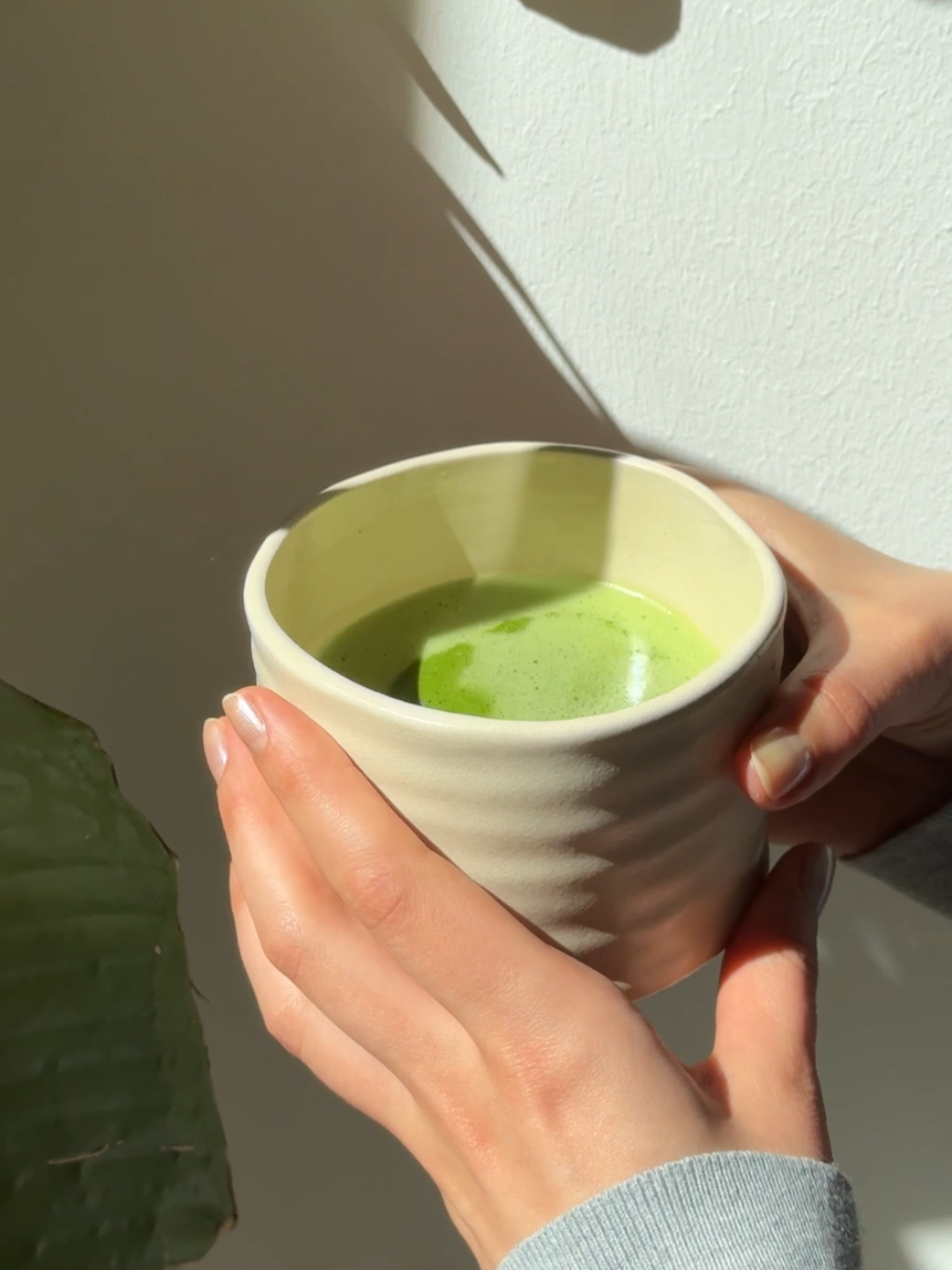
The three most common causes
1. Straight into the milk: Matcha and milk don't work without an in-between step. The milk proteins surround the powder before it can disperse evenly – the result: lumps that can hardly be whisked out.
2. Water too hot: Boiling water and matcha don't go together. Too high a temperature makes the powder taste harsh and makes whisking harder. The right temperature is 70–80 °C.
3. Low-quality powder: With coarsely ground matcha, sifting is often the only thing that helps. High-quality matcha – finely stone-ground like ours – can be whisked straight away, without this extra step.
How to make your matcha latte lump-free
Step 1: Water first, then milk
Always whisk matcha first with a small amount of warm water (70–80 °C, approx. 50–60 ml) until you have a smooth, creamy paste. Only then add the milk.
Our Organic Ceremonial Matcha is ground so finely that you don't need to sift it – it can be whisked straight away.
Step 2: Whisk properly
Work with the chasen in quick W or M movements – don't stir. The goal is a fine layer of foam, not a whirlpool. About 20–30 seconds is enough.
Step 3: Froth the milk and pour it in
Froth plant milk and pour it slowly over the whisked matcha. Barista oat milk and coconut milk work best – they give the latte a creamy texture.

Which accessories make the difference?
A good chasen is the most important accessory. A milk frother works too – but the texture isn't the same. The chasen creates a finer, more stable layer of foam.
A mixing bowl with a wide base gives the chasen enough room to work properly. In a narrow mug, that's hardly possible.
No chasen? A small milk frother works as a start – but pay attention to the water ratio first.
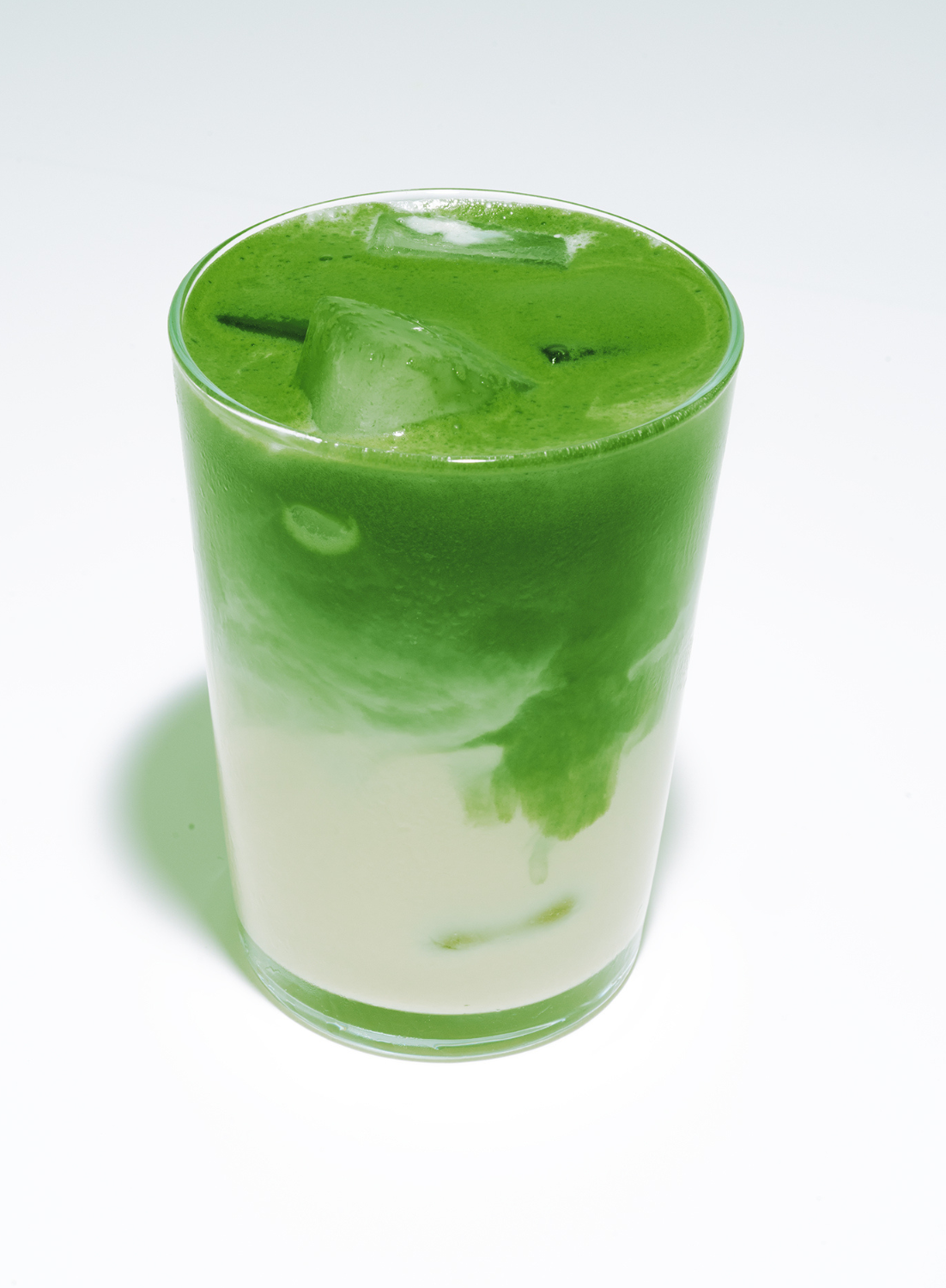
Iced matcha latte – can it be lump-free?
Yes. Our matcha disperses well in cold liquid too – but for the creamiest texture, whisk it with warm water first, then pour it over ice and cold milk. That creates the beautiful two-tone effect that makes an iced matcha.
FAQs
Why does my matcha clump?
Usually it's down to the preparation: matcha added straight to milk or mixed with water that's too hot almost always clumps. Lower-quality, coarsely ground matcha is also more prone to clumping than fine, stone-ground matcha.
How do I prevent lumps in my matcha latte?
Whisk matcha with 50–60 ml of warm water (70–80 °C), then add the milk. High-quality matcha like ours doesn't need to be sifted first.
Do you have to sift matcha?
Not necessarily – it depends on the quality. Finely stone-ground matcha can be whisked straight away. With coarsely ground powder, a sieve can help.
Does matcha dissolve in cold water?
Many matchas don't. Our organic matcha is ground so finely that it disperses well even in cold liquid.
Discover our organic matcha:
-
For beginners
 Organic Matcha Powder Ceremonial from Uji – 30 g TinOrganic Matcha Powder Ceremonial – 30 g Tin
- Regular price
-
370,00 kr - Regular price
-
- Selling price
-
370,00 kr - Unit price
-
1.233,33 kr / Per 100g

-
Bestseller
 Organic Matcha Powder Ceremonial from UjiOrganic Matcha Powder Ceremonial
- Regular price
- from
320,00 kr - Unit price
1.066,67 kr / 100g
-
 Organic Matcha Powder Traditional from UjiOrganic Matcha Powder Traditional
- Regular price
- from
100,00 kr - Unit price
1.000,00 kr / 100g
-
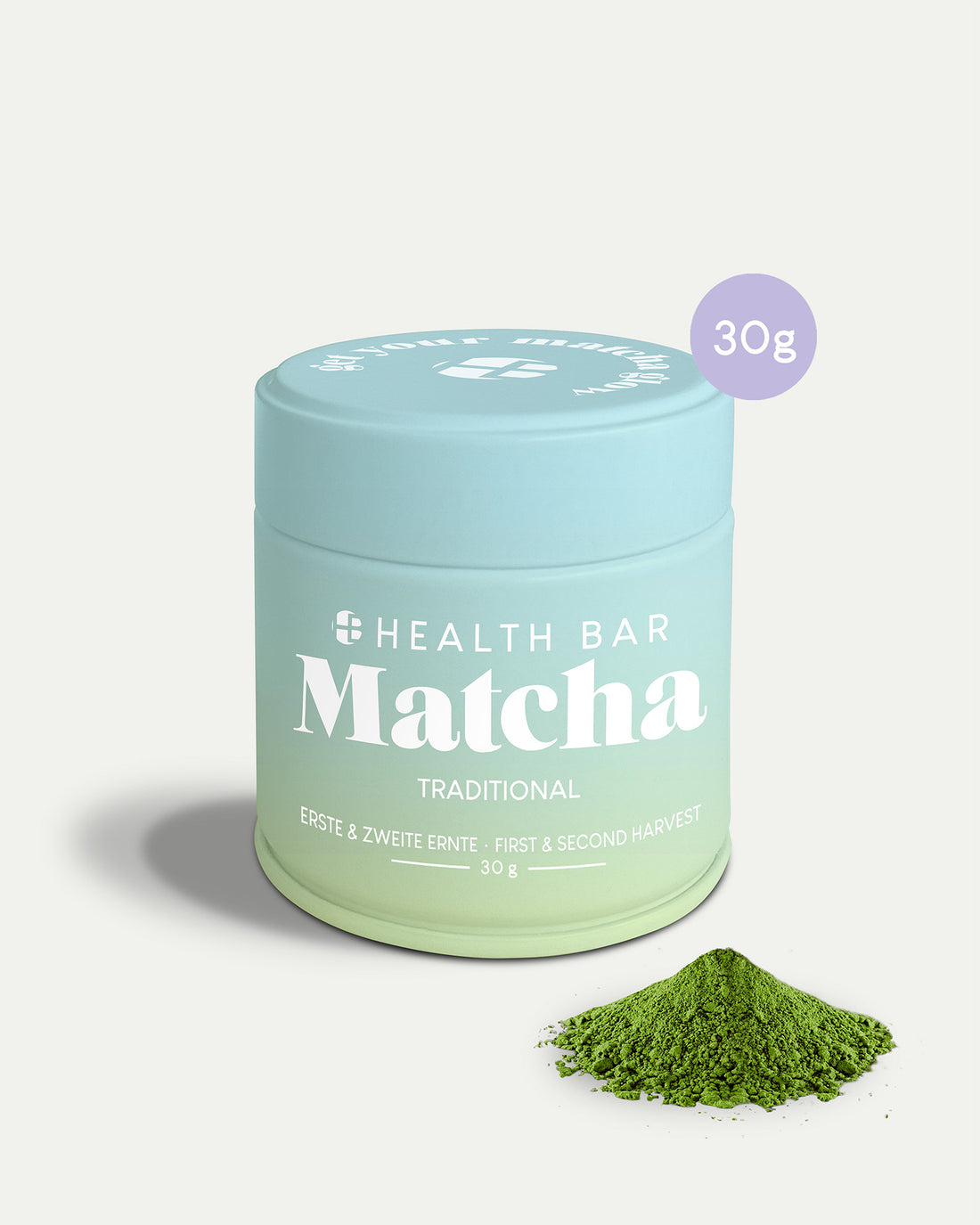 Organic Matcha Powder Traditional from Uji – 30 g TinOrganic Matcha Powder Traditional – 30 g Tin
- Regular price
-
320,00 kr - Regular price
-
- Selling price
-
320,00 kr - Unit price
-
1.066,67 kr / Per 100g
-
NEU
 Organic Matcha Sticks Ceremonial – 7 × 2 g on the goOrganic Matcha Sticks Ceremonial – 7 × 2 g
- Regular price
-
240,00 kr - Regular price
-
- Selling price
-
240,00 kr - Unit price
-
171,43 kr / Per 10g
-
NEU
 Organic Matcha Sticks Traditional – 7 × 2 g on the goOrganic Matcha Sticks Traditional – 7 × 2 g
- Regular price
-
180,00 kr - Regular price
-
- Selling price
-
180,00 kr - Unit price
-
128,57 kr / Per 10g
-
 Organic Matcha Discovery Set – 4 varieties to tryOrganic Matcha Discovery Set – 4 varieties to try
- Regular price
-
440,00 kr - Regular price
-
- Selling price
-
440,00 kr - Unit price
-
880,00 kr / Per 100g
-
 Matcha gift set with Natsume can & organic Matcha Ceremonial 30 g – Gift BoxMatcha gift set with Natsume can & organic Matcha Ceremonial 30 g – Gift Box
- Regular price
-
615,00 kr - Regular price
-
- Selling price
-
615,00 kr


