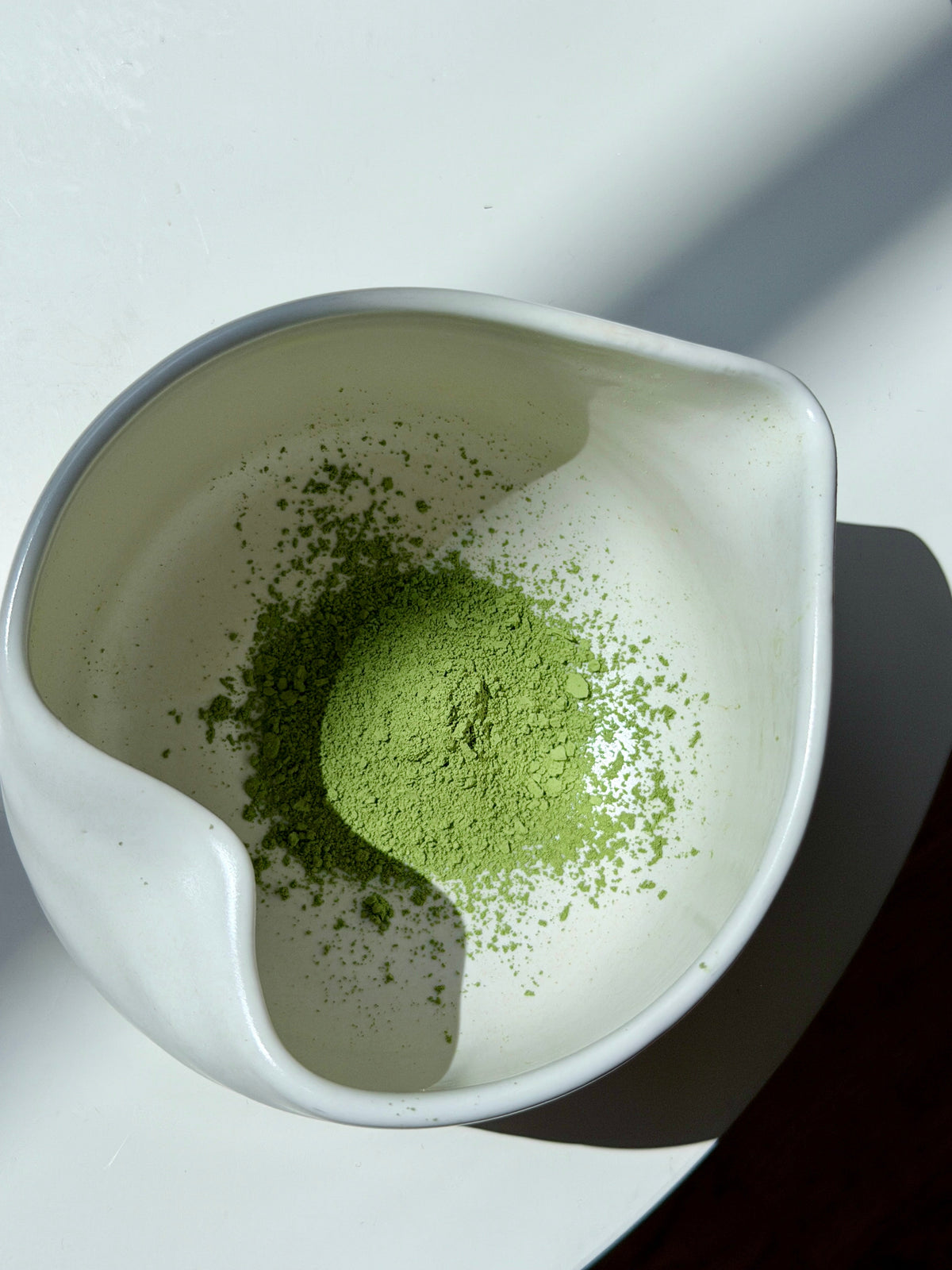

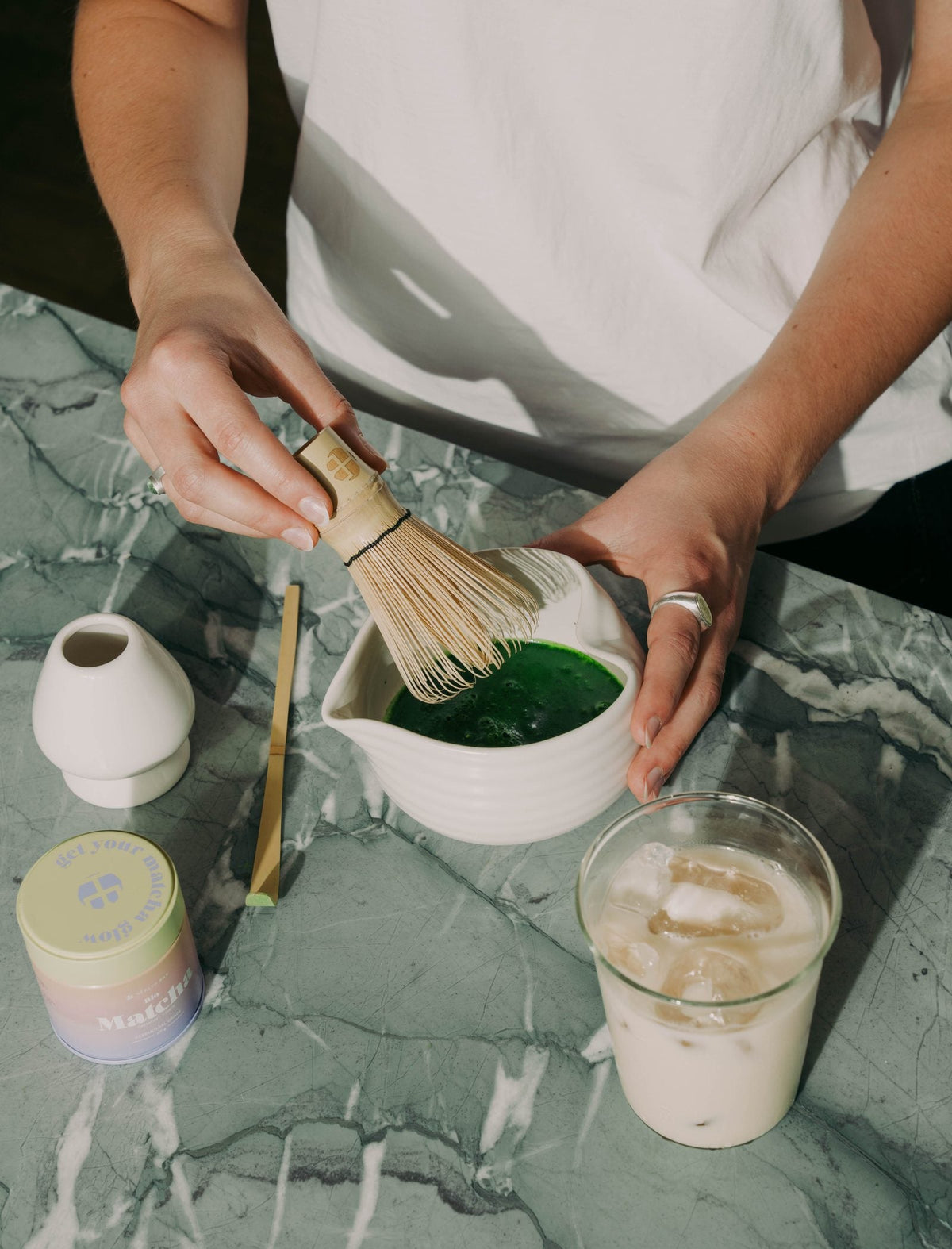
Your matcha tastes harsh even though it should be mild? In most cases, it's not the powder but the preparation. The most common reason is water that's too hot. The good news: that's easy to fix.
Key points at a glance
- The most common reason for harsh-tasting matcha: water that's too hot.
- Warm: 70 to 80 °C. Iced: room-temperature water.
- 2 g of matcha to 70 to 100 ml of water, whisk for 20 to 30 seconds.
Why boiling water makes matcha taste harsh
Matcha is finely ground green tea. Unlike with a tea bag, you drink the whole leaf. Boiling water is too hot for the fine powder: it practically scorches the tea leaves, and sharper notes come to the fore. The delicate, slightly sweet notes and the round umami get lost.
At the right temperature, high-quality matcha tastes mild, creamy and balanced – so mild that you can drink it pure.
The right water temperature for matcha
| Preparation | Temperature | Amounts |
|---|---|---|
| Pure matcha, warm | 70–80 °C | 2 g matcha, 70–100 ml water |
| Matcha latte, warm | 70–80 °C | 2 g matcha, 50 ml water, 150–200 ml milk |
| Iced matcha and iced latte | Room temperature | 2 g matcha, 50 ml water, ice, 150–200 ml milk or water |


How to get to 70–80 °C without a thermometer
- Let it cool: Bring water to the boil and let it stand with the lid open for about 5 minutes.
- Mix: 3 parts boiling water and 1 part cold water give you roughly 80 °C. At 2 to 1, you'll land at about 70 °C.
- Kettle with temperature control: Simply set it to 80 °C.
For iced matcha: room temperature instead of hot
For iced matcha, you don't need hot water at all. Whisk the matcha with room-temperature water. It dissolves well and gives you a smooth base without lumps. Our matcha is stone-ground so finely that it dissolves even in cold water. Then add ice and milk, done.

To keep your iced matcha from getting watery as the ice melts, try matcha ice cubes.
Other reasons your matcha tastes harsh
- Too much powder: More matcha doesn't make it better, just stronger. Stick to 2 g per 70 to 100 ml of water.
- Not whisked properly: Lumps are little concentrates you can taste when drinking. Whisk the matcha in quick W-movements for 20 to 30 seconds. You can read how to get it lump-free in Matcha latte without lumps.
- Stored incorrectly: Air, light, heat and moisture make the aroma flatter over time. How to keep your matcha fresh is explained in How to store matcha properly.
- Matcha straight into milk: Without water as an in-between step, the powder dissolves poorly and the taste becomes unbalanced. Always whisk with water first.
What matters in the matcha itself
A high-quality, gently processed matcha is naturally mild. Our Organic Matcha Ceremonial comes from a family farm in Uji, south of Kyoto, that we've worked with since 2019. The tea plants are shaded for 32 days before harvest, and the leaves are ground in stone mills. The 2026 harvest is a blend of the cultivars Saemidori, Okumidori and Yabukita, certified to EU organic and JAS Organic standards.


FAQ
What water temperature does matcha need?
For warm matcha 70 to 80 °C, never boiling. For iced matcha, room-temperature water is enough.
Can I make matcha with cold water?
Yes. Our matcha also dissolves in cold water and can be whisked smooth with it. That's ideal for iced matcha.
Does milk help against a harsh taste?
Milk softens the taste but doesn't fix the cause. At the right water temperature, high-quality matcha tastes mild and round even when pure.
Do I need to sift matcha so it doesn't taste harsh?
No, sifting has nothing to do with taste. Our matcha is ground so finely that you don't need to sift it. More on this in Do you need a sieve for matcha?.