

Matcha is not always the same. The differences usually lie in the cultivation process. & Harvest established. Our tea farm is a traditional company that has been family-run for several generations and has been producing organic matcha for several decades.
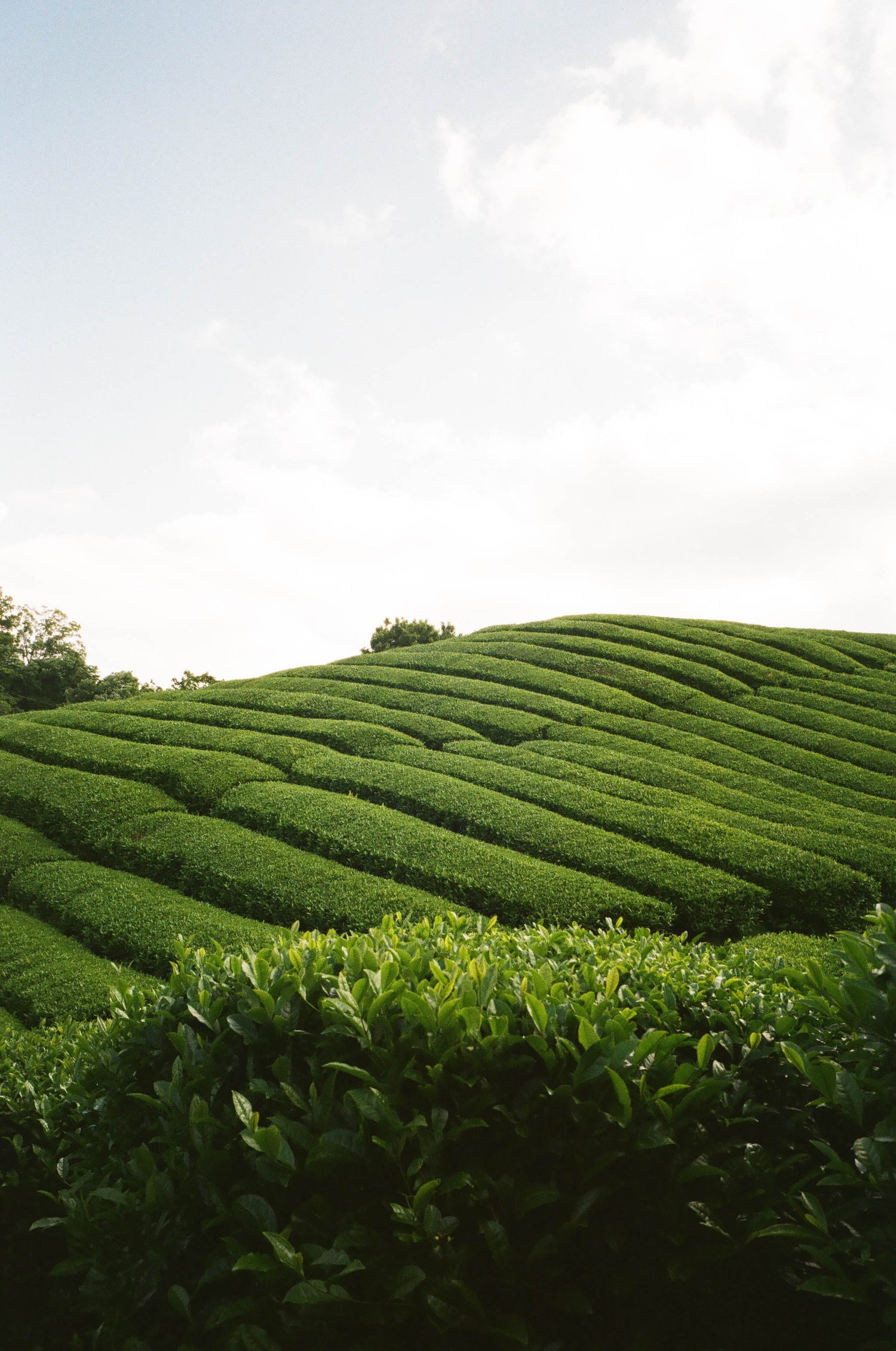
The growing area for the Matcha tea It is one of Japan's finest and oldest tea-growing regions: the Uji region, located west of Osaka. The region is known for its clean water and nutrient-rich soil, free of pesticides. The climate is ideal: the mist from the Uji and Kizu rivers keeps the tea plants moist and reduces the risk of frost damage. Traditionally, tea farmers protect the plants from the sun with reeds supported by bamboo poles. We have compiled a step-by-step guide to how our matcha tea is produced:
Oishitaen: Tea cultivation in the shade
Around April, shortly after new shoots appear on the bushes, the fields are covered, protecting the plants almost completely from sunlight. In Uji, reeds have been spread out on bamboo poles for centuries. Today, only a few farmers still use this traditional method. The shade allows the tea to concentrate its plant compounds and retain them in the leaf. Bushes that are not exposed to sunlight increase chlorophyll production many times over. Also important is L-theanine, the amino acid responsible for the umami flavor in tea. This mellow taste is preserved through shaded cultivation.
Chatsumi: Tea harvest
The first harvest of green matcha tea begins at the end of April and ends at the end of May. After the leaves are picked, new ones emerge and are harvested at the end of June and beginning of July. The third harvest of the year takes place in August. With each harvest, the tea becomes slightly weaker, less vibrant in color and flavor. Even the leaves within a single harvest vary in quality – only the very tip of the stem with the two smallest leaves are picked for premium-quality tea.
Mushi: Evaporation and drying
After harvesting, the tea leaves are immediately steamed to prevent oxidation and fermentation. This process ensures that the tea retains its vibrant green color, fresh aroma, and valuable botanicals. After steaming, the tea is dried with gentle puffs of air. The leaves shrink to about one-sixth of their original volume.
Senbetsu: Separation of stems and leaves
The dried tea leaves are sorted by size, weight, and color. Then their stems and veins are removed. The clean leaves are cut into smaller pieces and finally dried for a period of time. The finished tea undergoes a final inspection, and any unwanted parts are removed. The end result is small, dark green, perfectly cleaned leaves. This tea is called Tencha and is the raw material from which Matcha is made.
Funsai: Grind the leaves into powder
To produce matcha, the leaves of the tencha plant are taken and ground in rotary mills. Two specially shaped granite stones rotate and slowly grind the tea into a powder. The process requires time and precision.Thanks to its powdery texture, it blends perfectly with water, but is not soluble like cocoa powder, for example.
Kensa: Final exam
The final step is a detailed examination of the produced tea. Measurements of the nutrient content are taken, and tests are conducted for potential contaminants. The Health Bar Matcha is also certified by the independent Japanese organization JONA, which issues a special JAS certificate. This certification confirms that our tea comes from organic, pesticide-free cultivation and is not exposed to external pollutants, such as pesticides, during cultivation and production. z.B. The tea was contaminated with air pollutants. The Japanese JAS certificate is awarded in Europe by an independent body, Agro Bio Test, which not only additionally verifies the tests carried out in Japan, but also the way our tea is stored. In addition, laboratory tests regarding heavy metal and radiation exposure are carried out annually to ensure the best possible quality.
Fukurozume: hermetic packaging
Once it has been confirmed that the matcha meets all the strict requirements, it is placed in sealed packaging. Matcha tea is sensitive to external conditions. At home, after opening, it should be stored in the refrigerator in a closed, lightproof container. Matcha left in an open container quickly loses its color, aroma, and nutritional value.


