
You don't need a café or a tea ceremony for matcha.
With organic matcha, hot water and a little milk, you can make the three classics: pure, as a matcha latte and as an iced matcha latte. Here you can see how they differ and which matcha suits which variant.
The three variants compared
| Variant | Pure (usucha) | Matcha Latte | Iced Matcha Latte |
|---|---|---|---|
| Matcha | 2 g (1 tsp) | 2 g (1 tsp) | 2 g (1 tsp) |
| Water | approx. 70 ml, 70–80 °C | 30–50 ml, 70–80 °C | 30–50 ml, 70–80 °C |
| Milk | none | approx. 200 ml, warm and frothed | 150–200 ml, cold, with ice cubes |
| Taste | intense, fresh, round umami | creamy, round, mild | fresh, slightly sweet |
| Time | approx. 3 min | approx. 5 min | approx. 3 min |
1. Pure matcha: the classic from Japan

In Japan, this preparation is called usucha, "thin tea". You can read how it differs from koicha, "thick tea", in Usucha and koicha.
Without milk, you taste every difference in quality. So choose matcha from the first harvest, such as our organic Ceremonial Matcha from Uji. The Okumidori Single Cultivar tastes even clearer and sweeter.
Here's how:
-
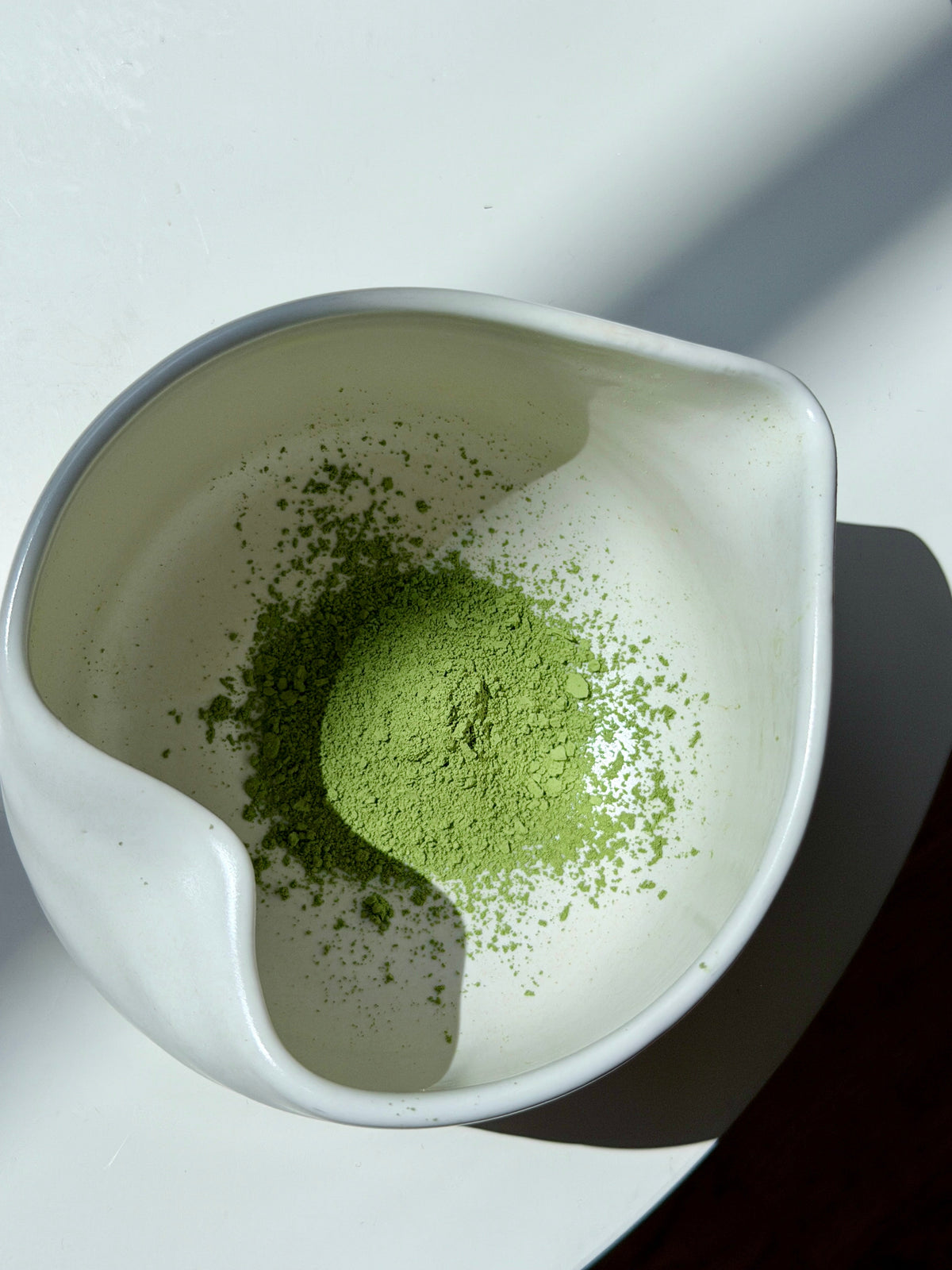
Matcha into the bowl
Put 2 g of matcha into a bowl. -
Stir until creamy
Add a splash of water and stir into a smooth paste. -
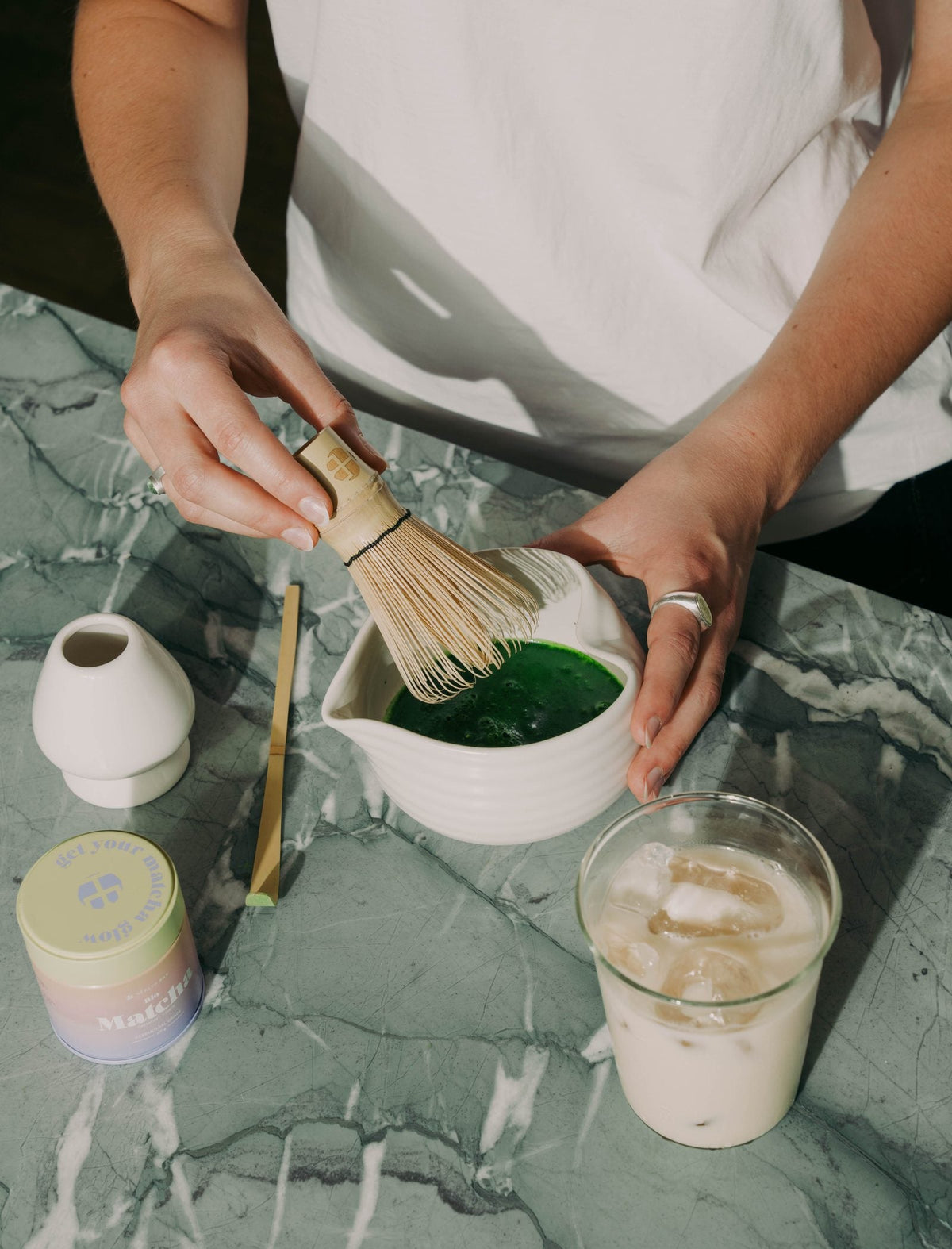
Whisk
Pour in the rest of the water and whisk in zigzag movements with the bamboo whisk until a fine foam forms.
Every step in detail, from water temperature to caring for your whisk, is shown in our guide How to prepare matcha.
2. Matcha latte: the gentle start

The milk makes the matcha creamy and mild.
That's why, for many people, the latte is their way into the world of matcha.
Here's how:
-
Whisk the matcha
Whisk 2 g of matcha with 30–50 ml of hot water until no lumps remain. -
Froth the milk
Heat and froth about 200 ml of milk or plant milk. -
Pour together
Pour the milk and matcha into the cup. Sweeten with a little maple syrup to taste.
You'll find ideas for vanilla, cinnamon or pumpkin spice in our matcha latte recipe.
3. Iced matcha latte: for warm days

Cold milk and ice soften the aroma.
So use a more full-bodied matcha like our organic Traditional Matcha. Its fresh, plant-like note still clearly tastes of matcha, even over ice.
Here's how:
-
Whisk the matcha
Whisk 2 g of matcha with 30–50 ml of warm water. -
Prepare the glass
Fill a glass with ice cubes and pour 150–200 ml of cold milk over them. -
Pour in the matcha
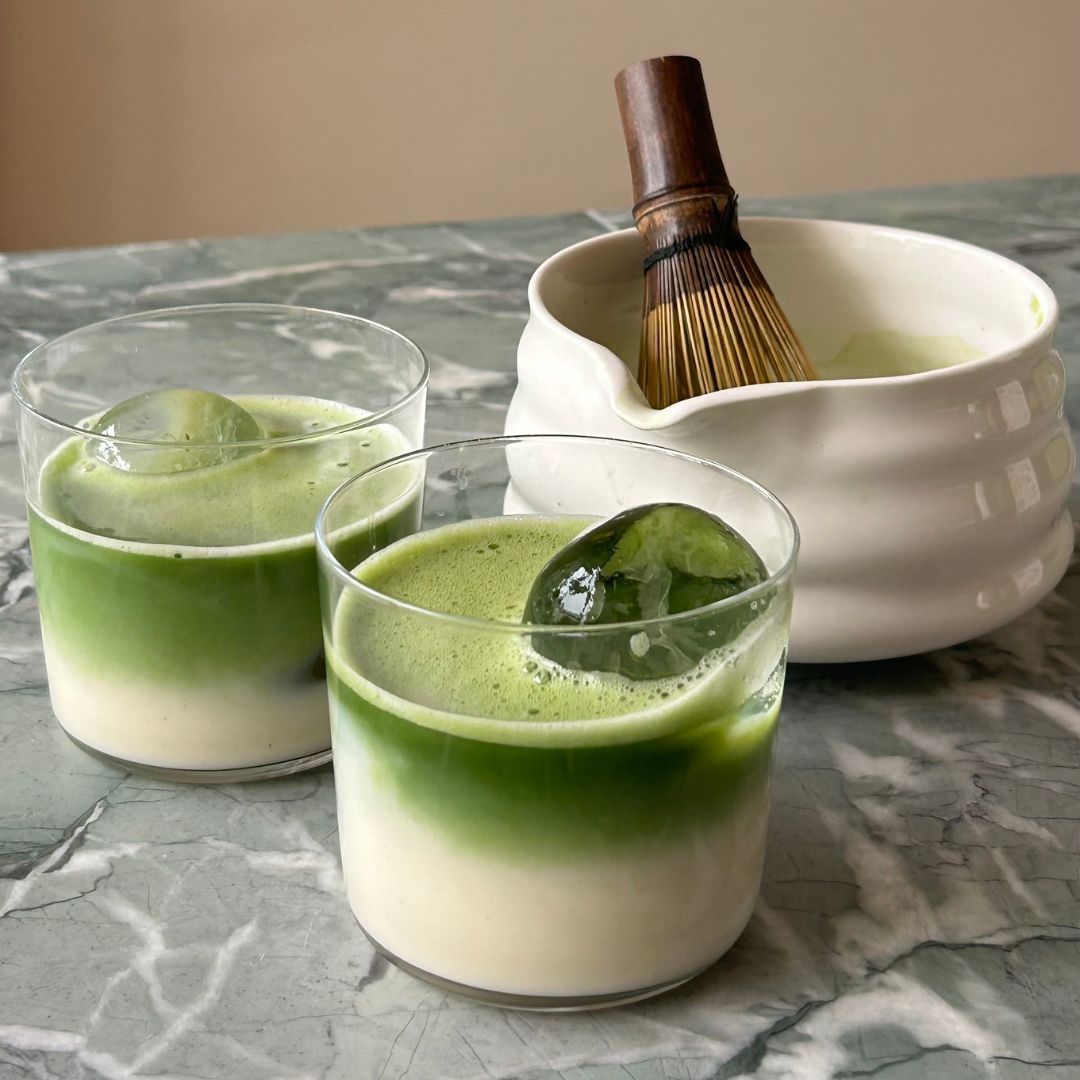
Slowly pour the matcha on top so the green and white layers stay visible.
With strawberries, mango or raspberries, it quickly becomes a new favourite drink. More on this in our iced matcha latte recipe.
Which variant suits you?
New to matcha?
Start with the matcha latte.
Want to taste the tea itself?
Drink it pure.
Warm outside or in the mood for fruit?
Make yourself an iced matcha latte.
What you need
- a bowl
- a bamboo whisk (chasen)
For a latte or iced latte, a milk frother or a jar with a tight lid for shaking works too. You'll find bowls, scoops and whisks in our matcha accessories.
Frequently asked questions
Can I use the same matcha for all three variants?
Yes, our Ceremonial works for all three variants. So you only need one tin to try everything.
Which milk works best?
Barista versions of oat and soy milk froth up most stably.
Almond milk tastes nutty, coconut milk adds a slightly sweet note.