

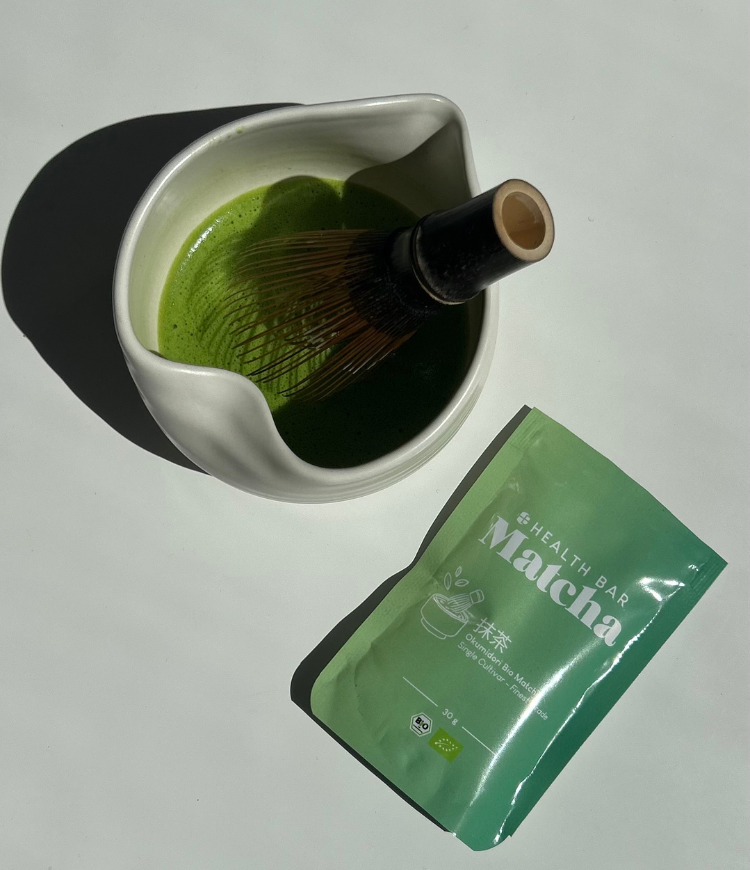
What makes it special?
Single Cultivar Matcha Explained: What Makes Okumidori from Uji Special
One cultivar, one harvest, one clear character.
With matcha, you increasingly come across terms like Okumidori, Yabukita or Saemidori. These aren't flavors, but different cultivars of the tea plant Camellia sinensis.
Our Okumidori matcha takes a special path here: it's made 100% from the Okumidori cultivar. So it's not a blend of different varieties, but a pure single-cultivar matcha
What does Single Cultivar mean?
It's simple, really:
Single cultivar = matcha made from just one single cultivar.
In a blend, different cultivars are combined with each other. That allows a specific flavor profile to be balanced in a targeted way. With a single cultivar, by contrast, the natural character of one individual tea variety takes center stage. That makes it especially exciting for anyone who doesn't just want to drink matcha, but also discover its subtle differences.
Okumidori: A Variety with Its Own Character
Our Okumidori comes from Uji, Kyoto, one of Japan's most traditional growing regions.
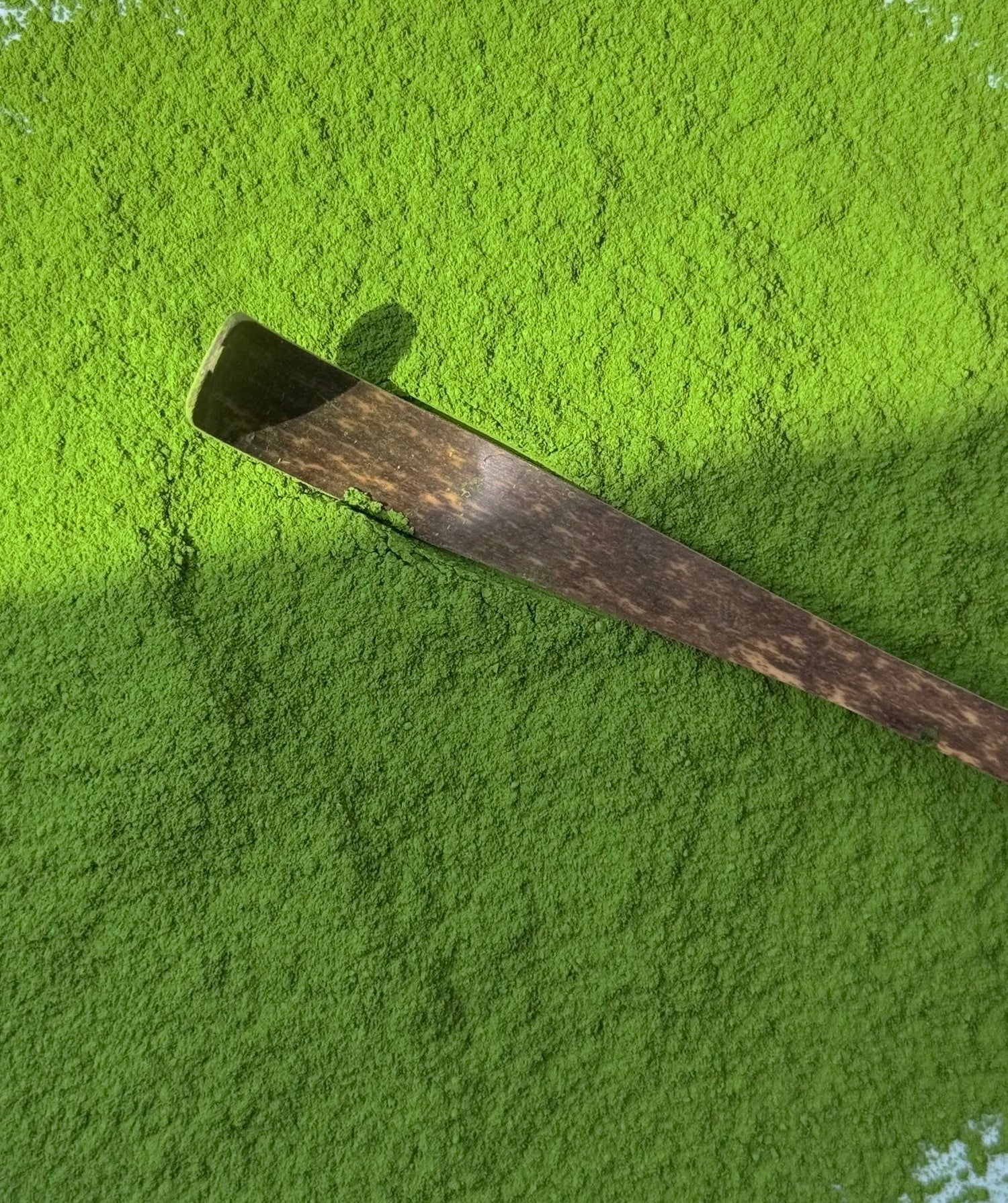
Only first-harvest leaves are used for our matcha. The tea plants are shaded for up to 32 days before harvest, before the leaves are gently processed and then traditionally ground into fine powder on granite stone mills.
The result is an especially fine, vivid green powder with a silky texture.
And what does Okumidori taste like?
This is exactly where the difference from a classic blend gets interesting.
Our Okumidori is:
gentle · rounded · slightly sweet · rich in umami
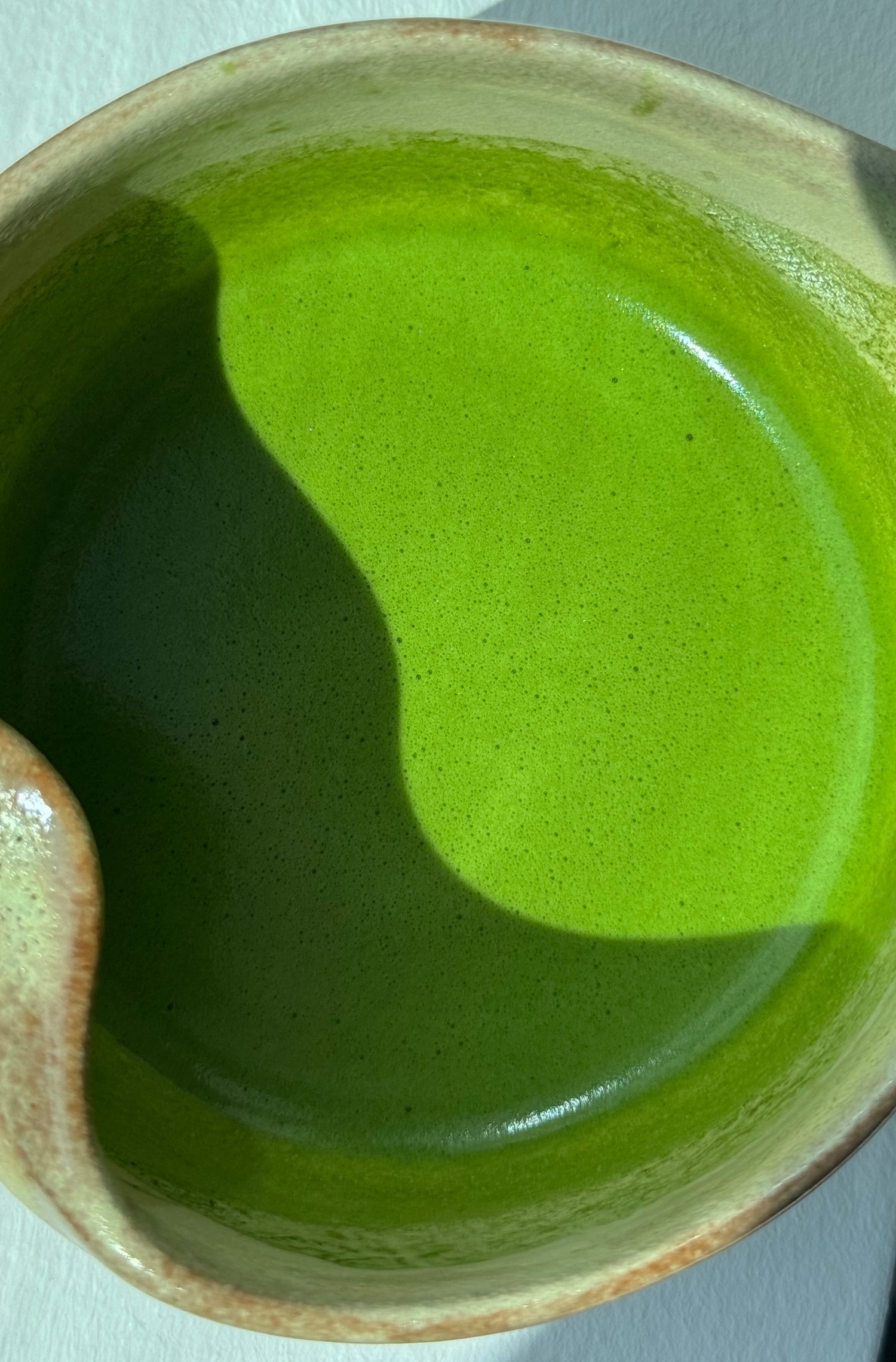
On top of that come delicate notes of edamame, white chocolate and sweet caramel, accompanied by very low bitterness and a long, harmonious umami.
Single Cultivar vs. Blend
Why Is Single Cultivar So Interesting?
A single cultivar isn't automatically more demanding to grow – but it shows a variety's character especially directly. In a blend, different cultivars are combined to create and balance a specific flavor profile.
With Okumidori, there's also the fact that this cultivar buds later than, say, Yabukita. That shifts the harvest window and, with it, part of the planning in cultivation. Factors like shading, harvest timing and processing also influence the resulting taste.
Okumidori is also grown far less often in Japan than Yabukita. At around 3.4% of Japan's tea-growing area, it's a comparatively rare cultivar. That's exactly what makes it so exciting for us: instead of combining different varieties into a blend, this is all about the distinct character of a single tea plant.
Why is our Okumidori limited?
Our Okumidori comes exclusively from the first harvest of the year. We use exclusively 100% Okumidori – no blend. Since Okumidori is grown far less often in Japan than, say, Yabukita, such single-variety batches are correspondingly limited. This harvest also only yields a limited amount, so our supply is limited too.
Once it's sold out, we wait for the next first harvest the following year.
- Regular price
-
$42.00 - Regular price
-
- Selling price
-
$42.00 - Unit price
-
$140.00 / Per 100g
- Regular price
-
$36.00 - Regular price
-
- Selling price
-
$36.00
- Regular price
-
$38.50 $41.00 - Regular price
-
- Selling price
-
$38.50 $41.00

- Regular price
-
$42.00 - Regular price
-
- Selling price
-
$42.00 - Unit price
-
$140.00 / Per 100g

- Regular price
-
$36.00 - Regular price
-
- Selling price
-
$36.00

- Regular price
-
$38.50 $41.00 - Regular price
-
- Selling price
-
$38.50 $41.00
Who is Okumidori for?
For anyone who loves enjoying matcha plain, is curious about different cultivars, and is looking for an especially soft, elegant and deep flavor profile.
One cultivar. A matcha all its own.
Maybe that's exactly the fascination of single-cultivar matcha: not blending everything together, but giving one single variety room to shine.
And Okumidori is a particularly beautiful example of that.
