

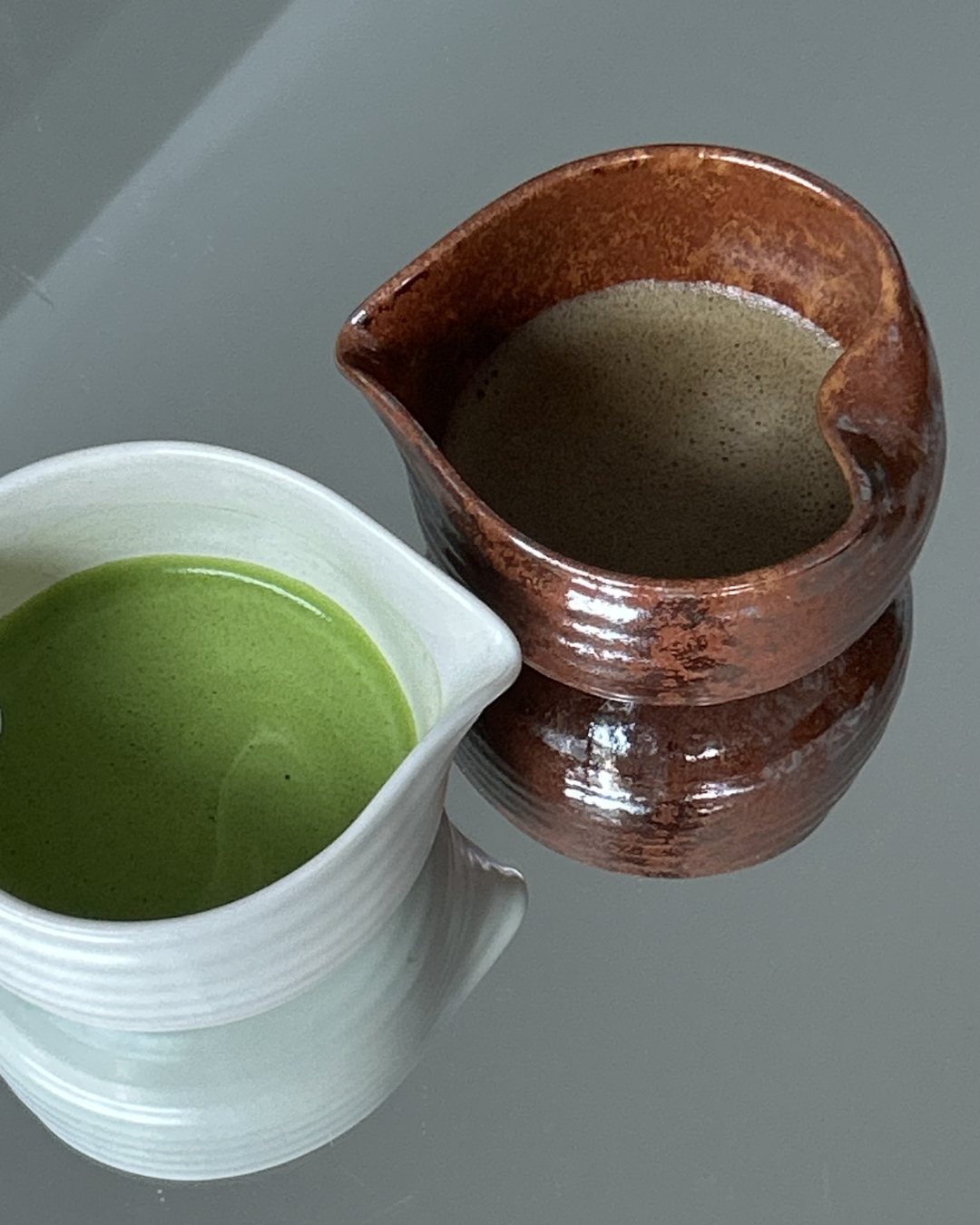
Hojicha vs. Matcha – Was ist der Unterschied?
Matcha und Hojicha – beide kommen aus Japan, beide werden aus der Teepflanze Camellia sinensis gewonnen, und beide haben in den letzten Jahren eine treue Community aufgebaut.
Und doch könnten sie unterschiedlicher kaum sein. Der eine ist intensiv grün, frisch und umami-reich. Der andere warm, geröstet und karamellsüß. Wer einmal beide probiert hat, versteht sofort: das ist kein "besser oder schlechter" – das ist eine Frage des Moments.
Was ist Matcha?
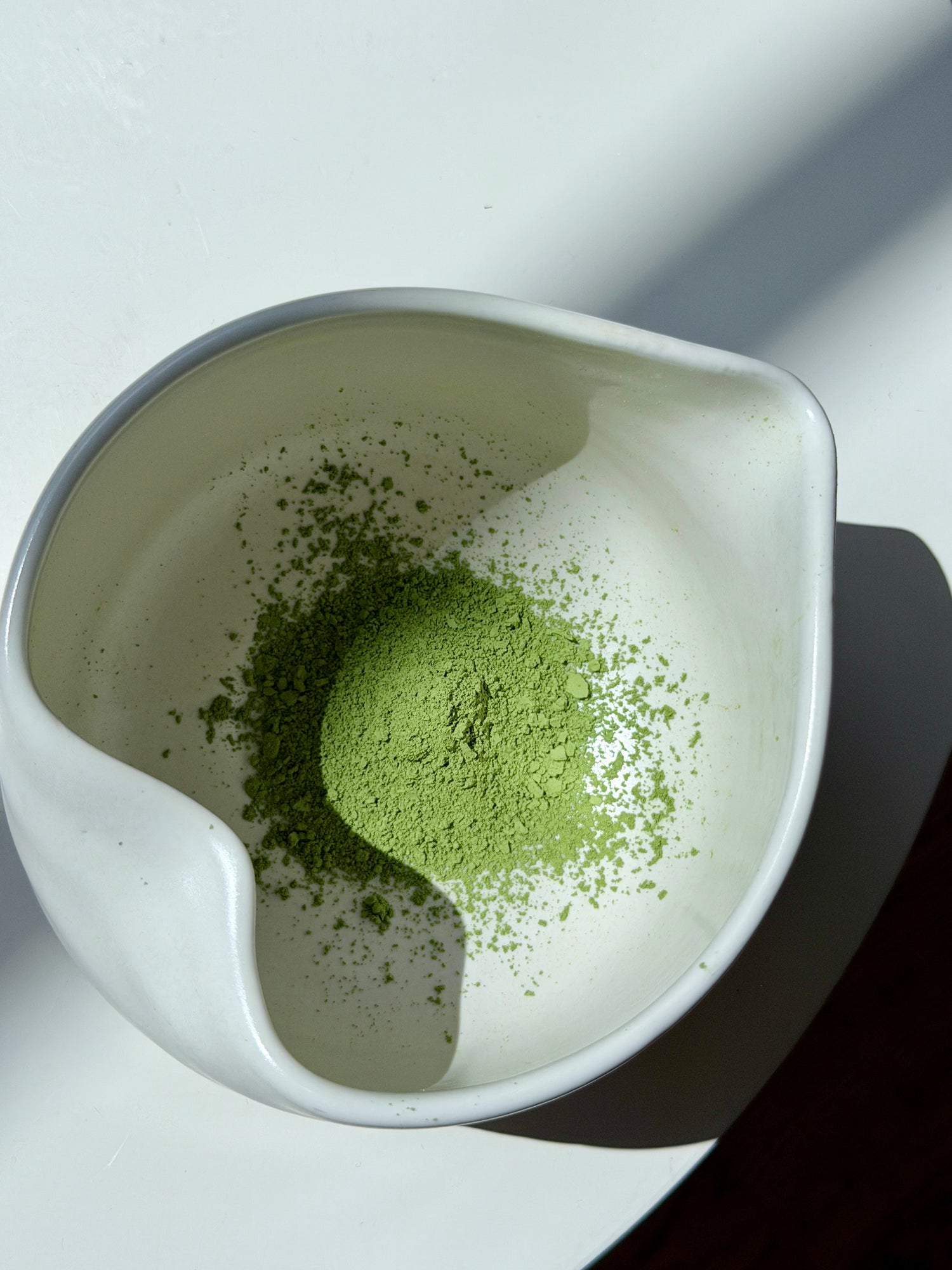
Matcha ist gemahlener Grüntee – aber nicht irgendein Grüntee. Die Besonderheit beginnt bereits Wochen vor der Ernte: Die Teepflanzen werden für rund 30 Tage vollständig beschattet. Ohne direkte Sonneneinstrahlung produzieren die Blätter mehr Chlorophyll und L-Theanin – das erklärt die intensive smaragdgrüne Farbe und den charakteristischen Umami-Geschmack. Nach der Ernte werden die Blätter gedämpft, getrocknet und von Stängeln und Blattadern befreit. Was übrig bleibt, nennt sich Tencha – die Basis für echten Matcha. Diese werden traditionell auf Steinmühlen zu einem ultrafeinen Pulver gemahlen. Das ist aufwendig, langsam und teuer.
Ceremonial Grade Matcha – wie wir ihn bei Health Bar verwenden – stammt aus der ersten Ernte des Jahres, den jüngsten, zartesten Blättern der Pflanze. Sie enthalten die höchste Konzentration an L-Theanin und Chlorophyll und schmecken entsprechend: mild, süßlich, cremig.
Was ist Hojicha?
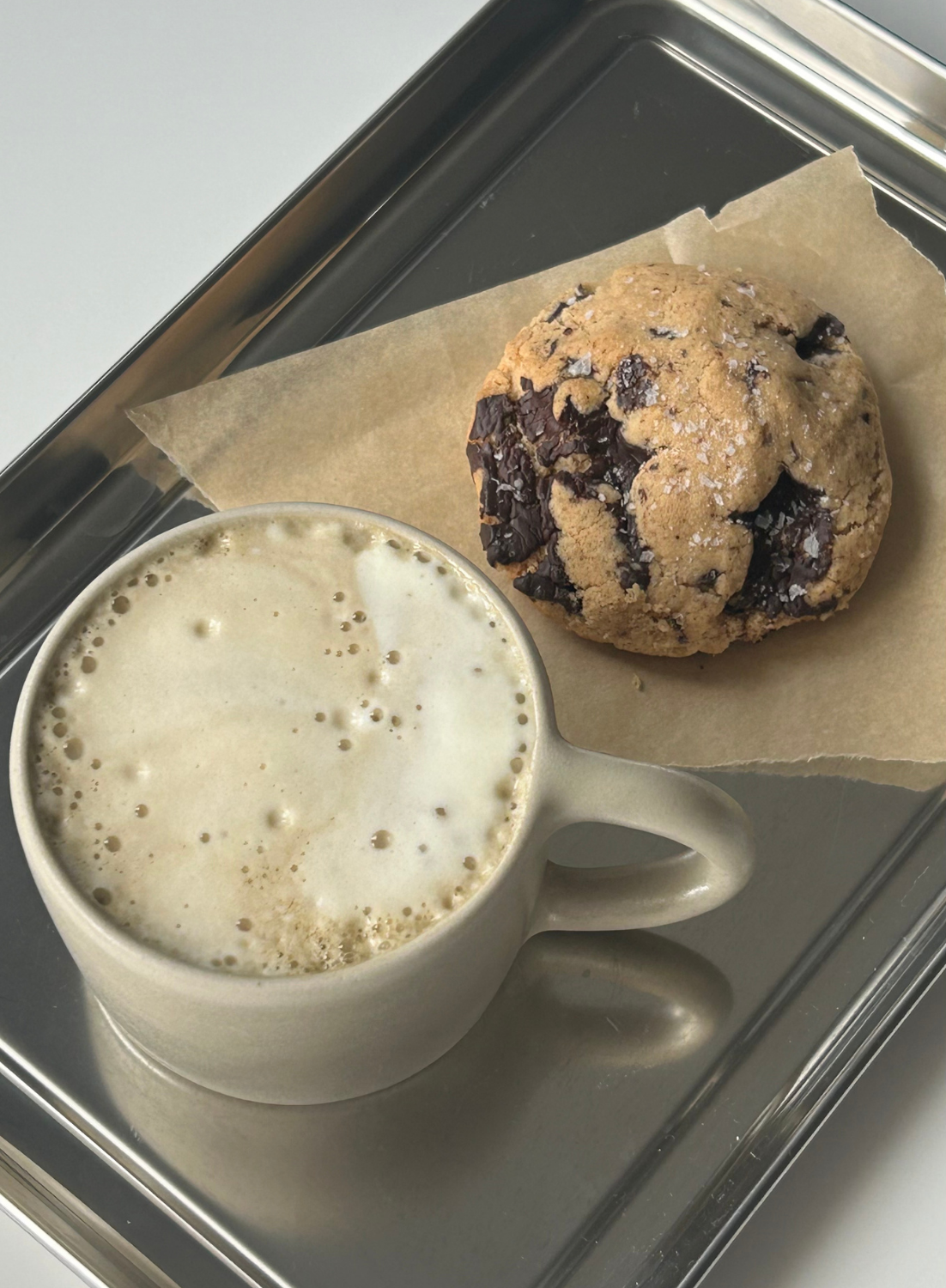
Hojicha teilt seine Herkunft mit Matcha – auch hier ist Camellia sinensis die Basis. Aber dann trennen sich die Wege. Hojicha wird nicht beschattet und nicht steingemahlen. Stattdessen werden reifere Teeblätter, Stängel und Zweige bei hoher Temperatur geröstet.
Dieser Röstprozess verändert alles. Die grünen Pflanzenpigmente werden abgebaut, der Tee nimmt eine warme Brauntönung an. Gleichzeitig entstehen durch die Maillard-Reaktion – denselben chemischen Prozess, der auch Kaffee und geröstetem Getreide ihr Aroma verleiht – neue Geschmacksstoffe: Karamell, Haselnuss, ein Hauch Vanille. Das Ergebnis ist ein Tee, der auf den ersten Blick wenig mit Matcha gemein hat – und geschmacklich in eine völlig andere Richtung geht.
Der entscheidende Unterschied: Koffein
Einer der wichtigsten Unterschiede zwischen Hojicha und Matcha liegt nicht im Geschmack, sondern im Koffeingehalt.
Matcha enthält durch die Beschattung und die Verwendung junger Blätter vergleichsweise viel Koffein – je nach Qualität und Dosierung zwischen 30 und 70 mg pro Portion.
Hojicha hingegen ist von Natur aus koffeinarm. Der Röstprozess baut einen Großteil des Koffeins ab – eine Portion Hojicha enthält oft nur noch 10–15 mg. Das macht ihn zur idealen Wahl für den Nachmittag, den Abend oder für alle, die empfindlich auf Koffein reagieren.
Zubereitung – wo liegen die Unterschiede?
Beide gibt es als feines Pulver, und beide lassen sich ähnlich zubereiten – mit einem entscheidenden Unterschied beim Wasser.
Matcha wird mit Wasser bei 70–80°C zubereitet. Zu heißes Wasser zerstört die empfindlichen Geschmacksstoffe und macht den Matcha bitter. Mit einem Bambusbesen (Chasen) wird das Pulver in schnellen W- oder M-Bewegungen aufgeschlagen, bis ein feiner Schaum entsteht.
Hojicha ist durch den Röstprozess deutlich robuster. Hier kann auch mit heißerem Wasser – bis zu 90°C – gearbeitet werden, ohne dass der Geschmack leidet. Das macht die Zubereitung etwas unkomplizierter.
Beide eignen sich hervorragend für Lattes: einfach Pulver aufschlagen, aufgeschäumte Milch oder eine Pflanzenmilchalternative dazugeben – fertig. Hojicha Latte ist dabei besonders für den Abend beliebt, weil er sättigend warm und koffeinarm ist.
Wann trinkt man was?
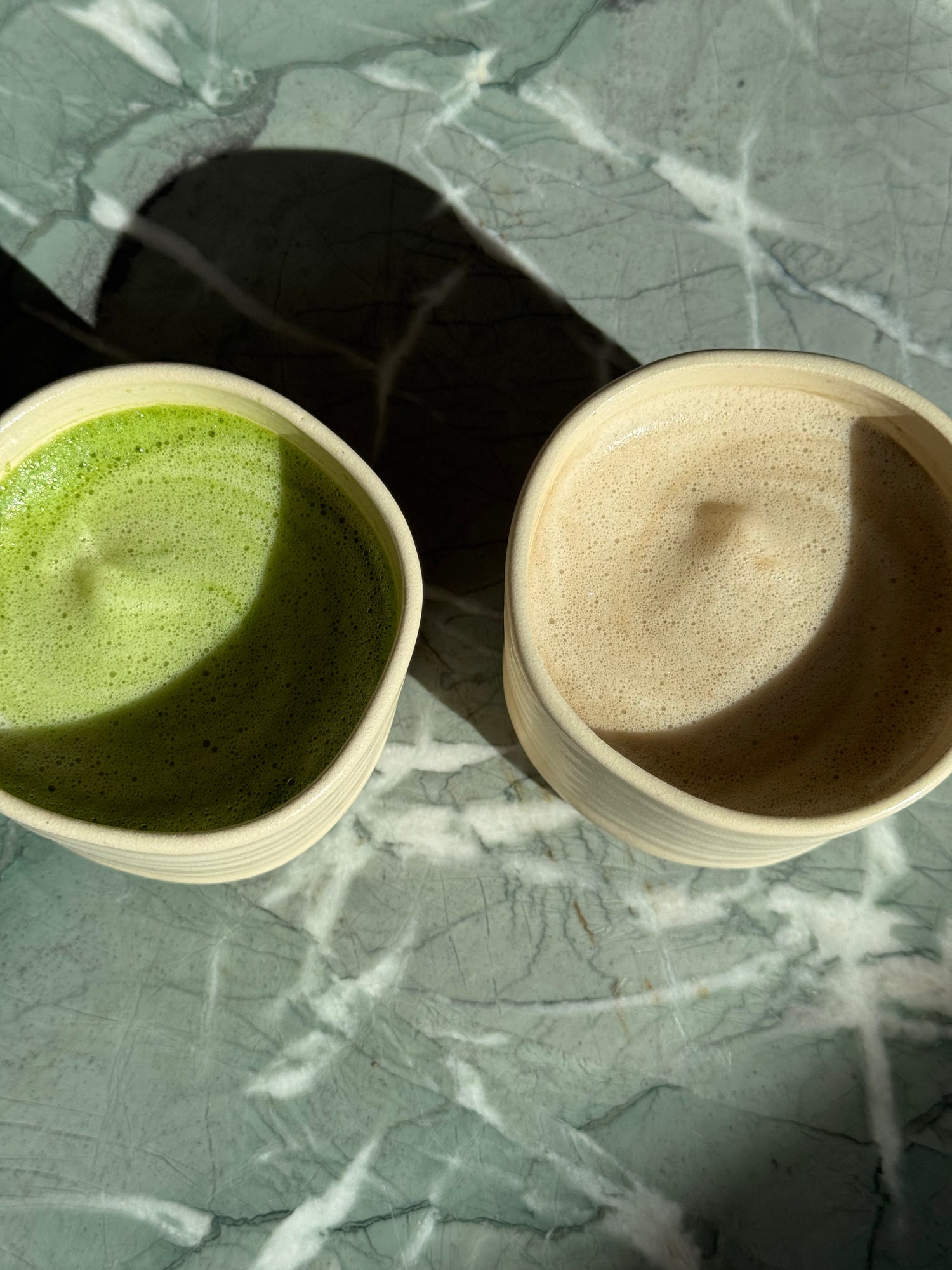
Das ist letztlich keine Wissenschaft, sondern eine Frage des Moments.
Matcha ist der ideale Begleiter für den Morgen oder den frühen Nachmittag. Wer eine genussvolle Alternative zu Kaffee sucht und den Tag mit einem kleinen Ritual beginnen möchte, ist hier richtig.
Hojicha passt in die zweite Tageshälfte. Nach dem Mittagessen, als Nachmittagsritual oder am Abend auf der Couch: Hojicha schmeckt warm und rund. Er ist außerdem eine gute Wahl für alle, die Matcha geschmacklich noch nicht ganz für sich entdeckt haben: Das Röstaroma ist zugänglicher, weniger "grün" und erinnert ein bisschen an Kaffee oder Kakao.
Fazit: Hojicha oder Matcha – was passt besser zu dir?
Matcha und Hojicha sind keine Konkurrenten – sie sind Ergänzungen. Wer beide im Schrank hat, hat für jeden Moment den richtigen Tee: morgens der frische, grüne Matcha, abends der warm-geröstete Hojicha.
Wer noch unsicher ist, welcher der richtige Einstieg ist – unser Matcha & Hojicha Probierset enthält beide und ist der einfachste Weg, selbst herauszufinden was besser passt.
Matcha & Hojicha entdecken:
-
 Organic Hojicha Powder – Roasted Green TeaOrganic Hojicha Powder – Roasted Green Tea Kyoto und Kagoshima
- Regular price
- ab
$6.00 - Unit price
$60.00 / 100g
-
For beginners
 Organic Ceremonial Matcha Tea – 30g (can)Organic Ceremonial Matcha Tea – 30g (can) Uji · 1. Ernte
- Regular price
-
$36.00 - Regular price
-
- Selling price
-
$36.00 - Unit price
-
$120.00 / Per 100g

-
Up to -7%
 Organic Matcha Starter Duo Set – Set for Traditional PreparationOrganic Matcha Starter Duo Set – Set for Traditional Preparation
- Regular price
-
$50.00 - Regular price
-
$54.00 - Selling price
-
$54.00 $50.00
-
LIMITED
 Okumidori Organic Matcha Tea – Single Cultivar – 30gOkumidori Organic Matcha Tea – Single Cultivar – 30g Uji · 1. Ernte
- Regular price
-
$42.00 - Regular price
-
- Selling price
-
$42.00 - Unit price
-
$140.00 / Per 100g
-
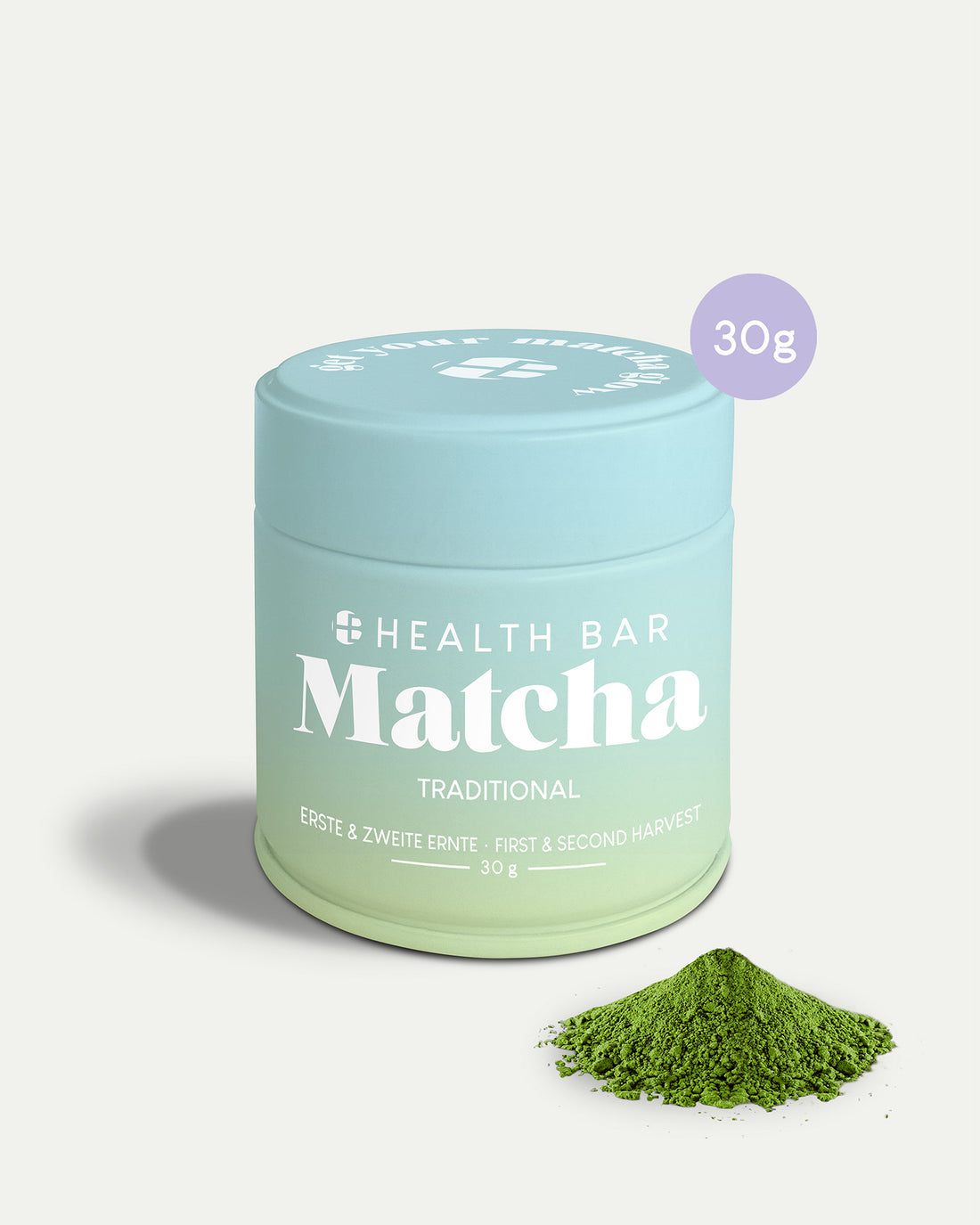 Organic Traditional Matcha Tea – 30g (can)Organic Traditional Matcha Tea – 30g (can) Uji · 1. & 2. Ernte
- Regular price
-
$31.50 - Regular price
-
- Selling price
-
$31.50 - Unit price
-
$105.00 / Per 100g
-
CAFFEINE-FREE
 Organic Mulberry Matcha Tea – Caffeine-FreeOrganic Mulberry Matcha Tea – Caffeine-Free Shimane · koffeinfrei
- Regular price
-
$17.00 - Regular price
-
- Selling price
-
$17.00 - Unit price
-
$56.67 / Per 100g


