


From Japan to South Korea
Amid volcanic landscapes, traditional tea fields and genuine handcraft, a Matcha is created that reveals a whole new side of Korean tea culture.
A few years ago we stood on a Matcha farm in Japan for the first time. Ever since, one question has stayed with us: Where do the world's most exciting Matcha qualities grow?
This time our search led us to South Korea – to one of the country's few organic Matcha farms.
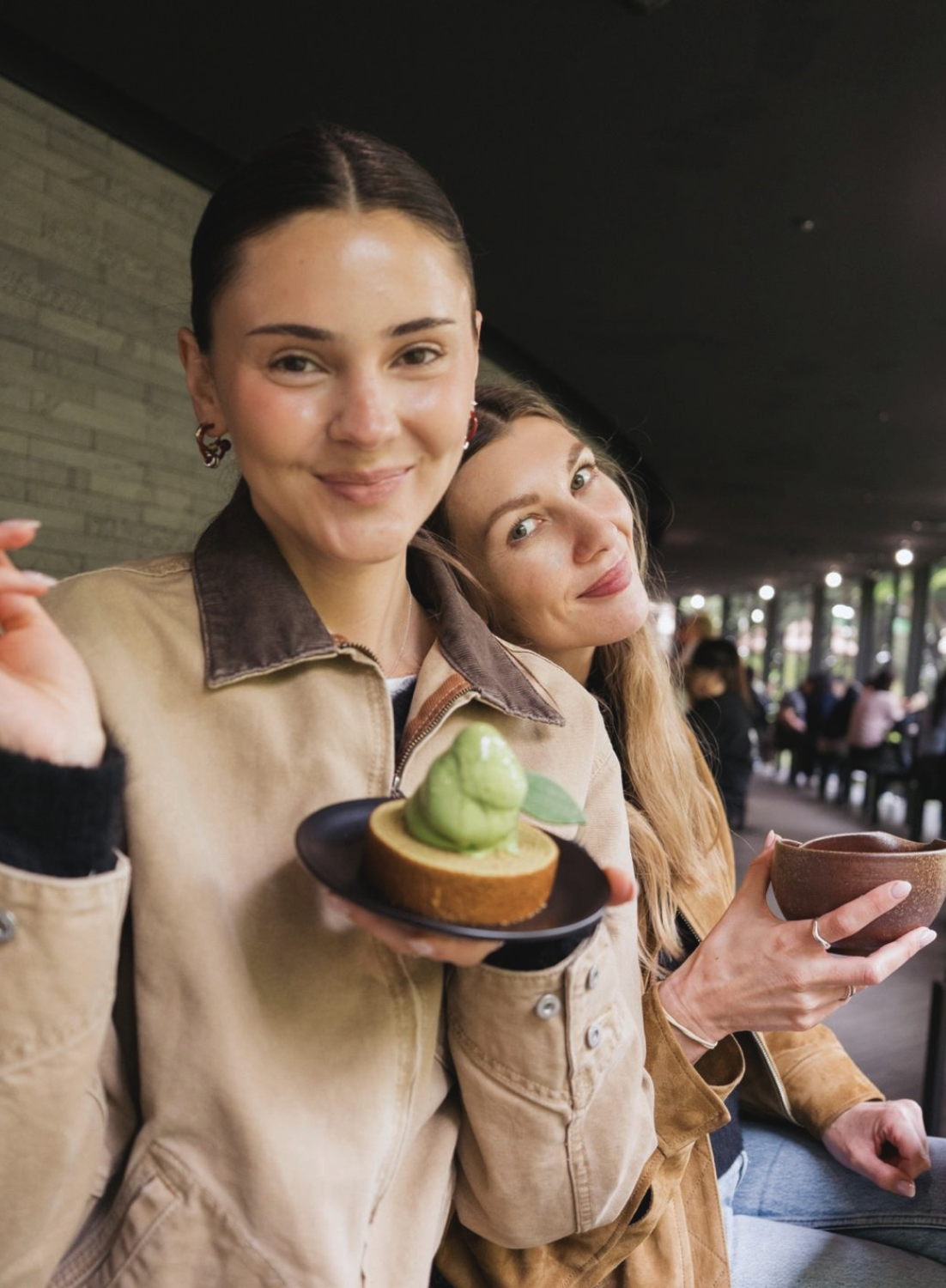
Why we travelled all the way to South Korea
We believe that exceptional Matcha isn't created at a desk.
That's why we visit our farmers in person. We want to get to know the people, understand their philosophy and taste the Matcha exactly where it grows.
After our visit to Japan a few years ago, this time our journey took us to South Korea – to a farm we'd been watching for a long time.
When we arrived, we knew straight away: this journey was worth it.


Why we make journeys like these
"Every journey reminds us why we founded Health Bar Matcha. Not to sell as many products as possible. But to discover places, to meet people and to bring a Matcha to Europe that we ourselves stand behind 100%."
– Nancy & Steffi
Between volcanic landscape and tea fields
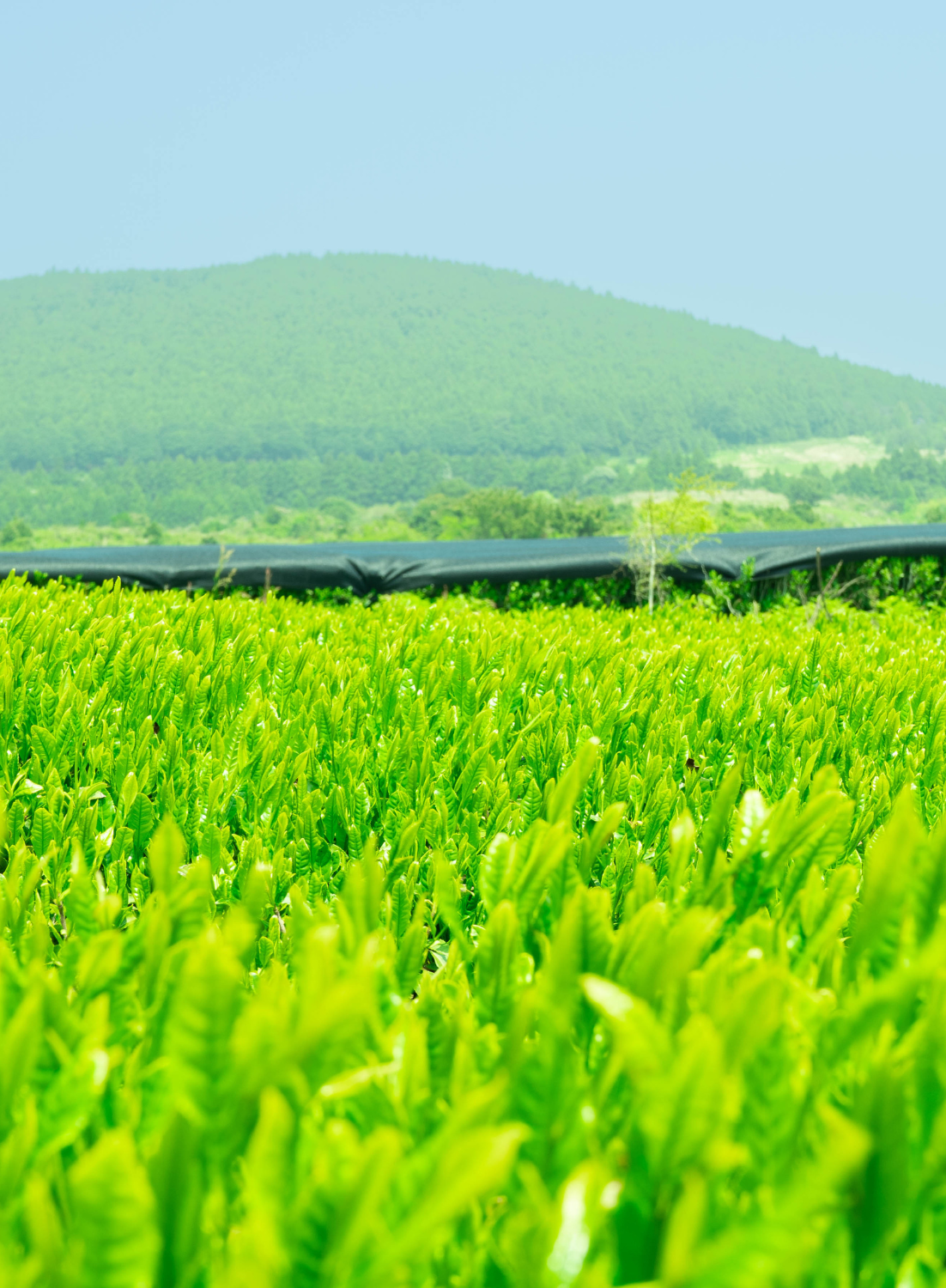
The landscape impressed us right away.
The tea fields lie in a region shaped by volcanic activity. Dark lava stones are dotted among the tea shrubs, while mineral-rich soils create ideal conditions for growing tea.
Just as with wine, the terroir – soil, climate and location – shapes the character of the plant when it comes to tea too.
It's precisely these special conditions that make this region so exciting for us.
A farm you won't forget
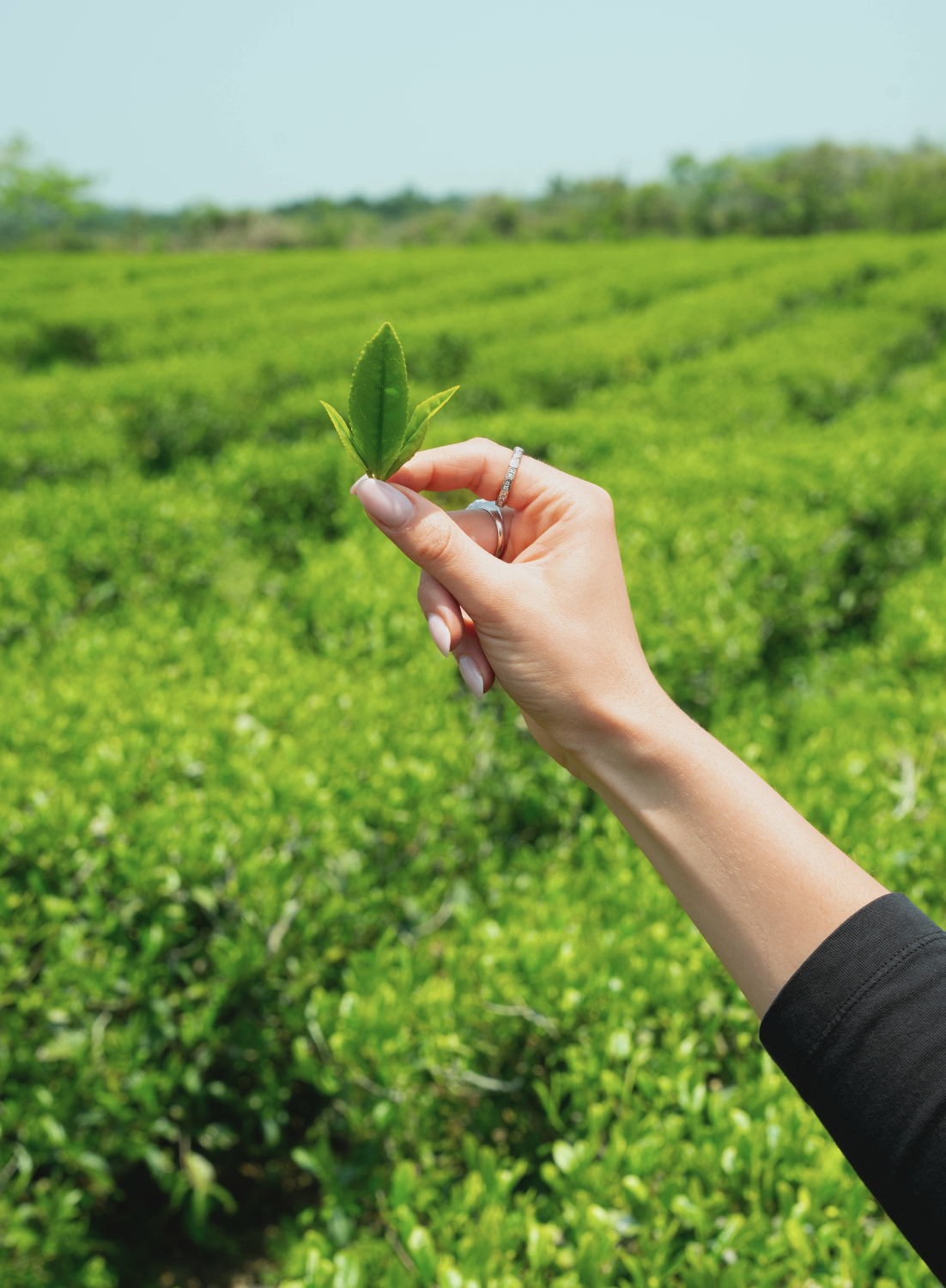
What touched us most was the calm. No huge production. No industrial operation.
Instead, a traditional farm where the tea leaves are still harvested by hand.
Horses graze between the fields, keeping the weeds short – and they deliberately leave the tea bushes standing, by the way. The farmer told us with a smile that the animals quickly realised the tea leaves didn't agree with them.
It's exactly these little stories that you'd never read on a product label.
What is Korean Matcha?
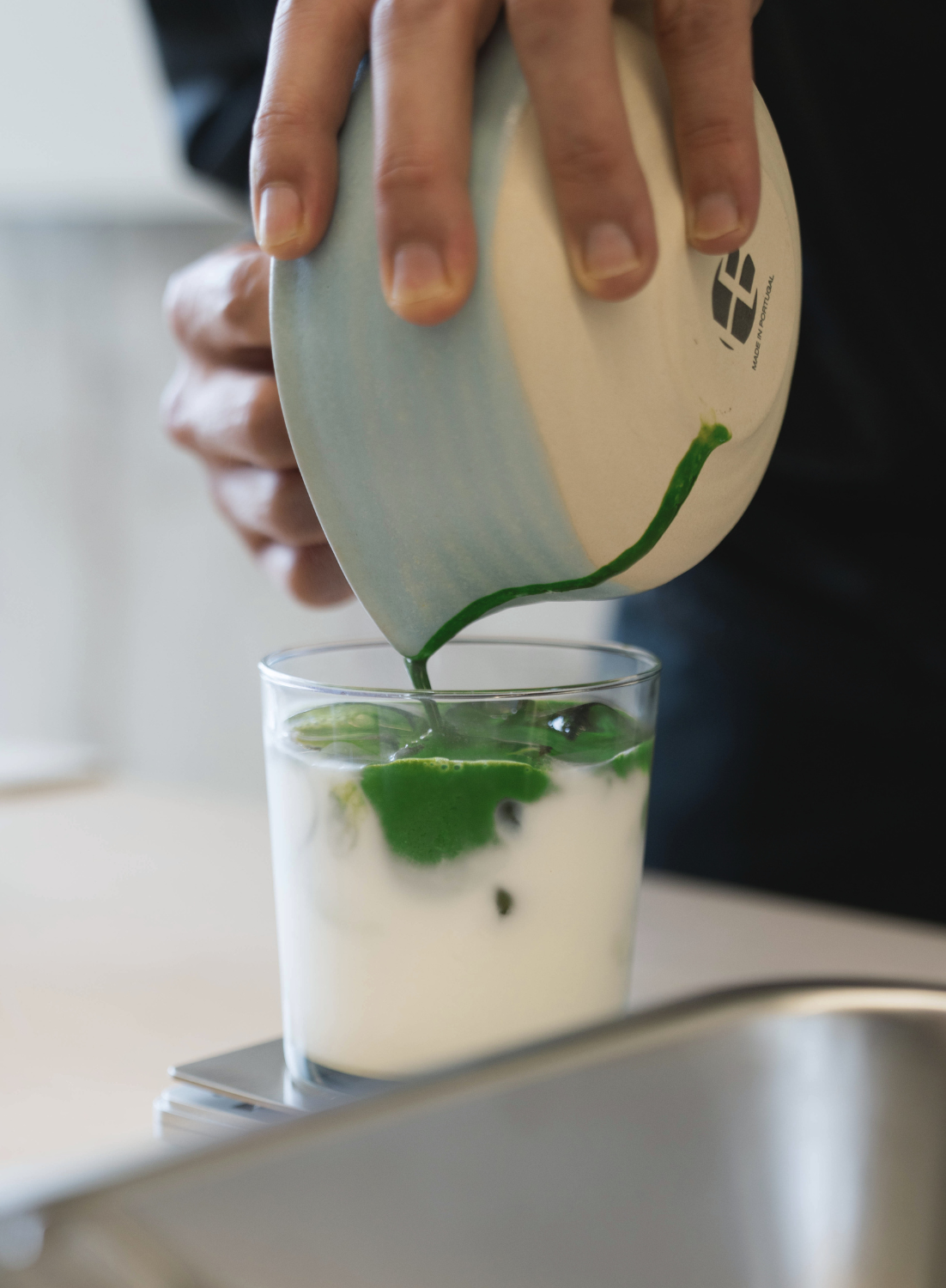
Korean Matcha is finely ground green tea that – just like Japanese Matcha – is made from shaded tea leaves. Although Japan is regarded as the home of Matcha, South Korea also looks back on a centuries-old tea culture.
Today, exceptional Matchas are produced there in small quantities, often by family-run farms. Our Matcha comes from an organic farm in a volcanic region of South Korea that we visited in person. For us, it quickly became clear: teas with a character all their own are created here.
Thanks to the island's balanced climate, Jeju Matcha contains less caffeine, giving it a particularly gentle, uplifting effect – ideal for daily balance and mindful rituals.


Questions about Matcha from South Korea?
What Makes Korean Matcha Special?
Korean matcha is produced in significantly smaller quantities than Japanese matcha. Our matcha comes from an organic farm on the South Korean island of Jeju – a region known for its volcanic soil and ideal tea-growing conditions. The interplay of climate, soil and traditional processing gives it its own distinctive character.
How does Korean Matcha differ from Japanese Matcha?
Both are made according to similar basic principles. The differences arise mainly from the respective terroir, the cultivar used and the processing. Our Korean Matcha comes from a volcanic region, which gives it a character all its own.
Why does your Matcha grow on volcanic soils?
Our partner farm lies in a volcanic region of South Korea. The mineral-rich soils create special conditions for growing tea. As with wine, the so-called terroir – meaning soil, climate and location – influences the character of the tea.
Is Korean Matcha better than Japanese Matcha?
Not better – just different. Both Japan and South Korea have a long tea tradition. Taste and quality depend above all on cultivation, cultivar, processing and the individual farm. Our aim isn't to compare countries of origin, but to discover exceptional Matchas and share them with our community.
Does Korean Matcha taste different from Japanese Matcha?
Yes – but not solely because of the country of origin.
Just like wine, Matcha is shaped by its terroir: soil, climate, altitude, shading, cultivar and processing all influence the eventual flavour profile.
Our Korean Matcha grows on mineral-rich volcanic soils and impresses with a soft, balanced character, delicate freshness and a pleasantly long finish. Compared to many bold Matchas, it feels particularly harmonious and elegant.
That's why we wouldn't say Korean Matcha fundamentally tastes better or worse – simply different. And that's exactly what makes it so exciting to us.
Discover our Matcha from Uji, Japan:
-
LIMITED
 Okumidori Organic Matcha Tea – Single Cultivar – 30gOkumidori Organic Matcha Tea – Single Cultivar – 30g Uji · 1. Ernte
- Regular price
-
35,00€ - Regular price
-
- Selling price
-
35,00€ - Unit price
-
116,67€ / Per 100g
-
CAFFEINE-FREE
 Organic Mulberry Matcha Tea – Caffeine-FreeOrganic Mulberry Matcha Tea – Caffeine-Free Shimane · koffeinfrei
- Regular price
-
14,00€ - Regular price
-
- Selling price
-
14,00€ - Unit price
-
46,67€ / Per 100g


