




Mulberry Matcha vs. Matcha what's the difference?
Mulberry Matcha and matcha are prepared the same way but come from two different plants. We compare origin, caffeine, taste and preparation side by side.



4,9 von 5 · fast 2.000 Bewertungen
„Für mich auch nach Jahren als Heavy-User der beste Matcha am Markt!“
„Für mich einer der leckersten Matchas 😋“
„Wahnsinnig cremig und geschmacksintensiv! Ab jetzt mein favorite product <3“
„Der Matcha schmeckt großartig und ist wirklich eine schmackhafte Ergänzung für ruhige und entspannte Momente. Ich hoffe der Bio Matcha Tee Mulberry bleibt dauerhaft im Sortiment.“
Echte Bewertungen über Judge.me. Jede Woche zeigen wir eine andere Auswahl, alle Bewertungen findest du auf den Produktseiten. Bewertungen ansehen
Four varieties, four characters. Here you can see at a glance which variety and taste suits you and your ritual.
Matcha OkumidoriUji, Kyoto – Single Cultivar
Our rarest variety: gentle, silky and naturally sweet, with round umami and a smooth, soft finish. Best enjoyed pure with water.
Sweet caramel, roasted chestnut, fresh green notes & intense umami.
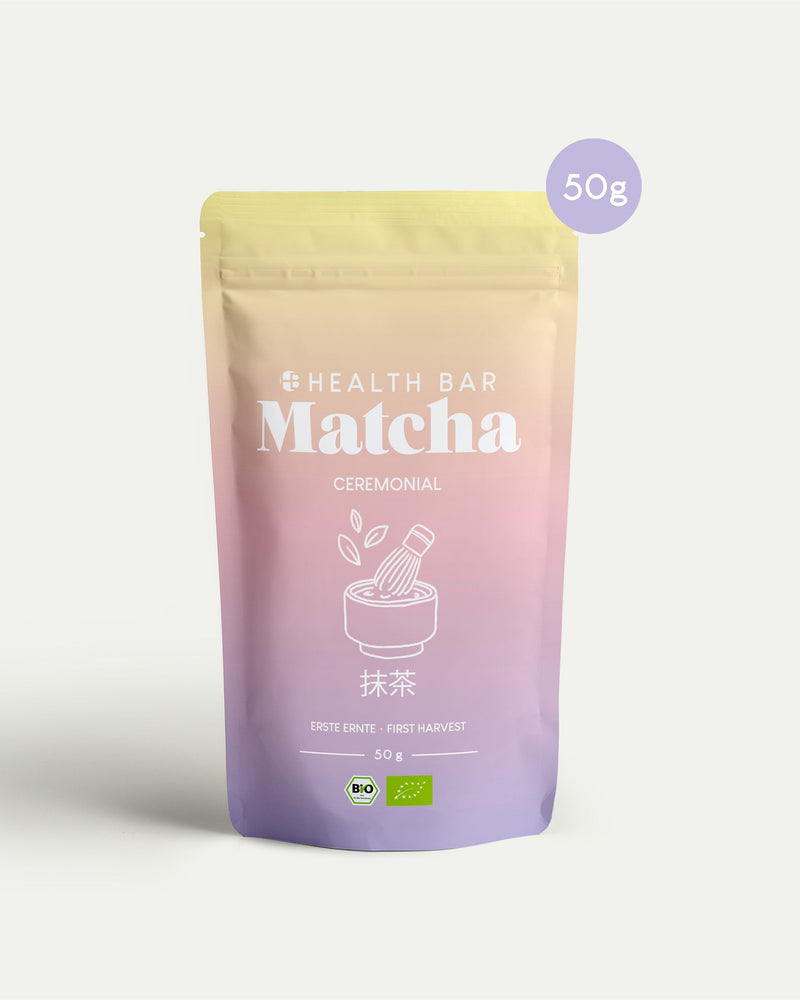
Matcha CeremonialUji, Kyoto – 1st harvest
Mild, creamy and balanced. The all-rounder from the first harvest – just as good pure as in a matcha latte.
Mild sweetness, fresh spring green notes, creamy umami & a silky finish.
Matcha TraditionalUji, Kyoto – 1st & 2nd harvest
Strong and full of character, with a round, balanced umami and a fresh green note. Holds its own in any milk, which makes it our favourite for lattes.
Intense green tea, fine umami, subtle fresh notes & a clear finish.
Mulberry MatchaJapan – mulberry leaves, caffeine-free
Caffeine-free and still full-bodied: finely ground white mulberry leaves, gentle and naturally sweet. For everyone who doesn't want to give up their ritual in the evening either.
Delicate grain notes, fresh herbs, soft green leaves, natural sweetness & a fine finish.
For our matcha varieties, we exclusively use high-quality organic matcha from Uji (Kyoto, Japan), one of the world's most renowned growing regions. From the gentle, mild ceremonial matcha of the first harvest to stronger blends and rare single-cultivar qualities like Okumidori – every matcha stands for vibrant color, fine texture, and authentic taste of the highest quality.
Der Weg deines Matcha
Matcha ist fein gemahlener Grüntee aus Japan: Du trinkst das ganze Blatt, aufgeschlagen statt aufgegossen. So entsteht unserer, von der Farm bis zu dir. Was ist Ceremonial Matcha?
2019 haben wir einen Matcha gesucht, der mild genug ist, um ihn pur zu trinken, und ihn auf einer Familienfarm in Uji gefunden. Seitdem kommt unser Matcha von dort.
Unsere Matcha Journey →Mehrere Wochen vor der Ernte werden die Teepflanzen mit Schilfrohr und Bambus beschattet. So werden die Blätter tiefgrün und der Geschmack weicher.
Wie Matcha angebaut wird →Für den Ceremonial werden nur die jungen Blätter der ersten Ernte gepflückt. Sie bringen die milde Süße und das feine Umami.
Teesorten und Cultivare →Gedämpft, getrocknet, ohne Stiele und Blattadern wird das Blatt zu Tencha. Granitsteinmühlen mahlen es langsam zu feinem Matcha.
Von Tencha zu Matcha →Jährliche Bodenproben auf der Farm, dazu Labortests auf Pestizidrückstände, Schwermetalle und Strahlenbelastung.
Zu den Laborergebnissen →Weiterlesen
Was du für den Start brauchst und wie dein erster Matcha gelingt.
Zum Einsteiger-Guide →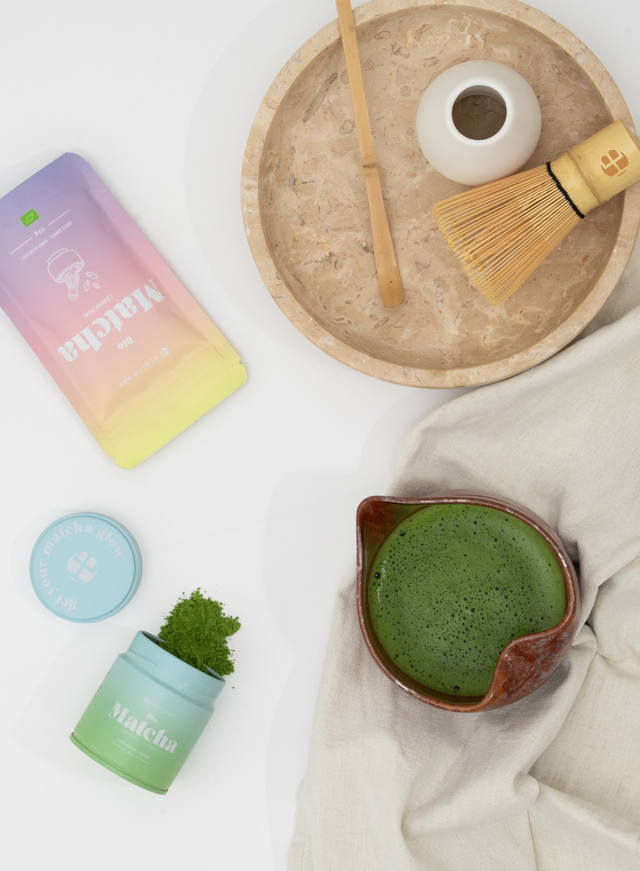
Ceremonial, Traditional, Okumidori oder Mulberry: welche Sorte pur, im Latte oder am Abend am besten passt.
Sorten im Vergleich →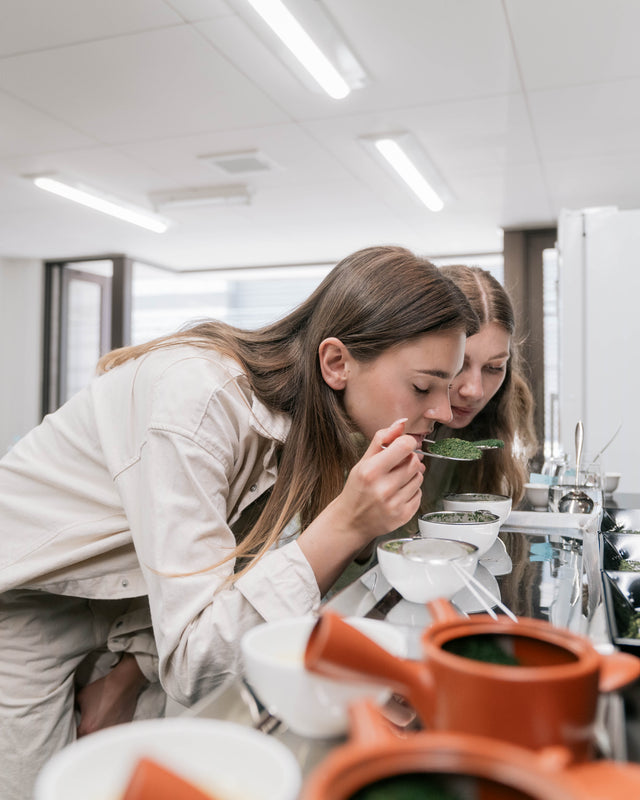
Farbe, Duft, Textur und Herkunft verraten viel über die Qualität. Darauf kannst du beim Kauf achten.
Qualität erkennen →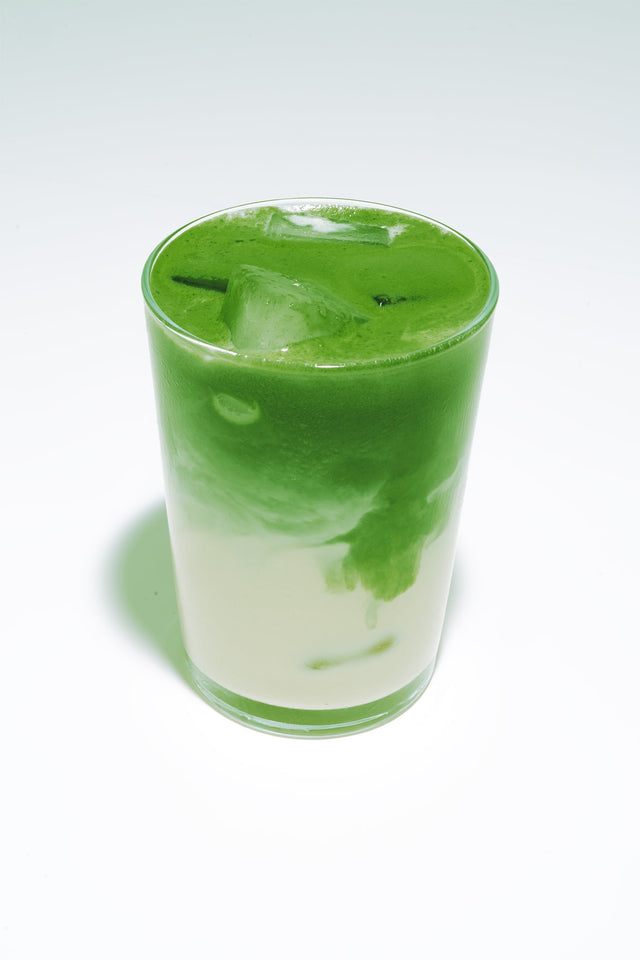
Koffein, Aminosäuren, Chlorophyll und mehr: was in einer Portion steckt und warum das ganze Blatt den Unterschied macht.
Zu den Inhaltsstoffen →
Geschmack, Koffein und Ritual im direkten Vergleich, dazu Tipps für den Umstieg.
Zum Vergleich →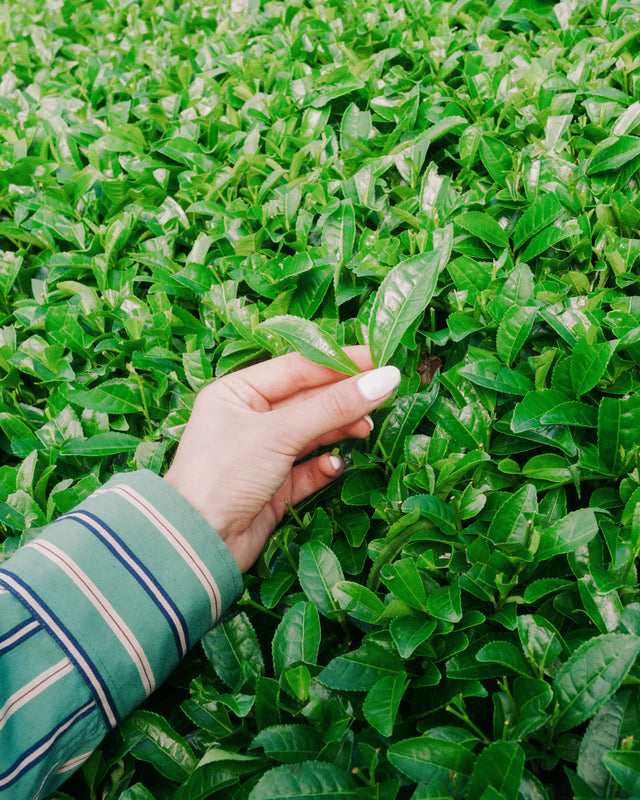
Was hinter dem Bio-Siegel steckt und worauf es beim Anbau ankommt.
Zum Bio-Siegel →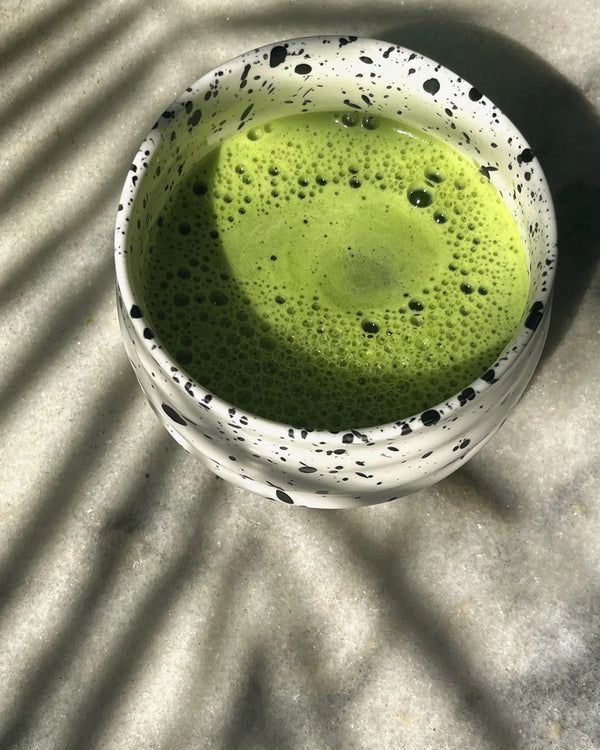
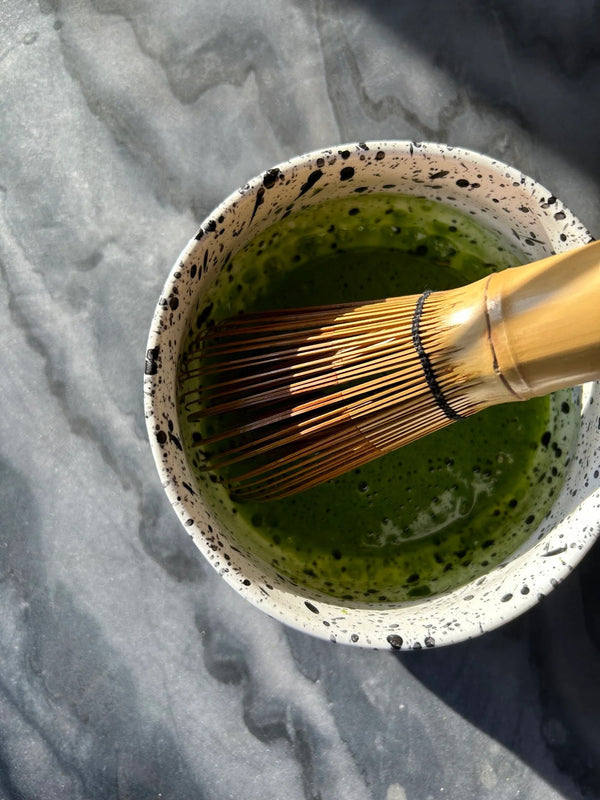
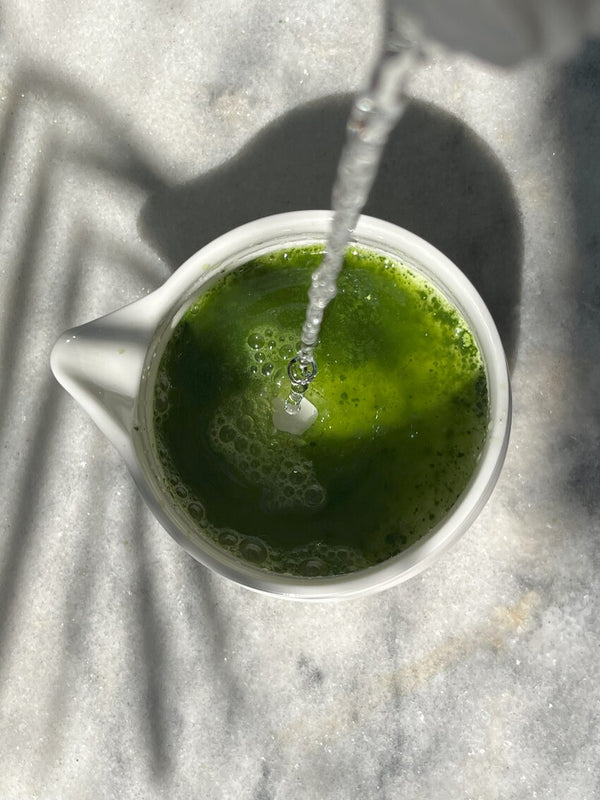
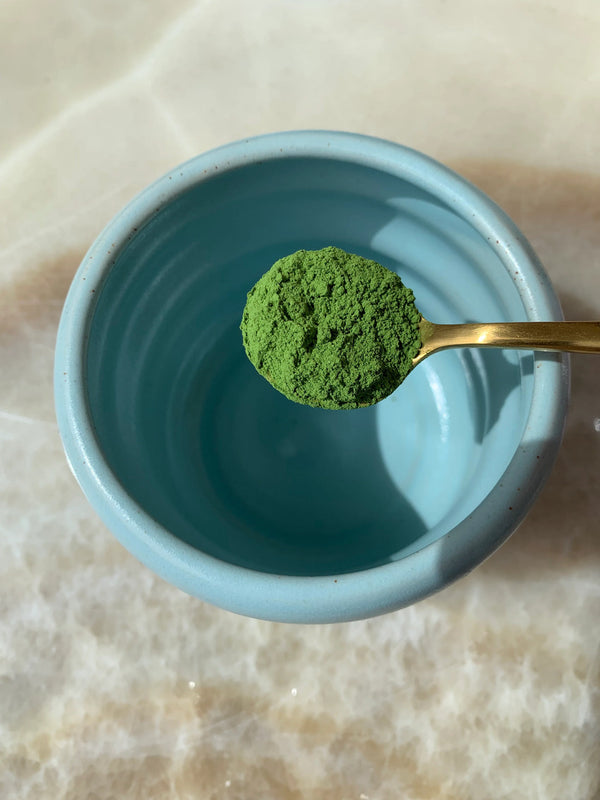
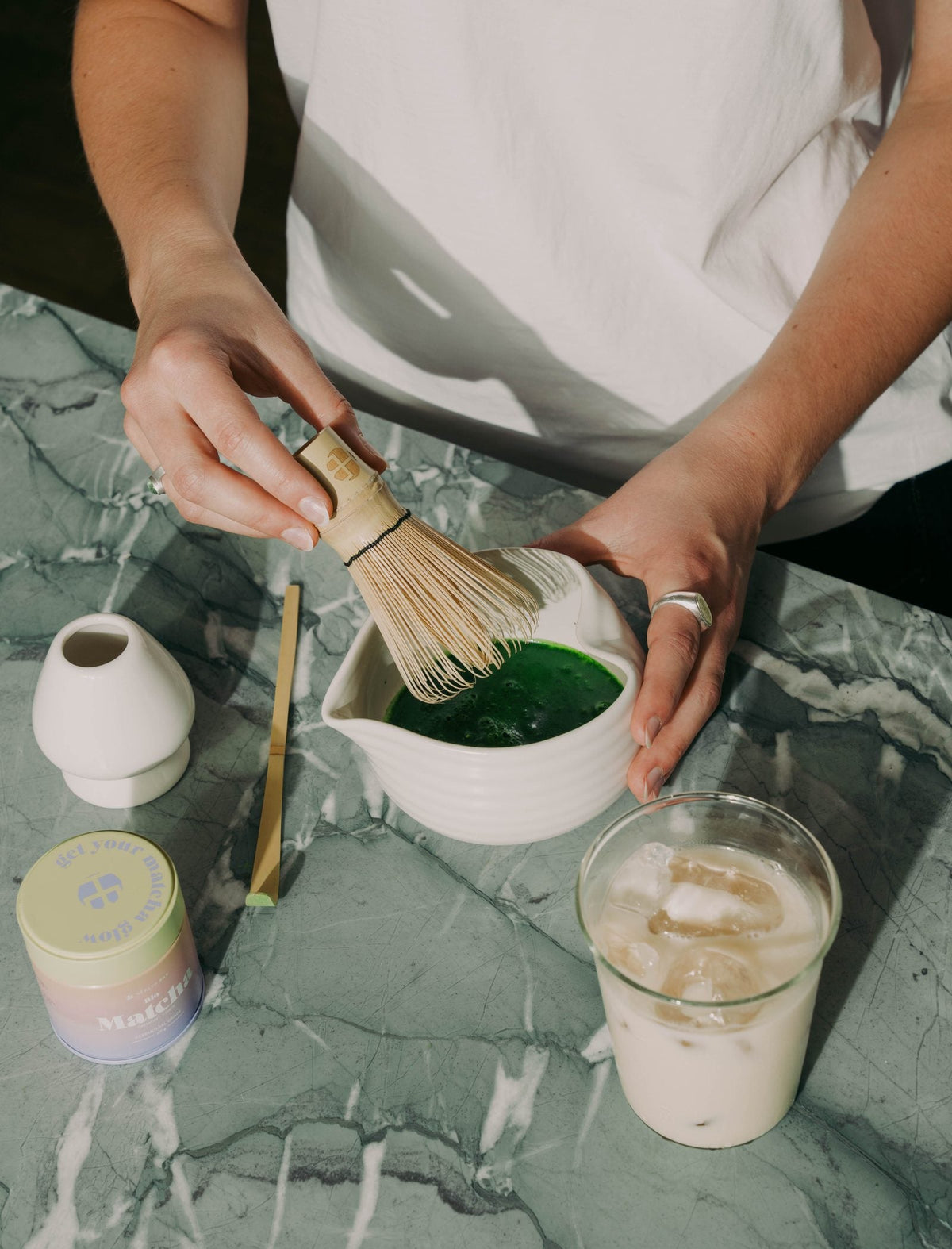
Unlike tea, matcha isn't steeped: you whisk the powder with water and drink the whole leaf. Put 2 g of matcha in a bowl, add a little water at 70–80 °C and whisk everything into a foam with the bamboo whisk using zigzag motions. A milk frother works instead of a whisk too, and for a latte you add warm milk. You'll find everything you need in our matcha equipment.

Dive into the world of matcha online in just 30 minutes – from the comfort of your own home! In our matcha workshop, you'll learn everything you need to know about our matcha.
Or watch our masterclass with Stefanie Giesinger.
Unopened, matcha keeps until the best-before date on the pack. Once opened, it tastes best in the first one to two months. It doesn't go off after that, but it gradually loses colour and aroma. You can still use it well for lattes or baking.
More on this: How long does matcha keep?
Airtight, dark, dry and cool, for example in the tightly closed tin in a kitchen cupboard, not next to the cooker or kettle. In summer the fridge can make sense if the tin is really airtight. Let it come to room temperature briefly before opening so that no condensation forms.
All tips: How to store matcha properly
Because every gram involves a lot of handwork: the tea plants are shaded for several weeks before the harvest, only the young leaves without stems and veins are processed, and a granite stone mill grinds only about 30 g of powder per hour.
Uji tencha has recently become much more expensive. Thanks to our long-standing partnership with our farm, we have still kept our prices the same in 2026. More on grinding: From tencha to matcha
No. Our Traditional Matcha is stronger than the Ceremonial, with a round, balanced umami, because leaves from the second harvest are added to those of the first. Matcha becomes harsh mainly through water that is too hot: at 70–80 °C it stays smooth.
You'll find the detailed comparison here: Ceremonial vs. Traditional matcha
From an organic tea farm in Uji, south of Kyoto, which has been run as a family business for generations. Uji is one of the oldest tea-growing regions in Japan: mist from the Uji and Kizu rivers keeps the tea plants moist and protects them from frost.
How our matcha is grown: The individual steps of matcha cultivation
Quite possibly. Matcha tastes different from steeped tea: creamy, mild and slightly sweet, with fine umami. Many people who don't otherwise drink tea get started with a matcha latte, matcha ice cream or matcha pancakes.
If you're unsure, try the 10 g size first. Partner cafés across Europe also serve our matcha.
Our matcha is packed in tinplate tins, not aluminum tins. We choose this packaging carefully to offer an optimal solution for storing matcha.
It's important that matcha packaging is airtight and opaque to preserve the freshness of the product.
It's worth mentioning that our empty tins are versatile and reusable. For example, they're perfect for storing spices. With our refill pouch, you can refill the tin again and again.
One serving of matcha (2 g) contains around 59 to 66 mg of caffeine, depending on the variety: a little more in the Organic Ceremonial Matcha, a little less in the Traditional Matcha. For comparison, EFSA states about 80 mg for an espresso and about 90 mg for a cup of filter coffee.
Our Mulberry is completely caffeine-free, and hojicha is roasted and much lower in caffeine.
Mulberry Matcha and matcha are prepared the same way but come from two different plants. We compare origin, caffeine, taste and preparation side by side.

Soy, almond, oat or coconut: how each plant milk tastes in a matcha latte. With an overview table, a basic recipe and tips on which matcha suits which milk.
If your matcha tastes harsh, the water is usually too hot. The right temperature for warm and iced matcha, tricks without a thermometer and other reasons for sharper notes.


