

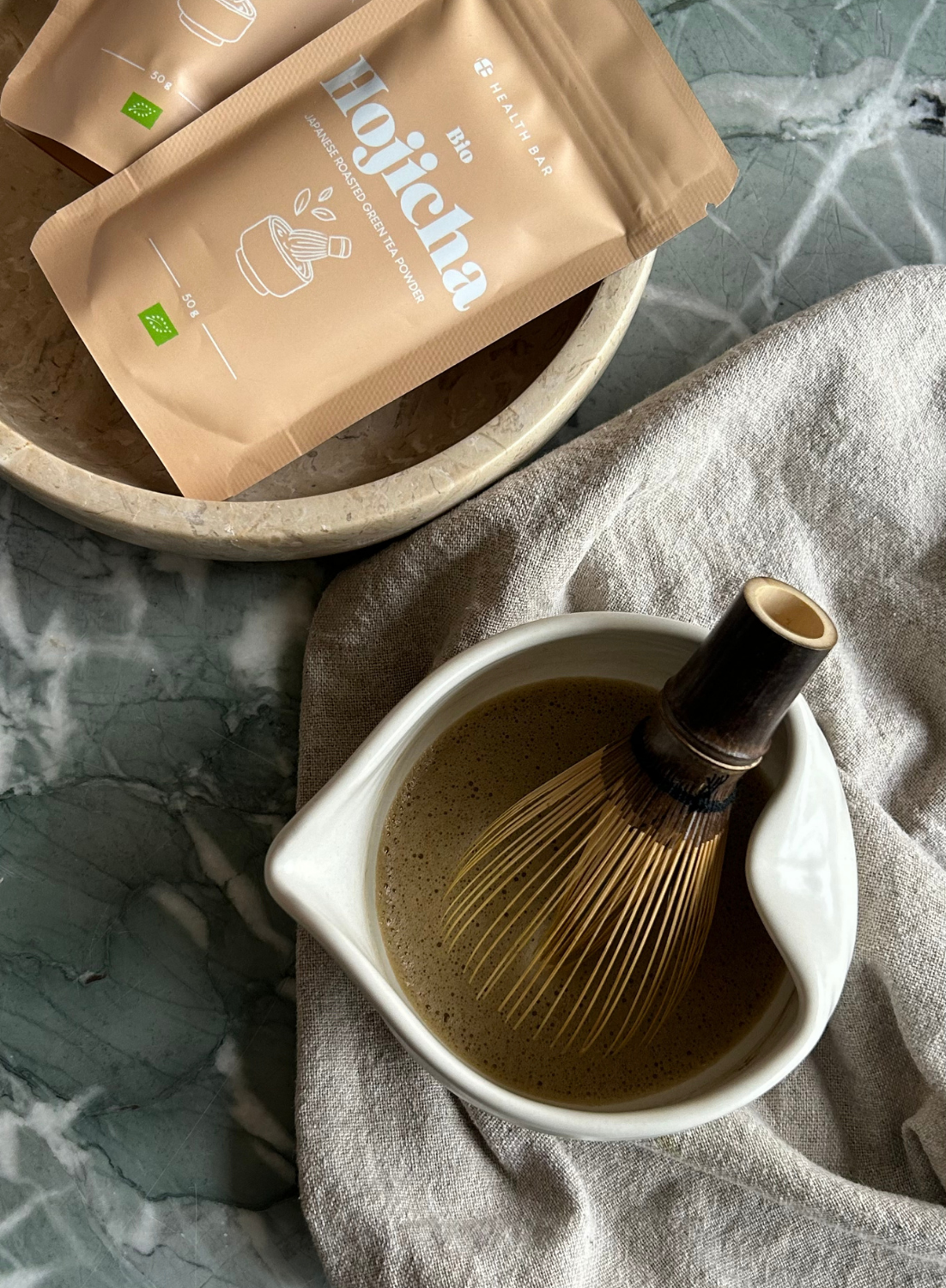
Hojicha Guide
Hojicha Pulver kaufen – worauf du achten solltest
Hojicha Pulver kaufen klingt erstmal einfach – aber wer einmal billiges Pulver probiert hat, weiß: der Unterschied ist enorm. Zwischen einem Hojicha der cremig, aromatisch und warm schmeckt, und einem der bitter, körnig oder flach ist, liegen oft nur ein paar entscheidende Qualitätsmerkmale. Hier erfährst du worauf es wirklich ankommt.
Was ist Hojicha Pulver – und warum Pulver?
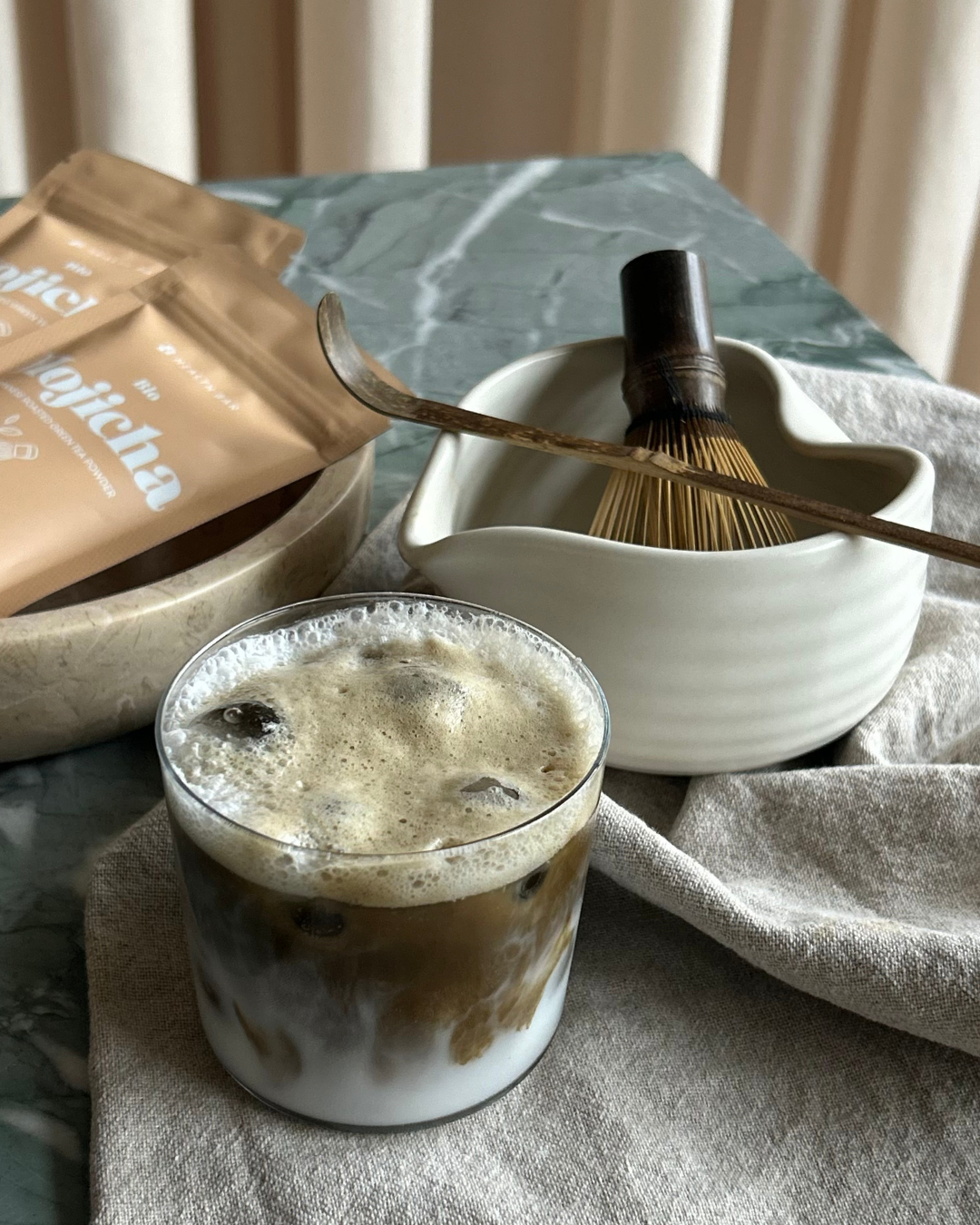
Hojicha gibt es in zwei Formen: als ganze oder grob geschnittene Blätter zum Aufbrühen, und als feines Pulver. Für einen Hojicha Latte, für Rezepte oder für die schnelle Zubereitung ist das Pulver die bessere Wahl – es löst sich vollständig auf, lässt sich aufschäumen und gibt dem Getränk eine cremige Textur die mit Blättern nicht erreichbar ist.
Wichtig: Hojicha Pulver ist nicht dasselbe wie gemahlener Hojicha Tee aus dem Supermarkt. Die Mahlfeinheit und die Qualität der Ausgangsblätter machen den entscheidenden Unterschied.
5 Kriterien für gutes Hojicha Pulver
1. Herkunft Japan
Hojicha hat seinen Ursprung in Japan, wo der Tee traditionell geröstet wird. Japanischer Hojicha bringt das charakteristische Röstaroma mit, das ihn so unverwechselbar macht. Produkte aus anderen Ländern sind oft günstiger, aber geschmacklich nicht immer vergleichbar. Achte auf eine klare Herkunftsangabe auf der Verpackung.
2. Bio-Zertifizierung
Tee nimmt Schadstoffe aus dem Boden und aus Pestiziden direkt auf – gerade bei einem Pulver das vollständig konsumiert wird ist Bio-Qualität kein Nice-to-have, sondern ein klares Qualitätsmerkmal.
3. Feine Mahlung
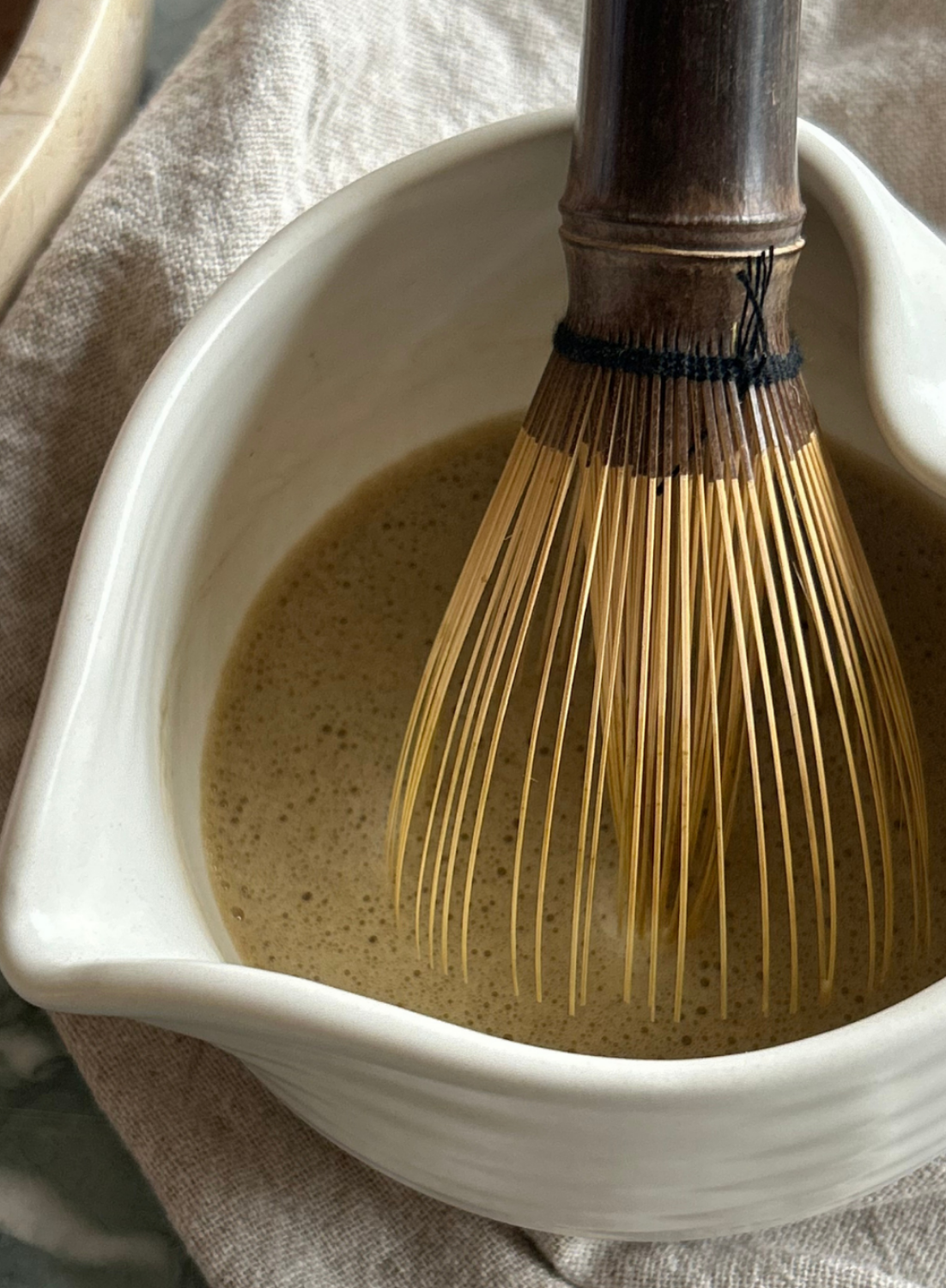
Je feiner das Pulver gemahlen ist, desto cremiger löst es sich auf und desto besser eignet es sich für Lattes und Rezepte. Grobes Pulver klumpt, setzt sich ab und hinterlässt eine körnige Textur im Getränk. Ein gutes Hojicha Pulver sollte sich samtig anfühlen und sich vollständig im Wasser auflösen.
4. Röstgrad und Farbe
Die Farbe von Hojicha Pulver ist ein guter Indikator für die Qualität des Röstprozesses. Ein hochwertiges Pulver hat eine warme, gleichmäßige Brauntönung – weder zu hell (zu wenig geröstet, flacher Geschmack) noch zu dunkel (zu stark geröstet, bitter). Der Geruch sollte sofort an Karamell und geröstetes Getreide erinnern.
5. Kein Zusatz von Aromen oder Zucker
Manche günstige Hojicha-Produkte setzen auf künstliche Röst- oder Karamellaromen um das natürliche Aroma zu imitieren. Das ist auf der Zutatenliste erkennbar – gutes Hojicha Pulver enthält genau eine Zutat: Hojicha.
Hojicha Pulver vs. Hojicha Blätter – was kaufe ich?
Wer hauptsächlich Hojicha Latte trinken möchte oder Hojicha in Rezepten verwenden will, ist mit dem Pulver besser bedient. Wer den klassischen japanischen Tee mag und die Zubereitung als Ritual schätzt, greift zu den Blättern.
So erfüllt unser Bio Hojicha diese Kriterien:
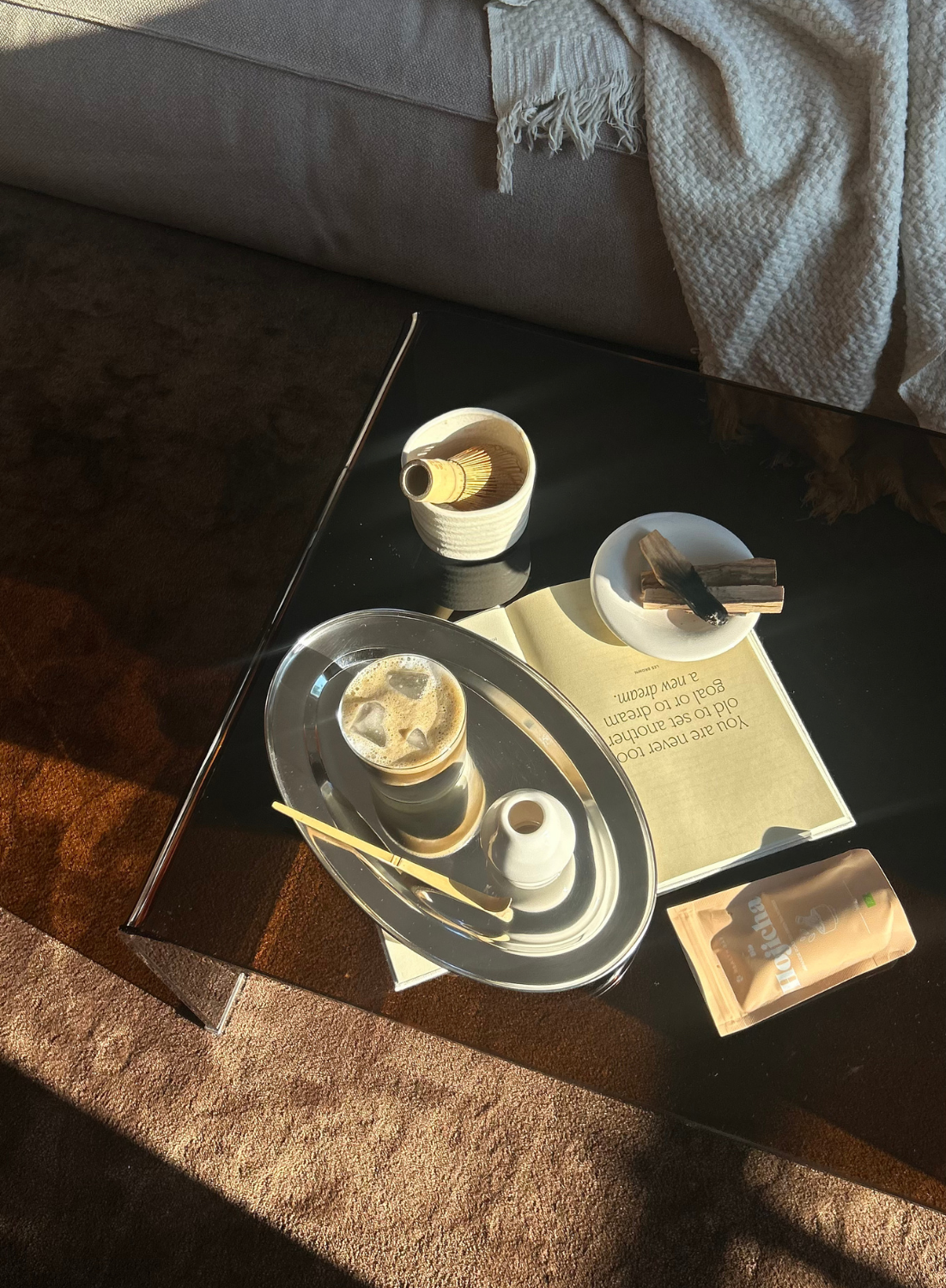
Genau an diesen Punkten haben wir unseren Hojicha ausgerichtet. Er stammt aus Japan, wird schonend geröstet und ist bio-zertifiziert – für uns keine Selbstverständlichkeit, sondern Grundvoraussetzung. Denn gerade weil bei Hojicha das ganze Blatt verarbeitet wird, legen wir größten Wert auf saubere Herkunft und geprüfte Qualität.
Das Ergebnis: ein cremiger, vollständig löslicher Hojicha, der sich ebenso für Lattes wie fürs Backen und Kochen eignet – unkompliziert, vielseitig und in einer Qualität, auf die du dich verlassen kannst.
Wie viel Hojicha Pulver brauche ich?
Als Orientierung: Für einen Hojicha Latte werden ca. 1–2g Pulver pro Portion verwendet. Das bedeutet:
- 10g Hojicha Pouch → ca. 5–10 Portionen – ideal zum Ausprobieren
- 50g Hojicha Pouch → ca. 25–50 Portionen – für den regelmäßigen Genuss
Wer Hojicha zum ersten Mal ausprobiert, startet am besten mit der kleinen 10g Variante. Wer bereits weiß dass er Hojicha mag, ist mit dem 50g Pouch langfristig besser und günstiger aufgestellt.
Matcha und Hojicha: Zwei Tees für unterschiedliche Momente
Matcha und Hojicha sind keine Konkurrenten – sie sind Ergänzungen. Wer beide im Schrank hat, hat für jeden Moment den richtigen Tee: morgens der fokussierte Matcha, abends der entspannte Hojicha.
Wer noch unsicher ist, welcher der richtige Einstieg ist – unser Discovery Set enthält beide und ist der einfachste Weg, selbst herauszufinden was besser passt.
Häufige Fragen
Ist Hojicha Pulver dasselbe wie Matcha?
Nein – beide kommen aus der Teepflanze, aber der Prozess ist völlig unterschiedlich. Matcha wird aus beschatteten, jungen Blättern gemahlen. Hojicha wird geröstet. Geschmacklich, optisch und im Koffeingehalt sind sie grundverschieden. Mehr dazu in unserem Artikel Hojicha vs. Matcha.
Wie lange ist Hojicha Pulver haltbar?
Ungeöffnet ca. 12–18 Monate. Nach dem Öffnen sollte es luftdicht und lichtgeschützt aufbewahrt werden – am besten in der Originaldose oder einem dunklen Behälter. Innerhalb von 4–6 Wochen nach dem Öffnen verbrauchen für optimales Aroma.
Kann ich Hojicha Pulver auch zum Backen verwenden?
Ja – Hojicha Pulver eignet sich hervorragend für Cookies, Muffins, Overnight Oats oder Porridge. Das Röstaroma verleiht Backwaren eine warme, nussige Note ohne dominant zu wirken.
Schmeckt Hojicha bitter?
Nein – das ist einer der größten Unterschiede zu Matcha und Kaffee. Hojicha ist von Natur aus mild und süßlich, fast ohne Bitterstoffe. Wer Matcha zu intensiv findet, ist bei Hojicha oft positiv überrascht.
Hojicha Bundles entdecken:
-
 Organic Hojicha Powder – Roasted Green TeaOrganic Hojicha Powder – Roasted Green Tea Kyoto und Kagoshima
- Regular price
- ab
4,90€ - Unit price
49,00€ / 100g
-
Up to -10%
 Organic Matcha & Hojicha Powder Sample SetOrganic Matcha & Hojicha Powder Sample Set
- Regular price
-
25,92€ - Regular price
-
28,80€ - Selling price
-
28,80€ 25,92€

