

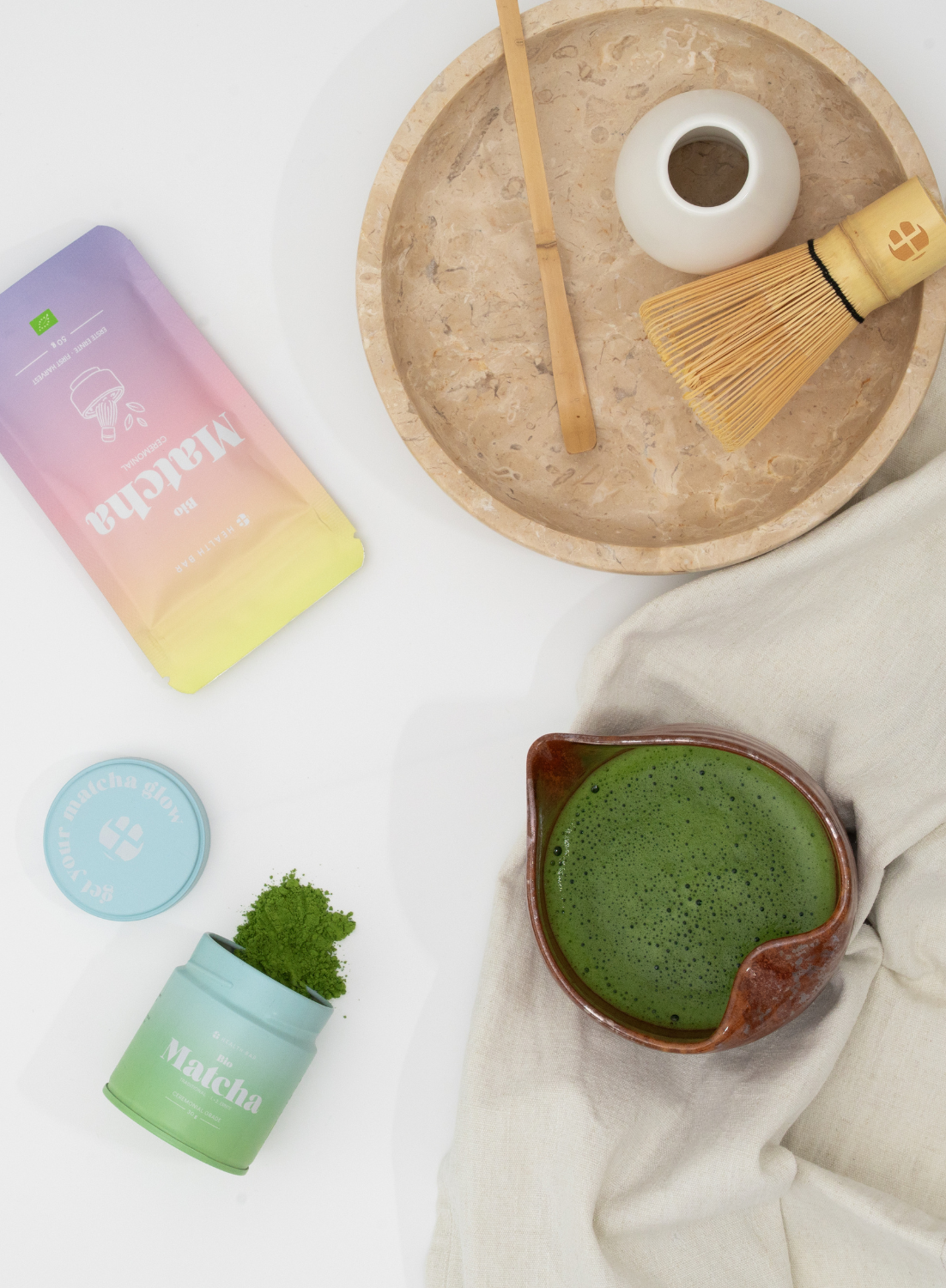
Ceremonial vs. Traditional Matcha
Which harvest is actually in your matcha?
Ceremonial, Traditional, Culinary – matcha comes with many labels. The difference can be explained with a single question: when were the tea leaves harvested?
We distinguish between Ceremonial Matcha from the 1st harvest and Traditional Matcha from the 1st & 2nd harvest. Culinary often comes from later harvests.
Ceremonial vs. Traditional Matcha
The tea plant can develop new shoots several times over the course of the year. The first harvest takes place in spring, followed by further harvests in summer. Leaf development and flavor profile change throughout the season.
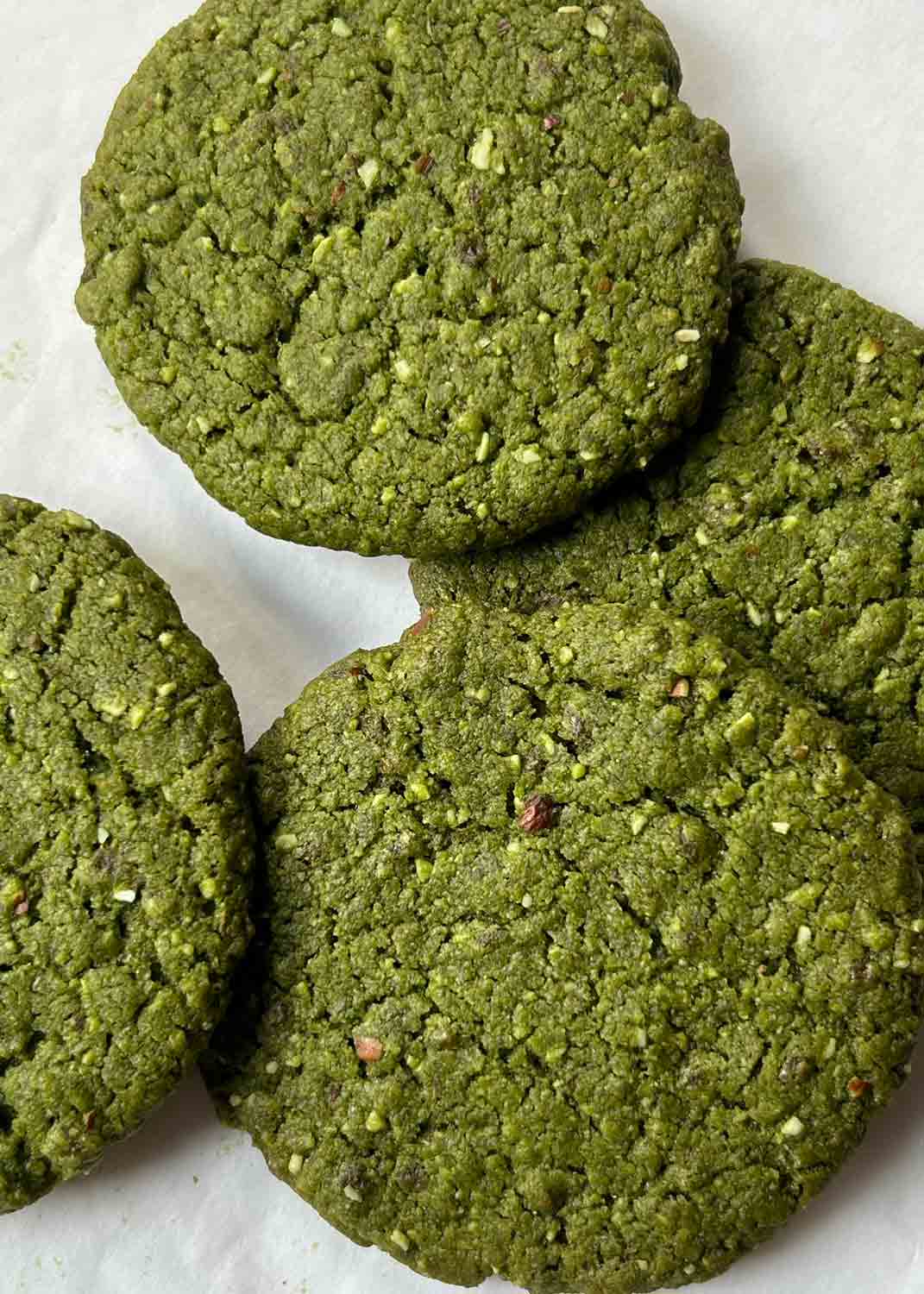
What Is Culinary Matcha?
The term culinary matcha is not an officially defined quality grade. Such matchas often come from later harvests (usually the third or fourth harvest of the year).
It's typically used for matcha intended mainly for desserts, smoothies, baking and other recipes. The taste is bolder, more robust and noticeably more bitter. The color is often a more muted, olive-green to slightly yellowish green, and the texture can be minimally coarser than fine matcha. Culinary isn't simply "worse" – it's used differently. The bolder profile can even be desirable here, because the matcha holds its own well against milk, fruit or other ingredients.
Der Unterschied auf einen Blick
| Merkmal | Ceremonial | Traditional | Culinary |
|---|---|---|---|
| Ernte | 100 % 1. Ernte | 1. und 2. Ernte | häufig spätere Ernte, z. B. die 3. |
| Geschmack | mild, cremig, fein umami | kräftiger, intensiver, vollmundig | kräftig und präsent |
| Pur trinken | ja | ja, wenn du es intensiver magst | eher nicht |
| Kochen und Backen | geeignet | geeignet | geeignet |
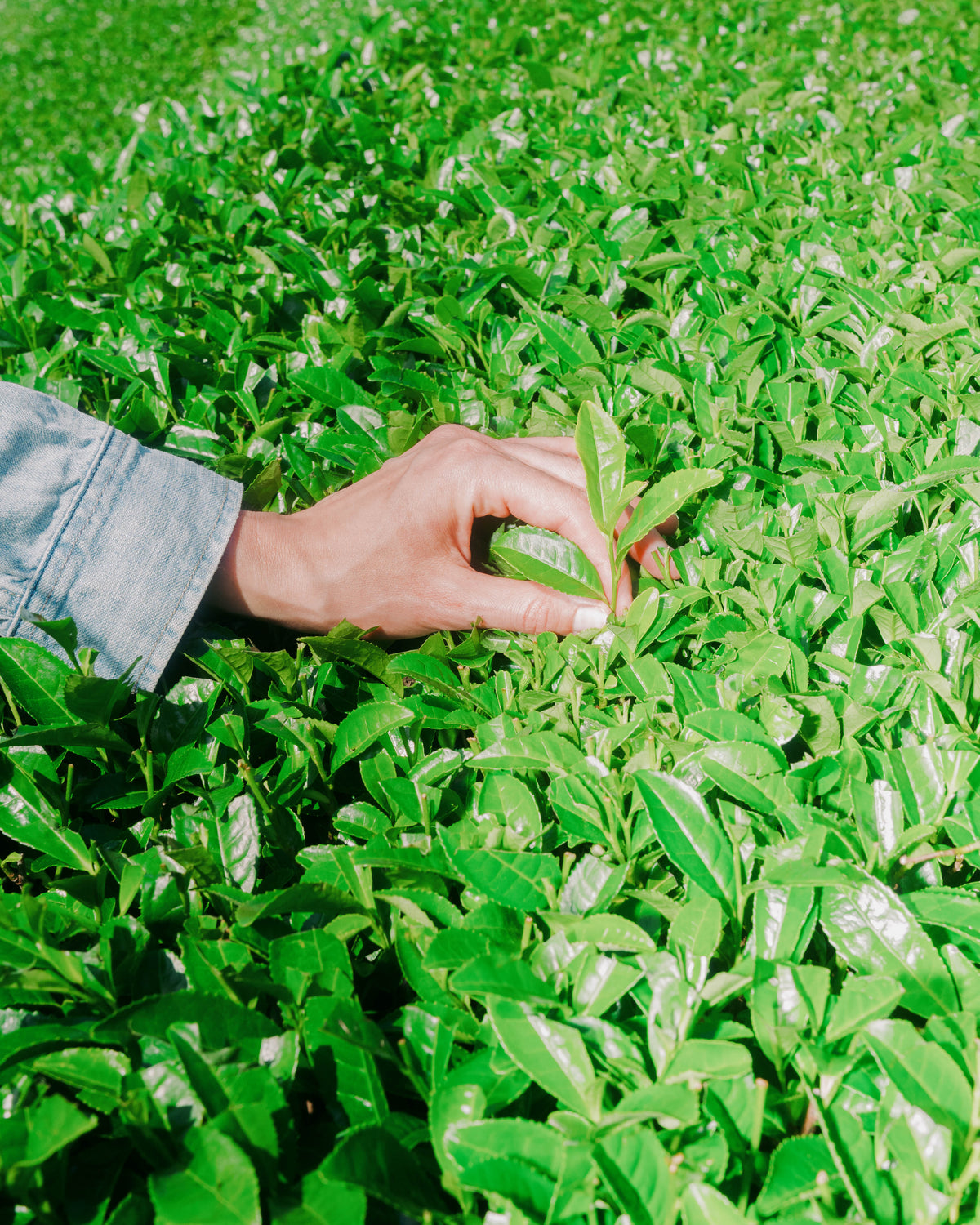
What Makes the Difference
- The harvest: The first, second or third harvest influences the later flavor profile.
- The cultivar: Different cultivars bring different aromas and characters.
- The origin: Where the tea is grown plays an important role in its properties.
- The processing: Shading, tencha processing and grinding are among the crucial steps on the way to matcha.
- The taste: In the end, what matters is what lands in your cup – and what fits your personal matcha ritual.
Which Matcha Suits You?
Our tip: there's no single matcha that's right for everyone.
The 1st harvest offers a particularly fine and mild profile. The combination of the 1st and 2nd harvest brings more strength and presence. The best matcha is the one that fits your ritual.
Matcha CeremonialUji, Kyoto – 1st Harvest
Mild, creamy and balanced. The all-rounder from the first harvest – just as good plain as in a matcha latte.
Sweet milk chocolate, fresh spring green notes, creamy umami & a silky finish.
- Flavor
- sweet
- nutty
- Intensity
- mild
- bold
- Effect
- calming
- energizing
Matcha TraditionalUji, Kyoto – 1st & 2nd Harvest
Bold and full of character, with a slightly bitter note. Holds its own in any milk, which makes it our favorite for lattes.
Intense green tea, delicate umami, subtle vegetal notes & a clear finish.
- Flavor
- sweet
- nutty
- Intensity
- mild
- bold
- Effect
- calming
- energizing
Matcha OkumidoriUji, Kyoto – Single Cultivar
Our rarest variety: gentle, silky and naturally sweet, with rounded umami and almost no bitterness. Best enjoyed plain with water.
Sweet caramel, roasted chestnut, fresh green notes & intense umami.
- Flavor
- sweet
- nutty
- Intensity
- mild
- bold
- Effect
- calming
- energizing
Mulberry MatchaJapan – Mulberry Leaves, Caffeine-Free
Caffeine-free yet full-bodied: finely ground white mulberry leaves, gentle and naturally sweet. For anyone who doesn't want to give up their ritual in the evening either.
Delicate grain notes, fresh herbs, soft green leaves, natural sweetness & a fine finish.
- Flavor
- sweet
- nutty
- Intensity
- mild
- bold
- Effect
- calming
- energizing


FAQs
Is Ceremonial Matcha Always from the First Harvest?
No. "Ceremonial" is not an officially protected Japanese quality grade. At Health Bar, Ceremonial Matcha stands for our matcha made from 100% first harvest.
Is Traditional Matcha Worse Than Ceremonial?
No. Our Traditional uses leaves from the first and second harvest, giving it a bolder flavor profile.
Is Culinary Matcha Always from the Third Harvest?
No. Culinary is not an official Japanese classification. Depending on the supplier, different harvests can be used. Culinary matchas often come from later harvests.
Which Matcha Is Best for Matcha Latte?
Traditional is especially well suited for a bolder latte. If you prefer a milder, creamier latte, Ceremonial also works well.
Discover matcha & hojicha:
-
Bestseller
 Organic Ceremonial Matcha TeaOrganic Ceremonial Matcha Tea
- Regular price
-
£9.00 £136.00 - Regular price
-
- Selling price
-
£9.00 £136.00 - Unit price
-
£90.00 / Per 100g
-
 Organic Hojicha Powder – Roasted Green TeaOrganic Hojicha Powder – Roasted Green Tea
- Regular price
-
£4.50 £13.50 - Regular price
-
- Selling price
-
£4.50 £13.50 - Unit price
-
£45.00 / Per 100g
-
For beginners
 Organic Ceremonial Matcha Tea – 30g (can)Organic Ceremonial Matcha Tea – 30g (can)
- Regular price
-
£27.00 - Regular price
-
- Selling price
-
£27.00 - Unit price
-
£90.00 / Per 100g

-
Up to -15%
 Organic Matcha Starter Duo Set – Set for Traditional PreparationOrganic Matcha Starter Duo Set – Set for Traditional Preparation
- Regular price
-
£37.50 - Regular price
-
£44.21 - Selling price
-
£44.21 £37.50
-
LIMITED
 Okumidori Organic Matcha Tea – Single Cultivar – 30gOkumidori Organic Matcha Tea – Single Cultivar – 30g
- Regular price
-
£31.50 - Regular price
-
- Selling price
-
£31.50 - Unit price
-
£105.00 / Per 100g
-
 Organic Matcha Tea, TraditionalOrganic Matcha Tea, Traditional
- Regular price
-
£7.50 £99.50 - Regular price
-
- Selling price
-
£7.50 £99.50 - Unit price
-
£75.00 / Per 100g
-
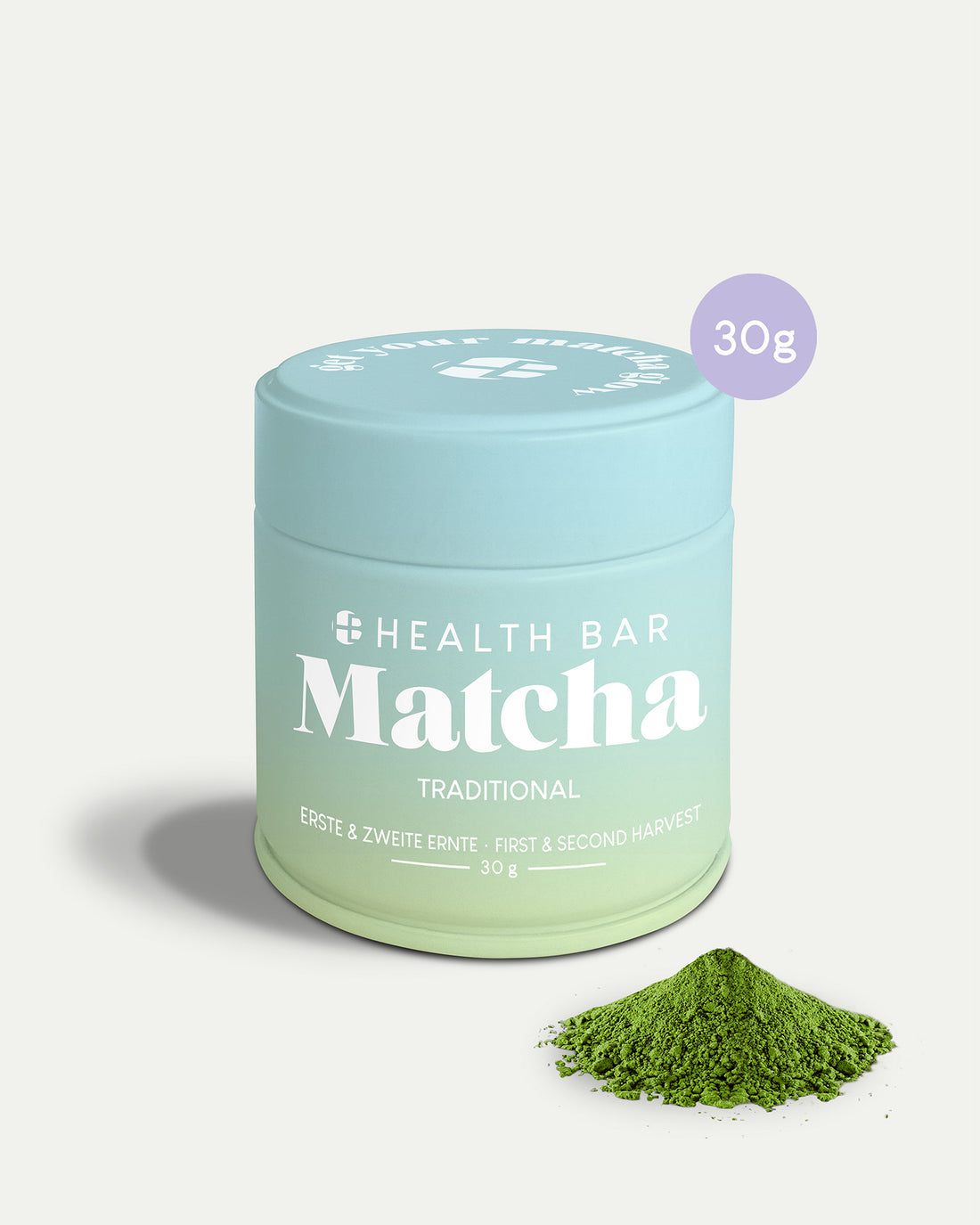 Organic Traditional Matcha Tea – 30g (can)Organic Traditional Matcha Tea – 30g (can)
- Regular price
-
£23.50 - Regular price
-
- Selling price
-
£23.50 - Unit price
-
£78.33 / Per 100g
-
CAFFEINE-FREE
 Organic Mulberry Matcha Tea – Caffeine-FreeOrganic Mulberry Matcha Tea – Caffeine-Free
- Regular price
-
£12.50 - Regular price
-
- Selling price
-
£12.50 - Unit price
-
£41.67 / Per 100g


