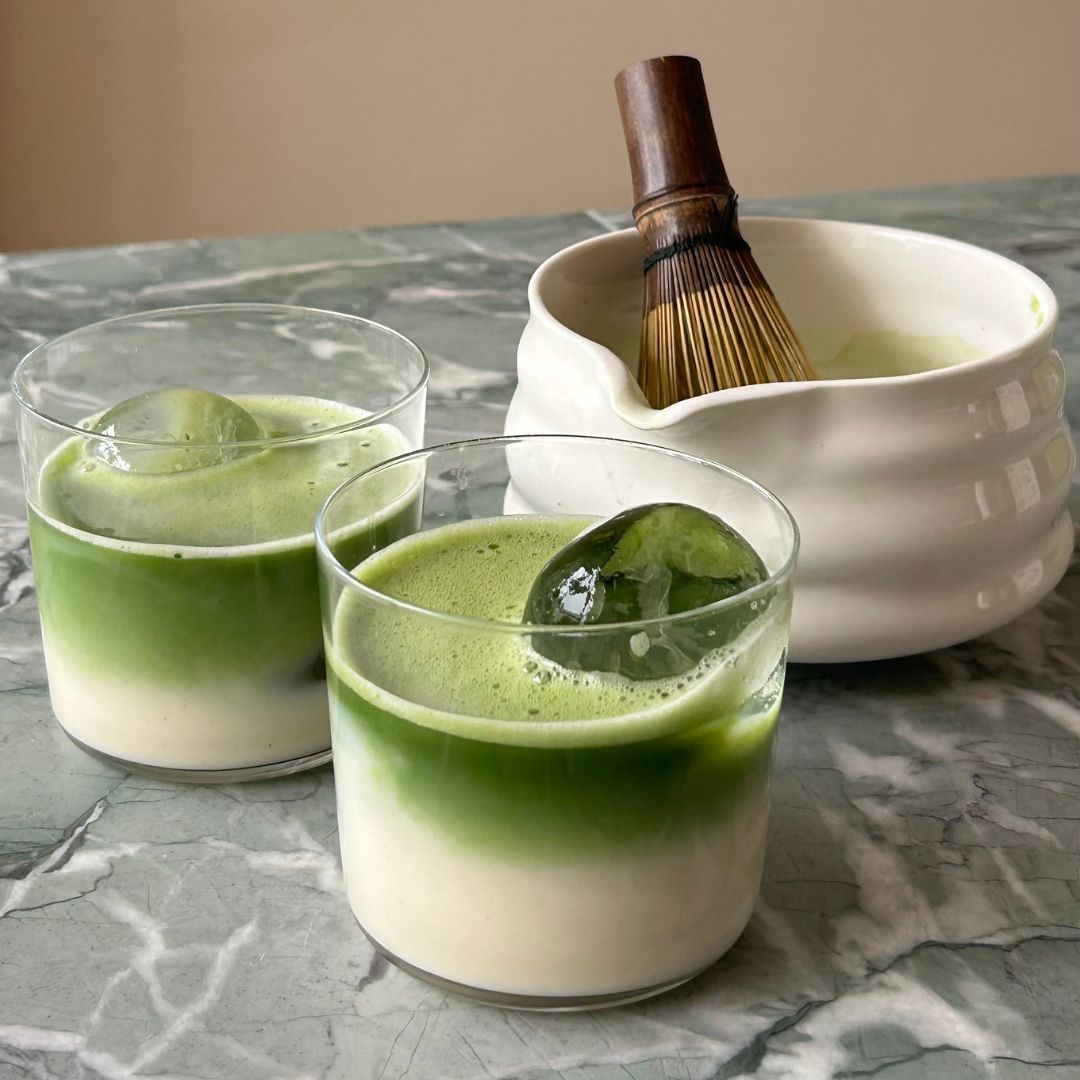

A beloved tea in Japanese culture for years, matcha is now conquering the world. This is not only due to its stunning color, but also to its powerful stimulating effect. Matcha is a Japanese green tea used in the traditional tea ceremony. Found in powder form, its vibrant green color immediately draws attention, but its true highlight is its flavor – an intense characteristic that often takes some getting used to.
The fact that matcha is powdered can be intimidating for some people, as the preparation is somewhat different than with a standard tea bag.
It is a ritual, an experience, and almost like a meditation, which often relaxes me, and I personally can enjoy my matcha even more happily after preparation and start the day in a more balanced way.
How do you prepare matcha?
In Japan there is a special kit for the preparation of matcha, which consists of a Ceramic bowl for matcha It consists of a chawan, a chasen (a small bamboo whisk for stirring), and a bamboo spoon. It's not a problem if you don't have all of these; they can easily be replaced with kitchen utensils such as a cup, teaspoon, and milk frother.
The traditional method:
A small amount of the Matcha powder Place the powder in a small bowl and add hot water – not boiling water. It's best to start by adding just a little hot water to the powder and mixing it into a paste. Once the powder and water are perfectly blended, slowly add the remaining water. Then, whisk the mixture with a bamboo whisk until smooth and frothy. No milk or sweetener is added to this traditional method.
The popular Matcha Latte:
This is one of the most popular options, where the matcha is simply prepared traditionally, as described above, but with the addition of frothed milk. It is particularly suitable for matcha beginners to better familiarize themselves with the taste.
Preparation:
1 teaspoon of matcha powder
½ cup vegan milk
Optional: 1 teaspoon maple syrup
Froth the milk.
Pour some matcha into your favorite mug. Fill 1/3 of the mug with water no hotter than 80 degrees Celsius (no hotter, to preserve the nutrients). Using a whisk (chasen), whisk the matcha until the powder has dissolved and the drink becomes frothy. Add maple syrup if desired, and finally top with the remaining milk.
The modern iced matcha:
A recipe that is simply ideal for warmer days and provides you with the energy and nutrients you need.
Preparation:
1 cup vegan milk (Tip: rice – coconut milk)
1-1 ½ teaspoon of matcha powder
1/3 cup water
1-3 ice cubes
A little maple syrup (optional)
Whisk the matcha and water with a matcha whisk (chasen) until smooth. Place ice cubes in a glass, add the matcha, and top with vegan milk.
Normally, when matcha is whisked with a bamboo whisk (chasen), a fine foam forms on the surface of the drink.This foam is created by the air that is incorporated into the matcha during whisking, and by the proteins contained in the tea, which mix with the air.
If no foam forms, this can have various reasons:
1. Matcha Quality: High-quality matcha has a better ability to create foam due to its finer texture and higher protein concentration. Lower-quality matcha may not produce enough foam.
2. Water quality: Water quality can also affect foam formation. Ideally, the water should be soft, as hard water can impair foam formation.
3. Water temperature: The ideal water temperature for whisking matcha should be between 70°C and 80°C. Water that is too hot can impair the taste of the matcha and affect foam formation.
4. Whisking Technique: Whisking matcha correctly requires a specific technique. The bamboo whisk should be used in a Z-shaped motion to incorporate air and create a foam. Incorrect technique can result in insufficient foam.
If you're looking for high-quality matcha, you've come to the right place. In our Shop You can purchase our in-house brand. It not only has beautiful packaging, but it's also top premium quality and certified organic, which was very important to us.