

Notify me when available
We will email you as soon as this product is back in stock.
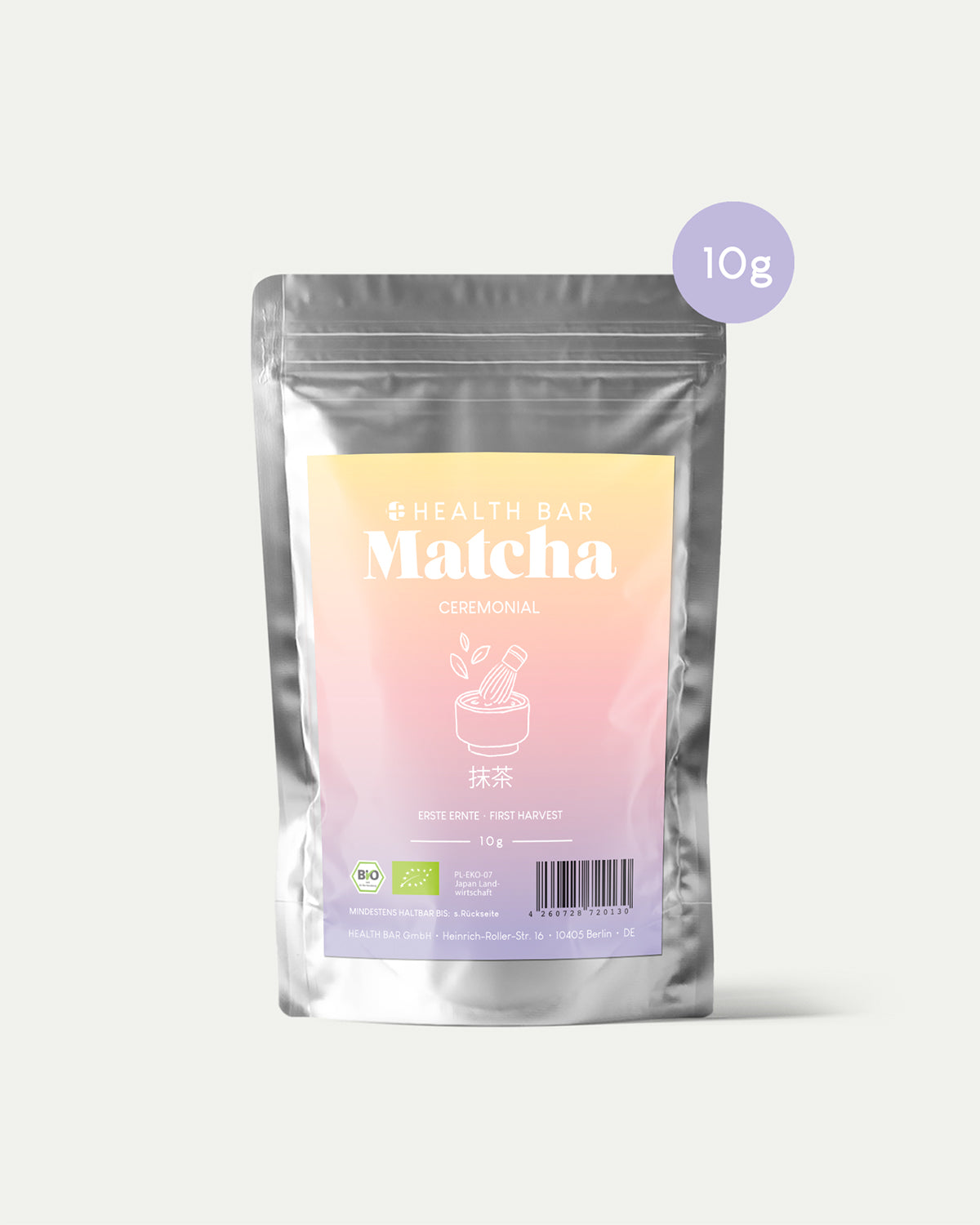
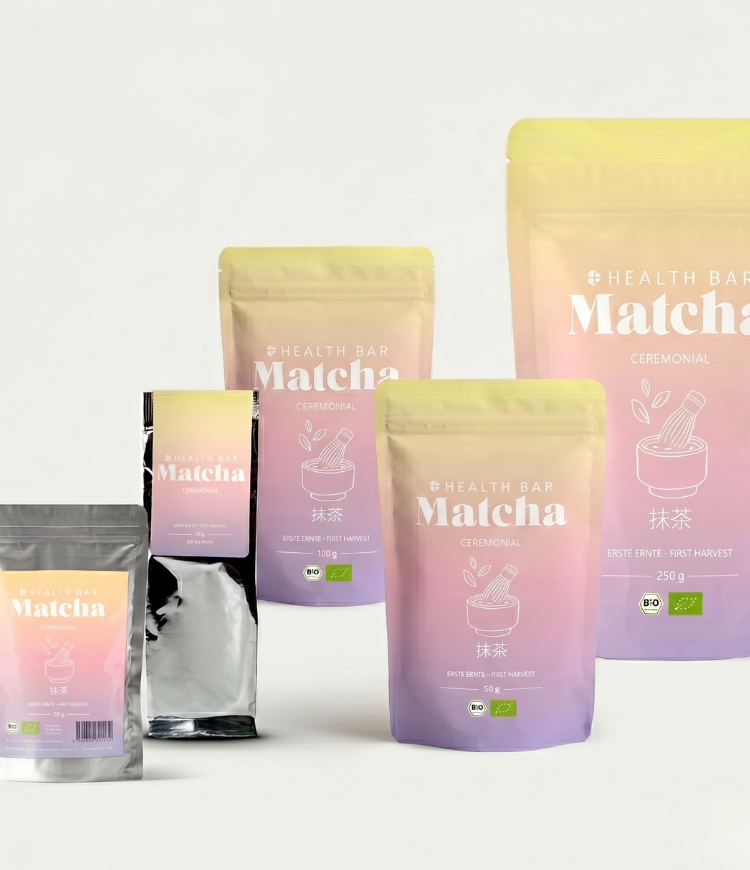
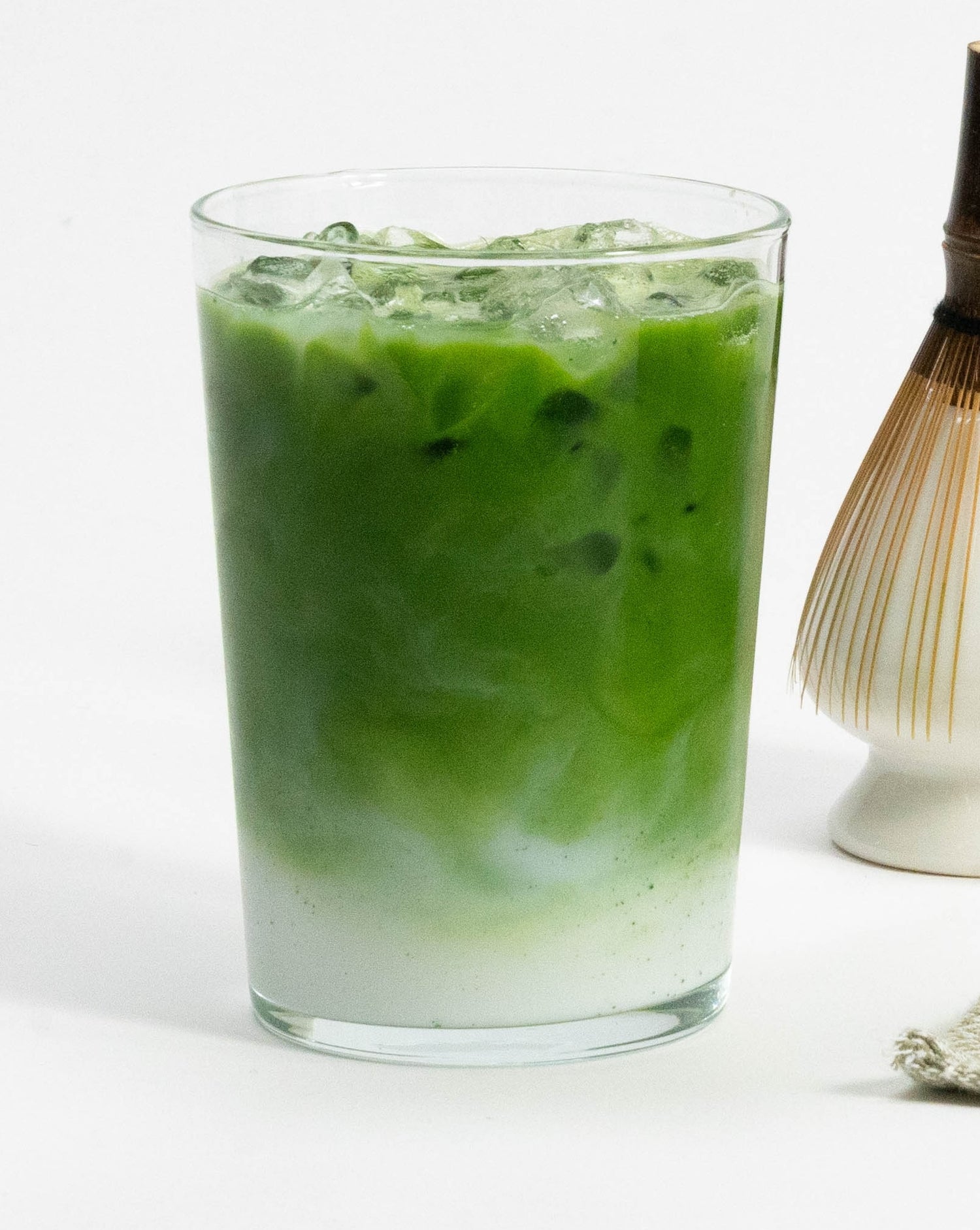
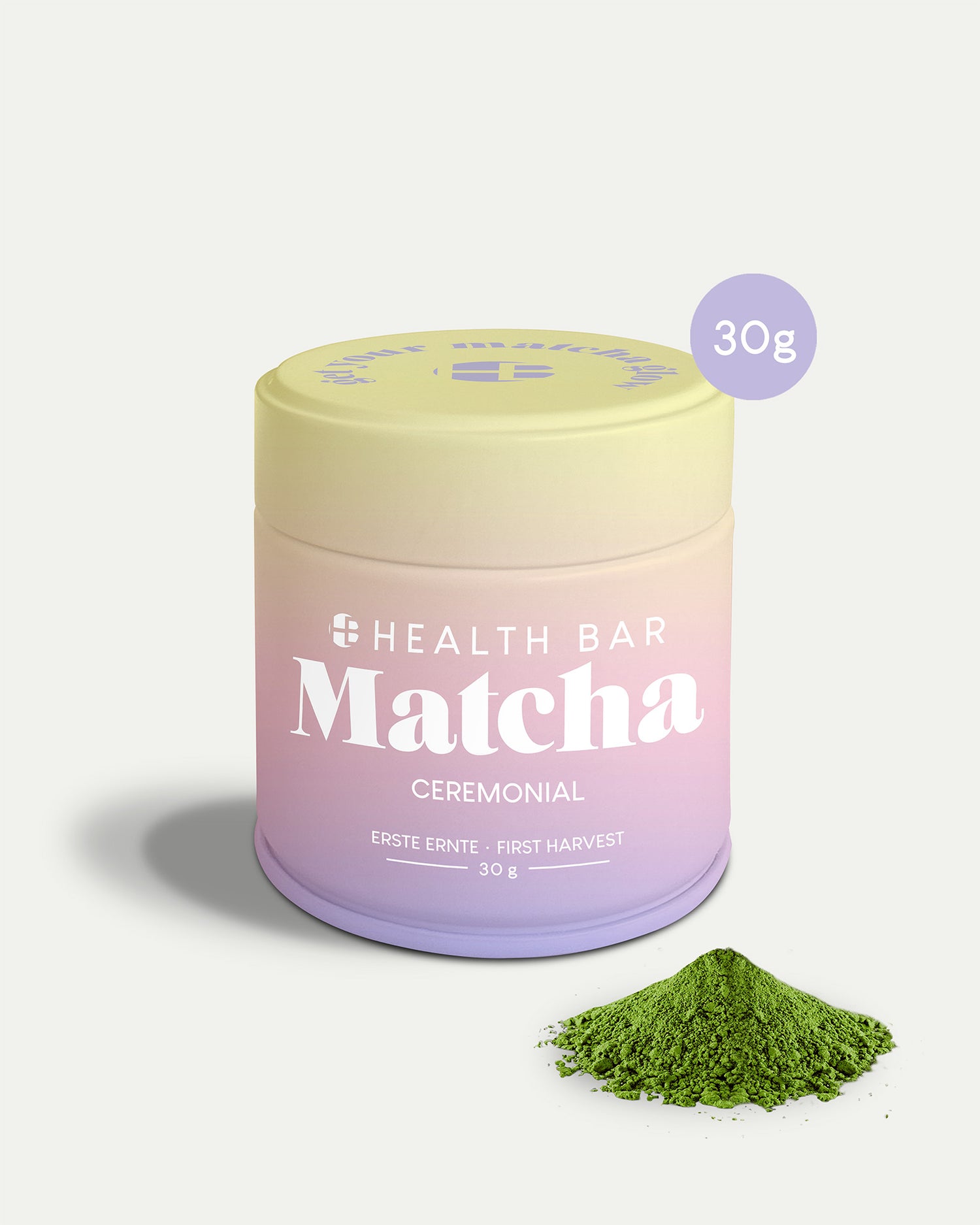

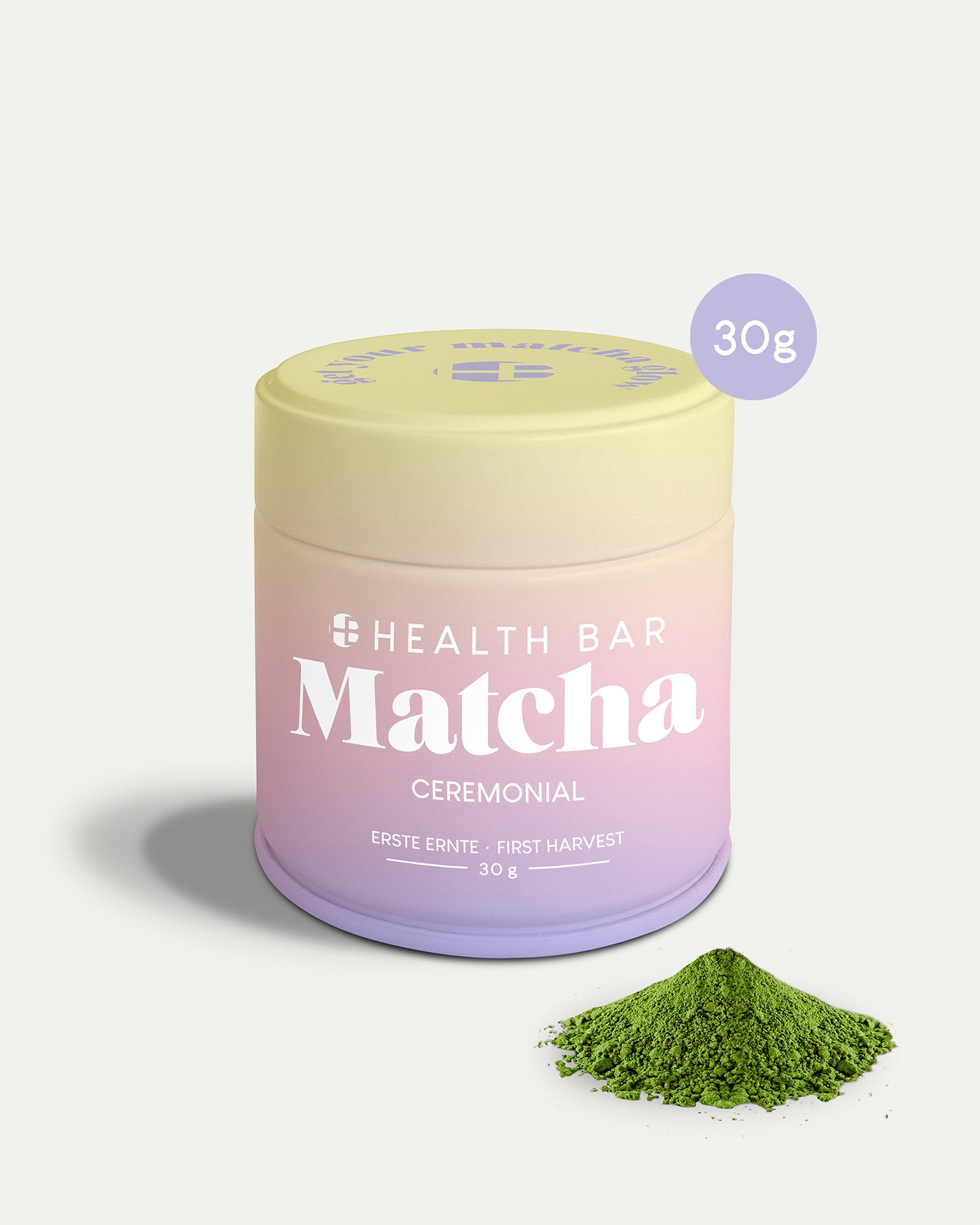
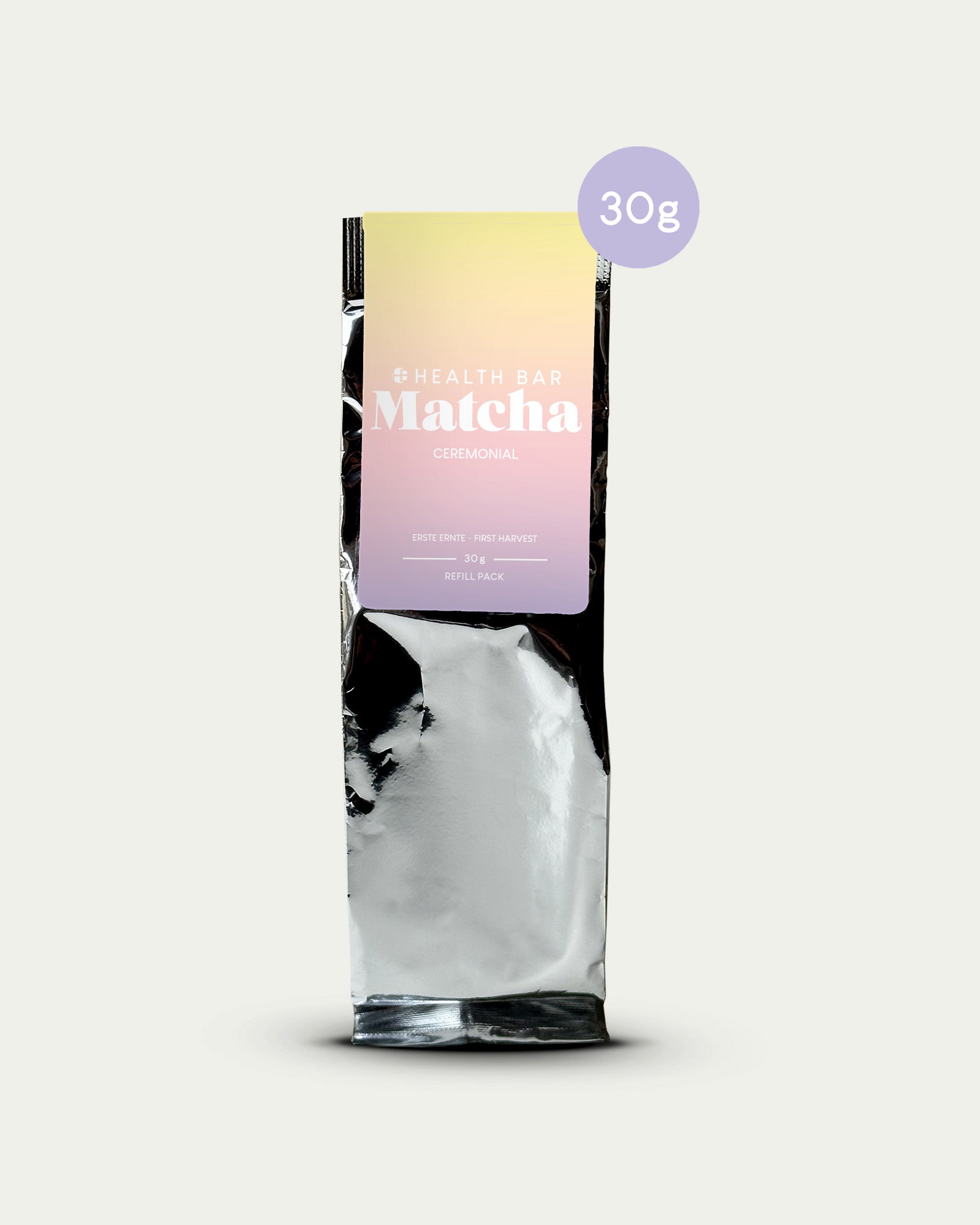
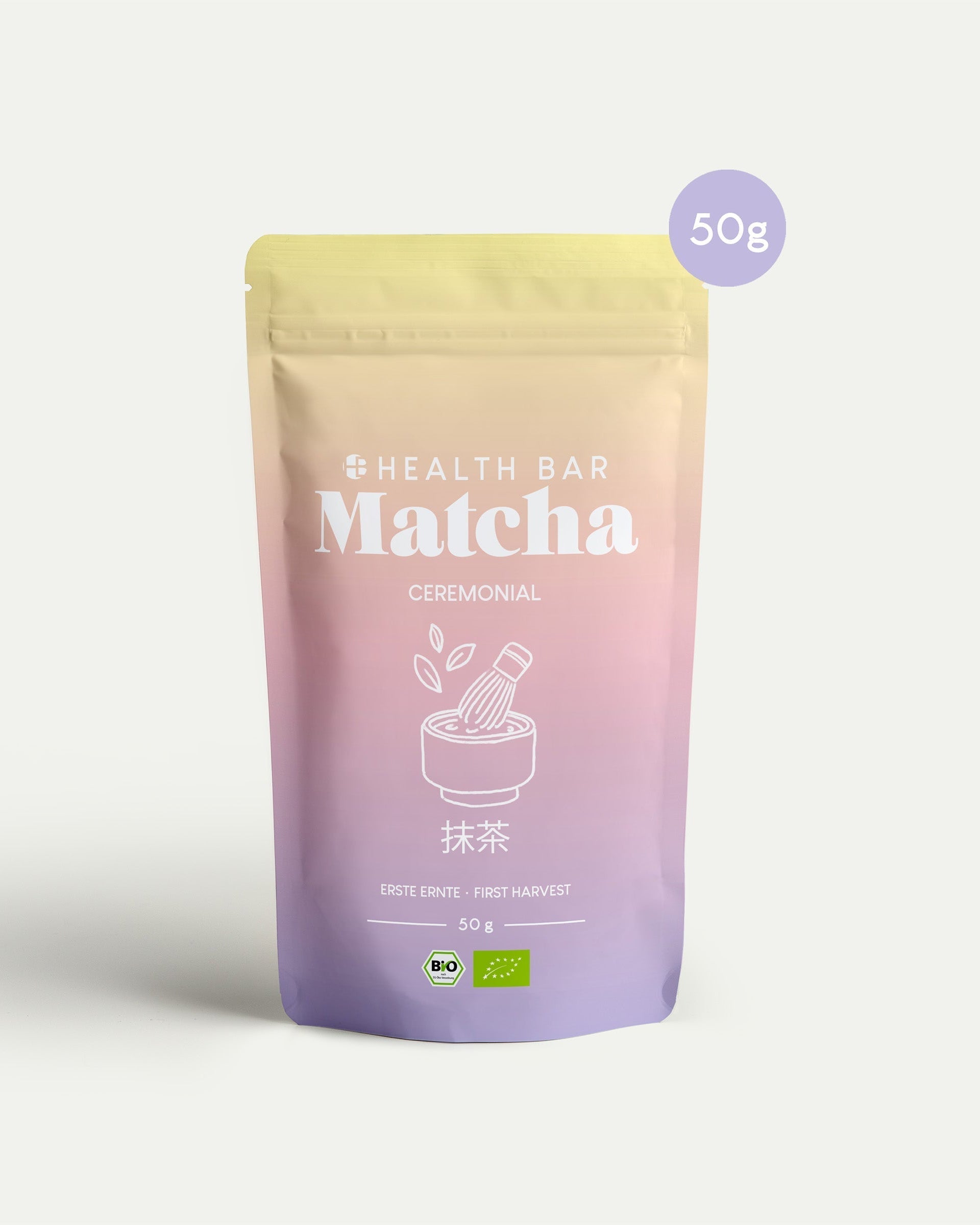
Organic Ceremonial Matcha Tea
- Regular price
-
£9.00 approx. 5 cups · £1.80 per cup - Regular price
-
- Selling price
-
£9.00 approx. 5 cups · £1.80 per cup - Unit price
-
£90.00 / Per 100g
Delivery time within GB: 4 - 5 working days
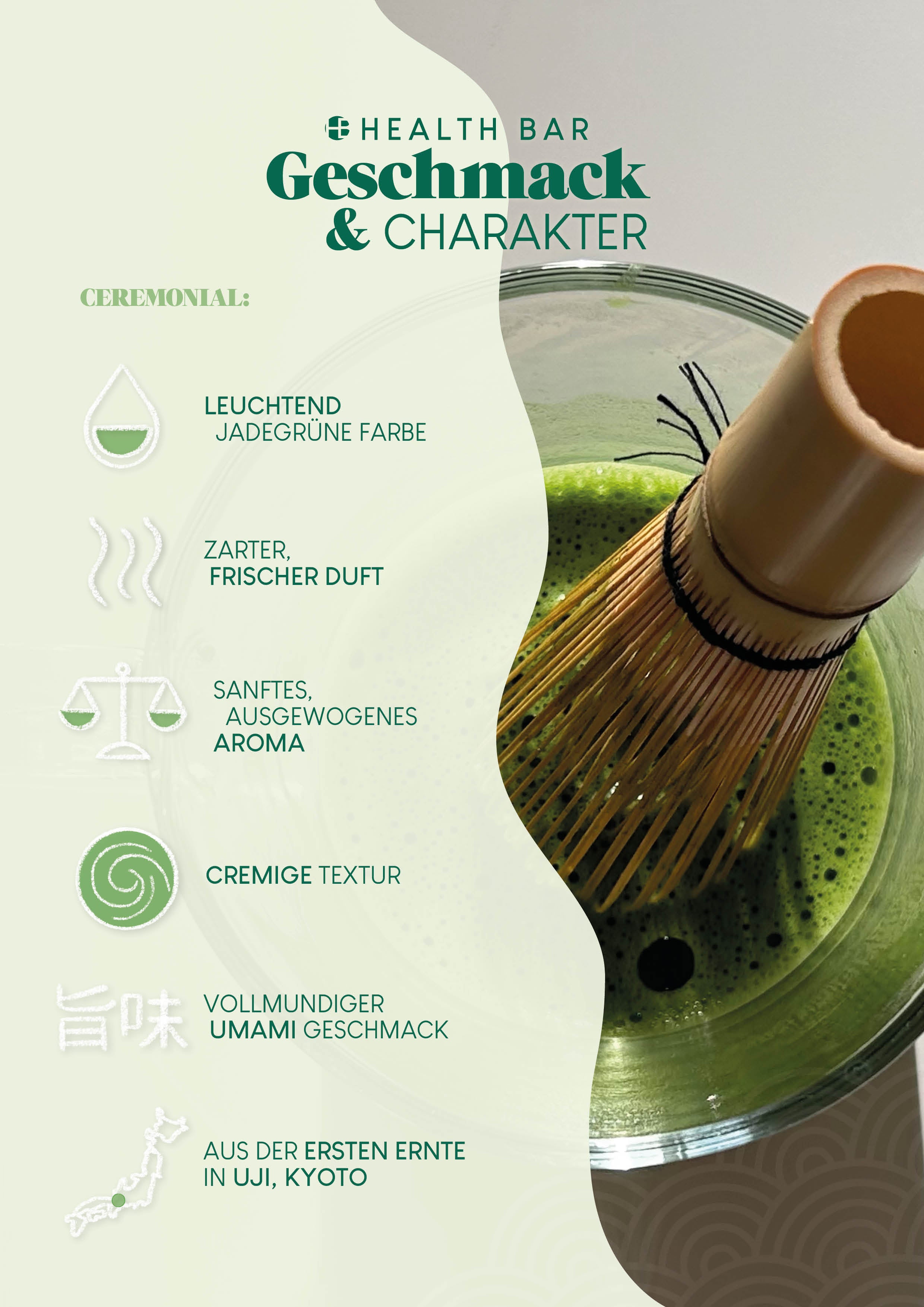
Mild. Creamy. Balanced.
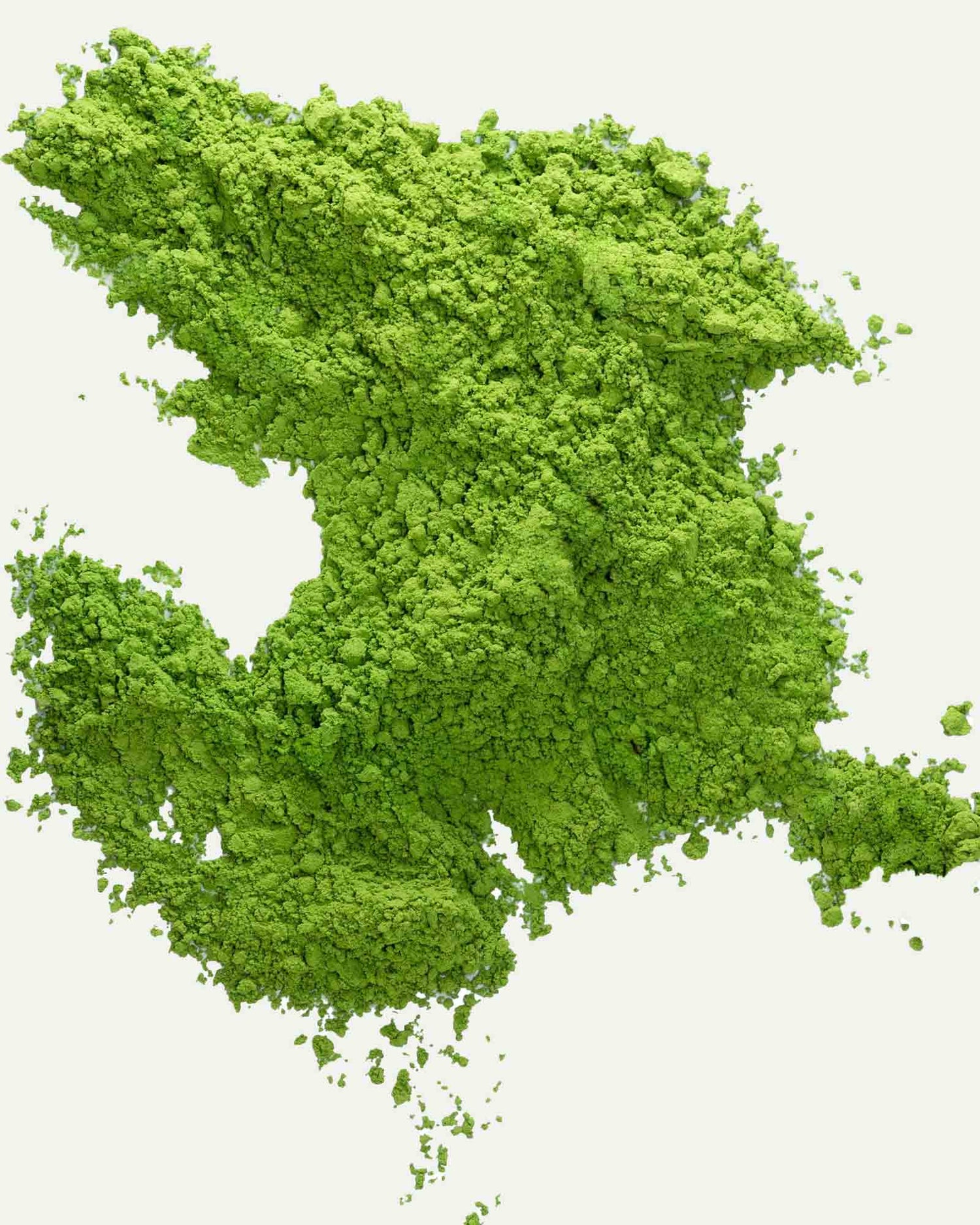
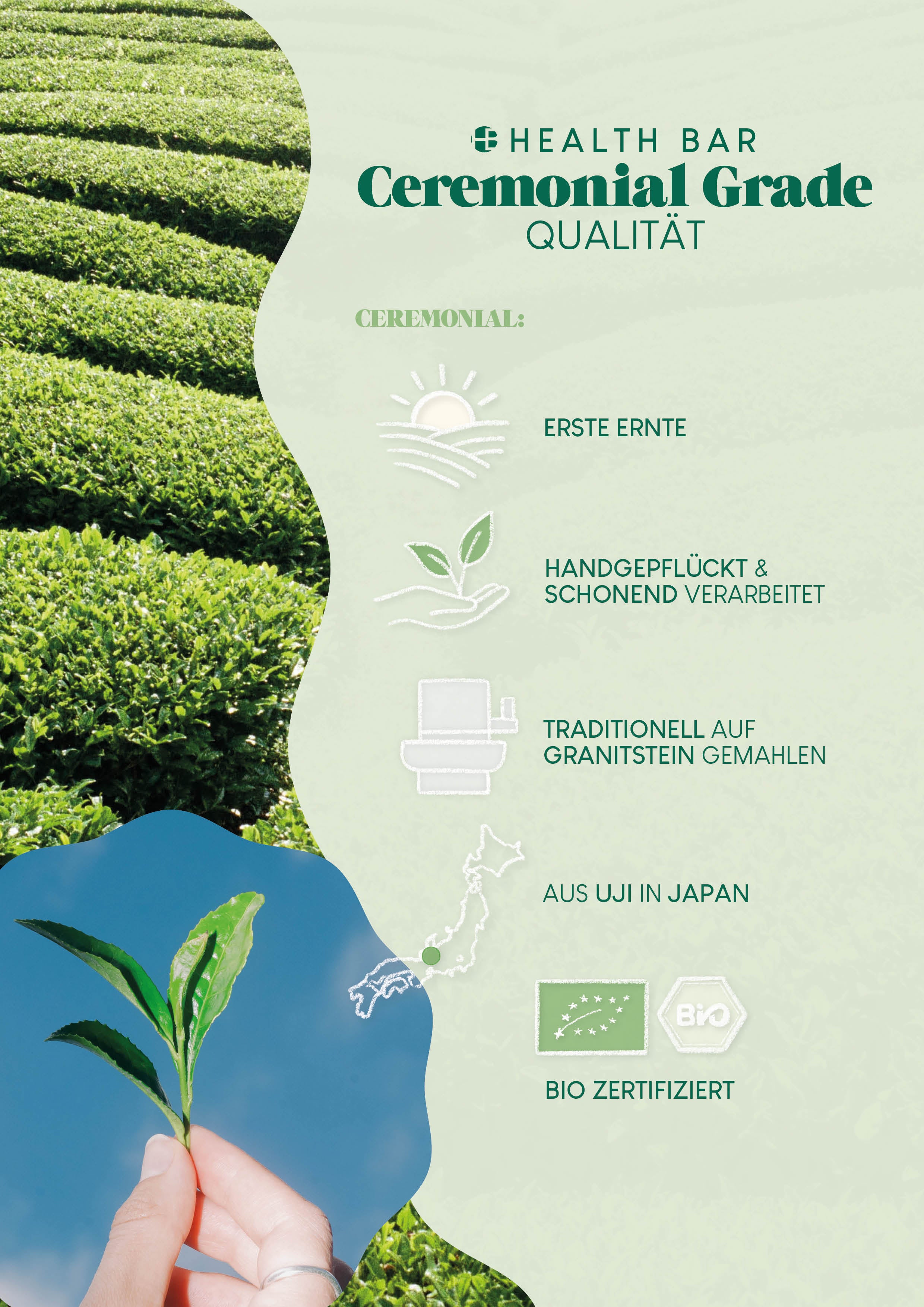
Premium Ceremonial Matcha from the first harvest in Uji, Japan – ideal for everyday enjoyment, matcha latte or mindful morning routines.
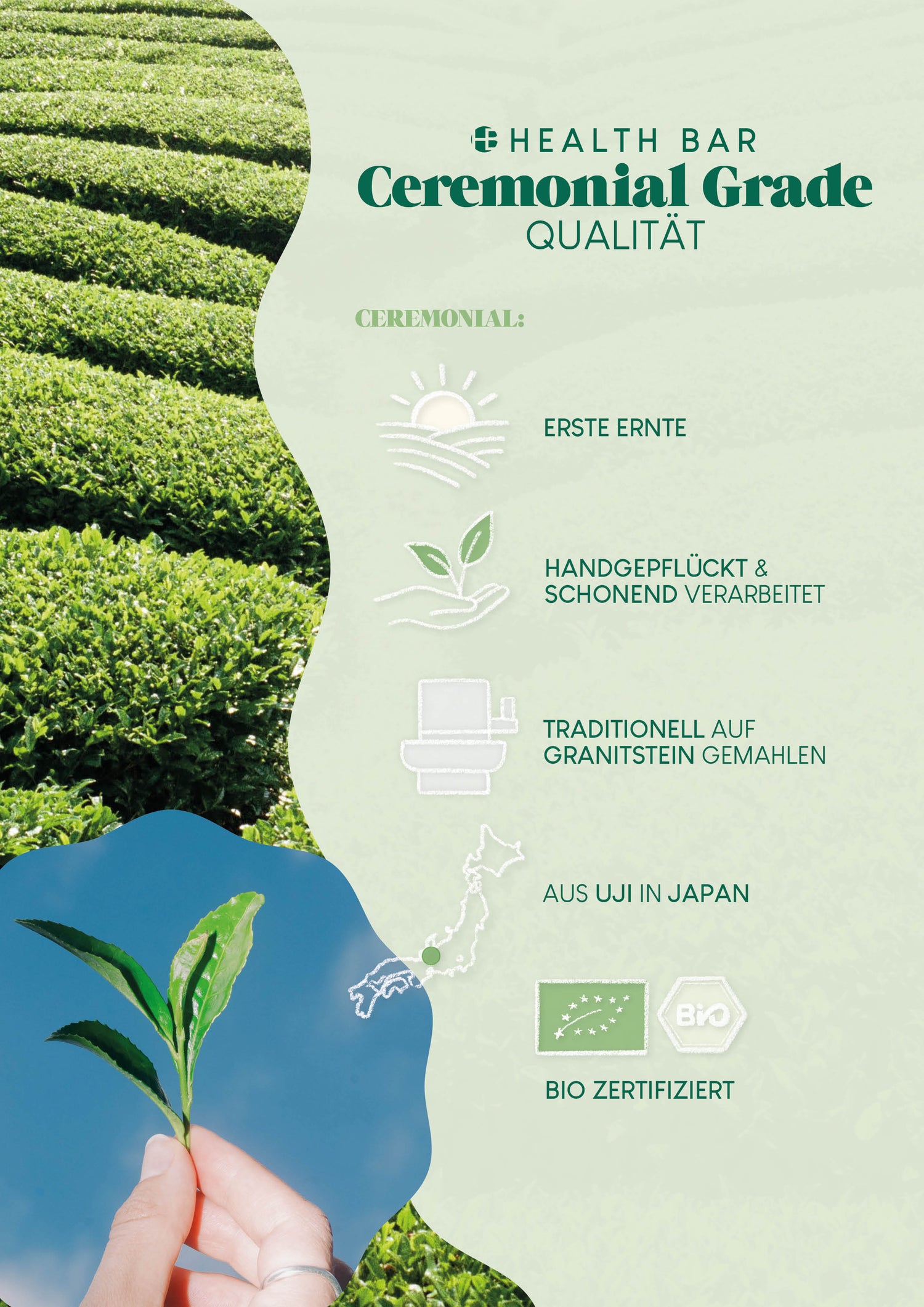
- 100% first harvest (Ceremonial Grade)
- Origin: Uji, Kyoto (Japan)
- Organic-certified (EU Organic, JAS Organic)
Pickup availability could not be loaded
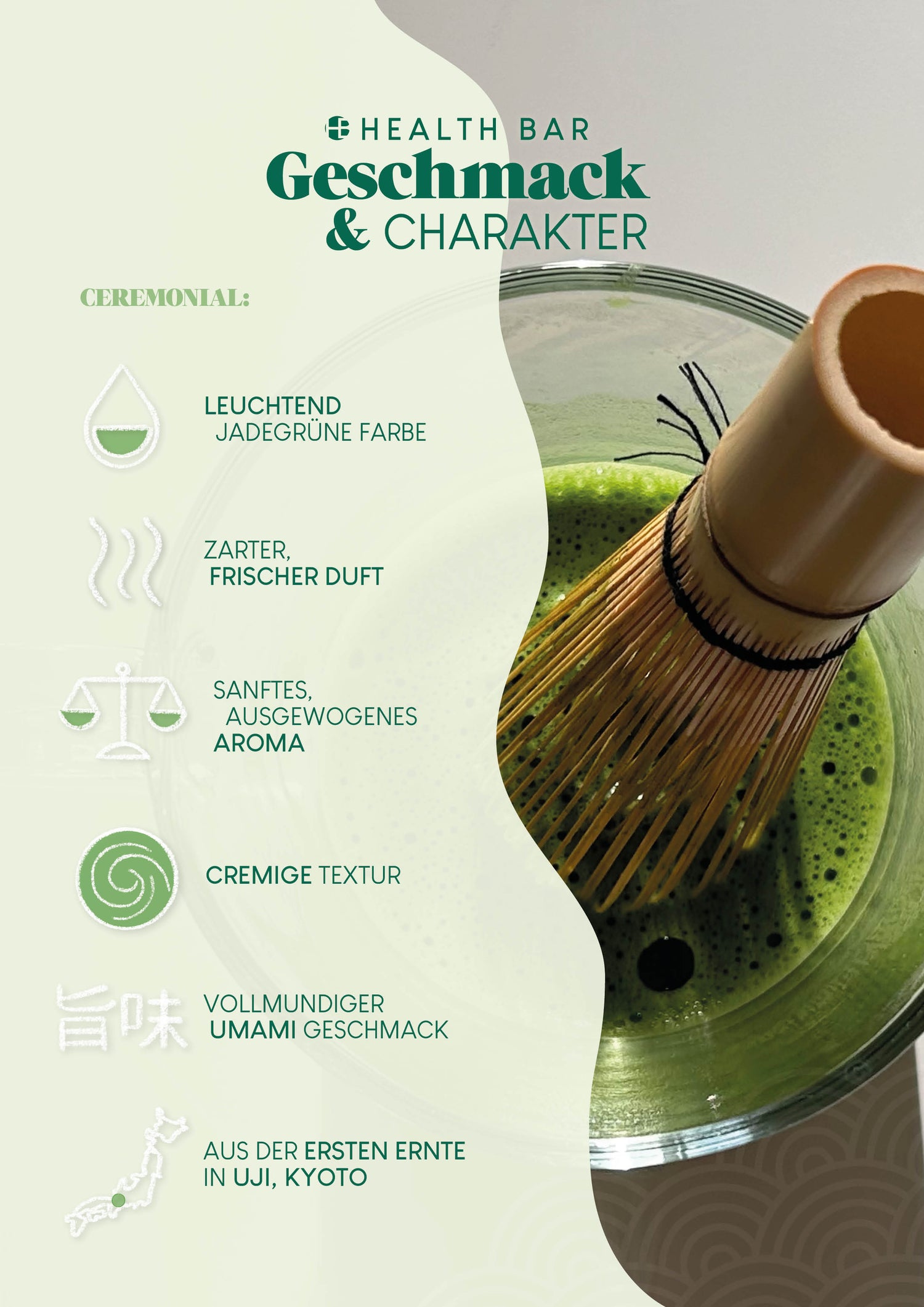
Flavor profile
- mild and balanced
- creamy texture
- natural sweetness
- fine umami
- hardly any bitterness
Ideal for everyday enjoyment without dominant bitter notes.
What is Matcha?
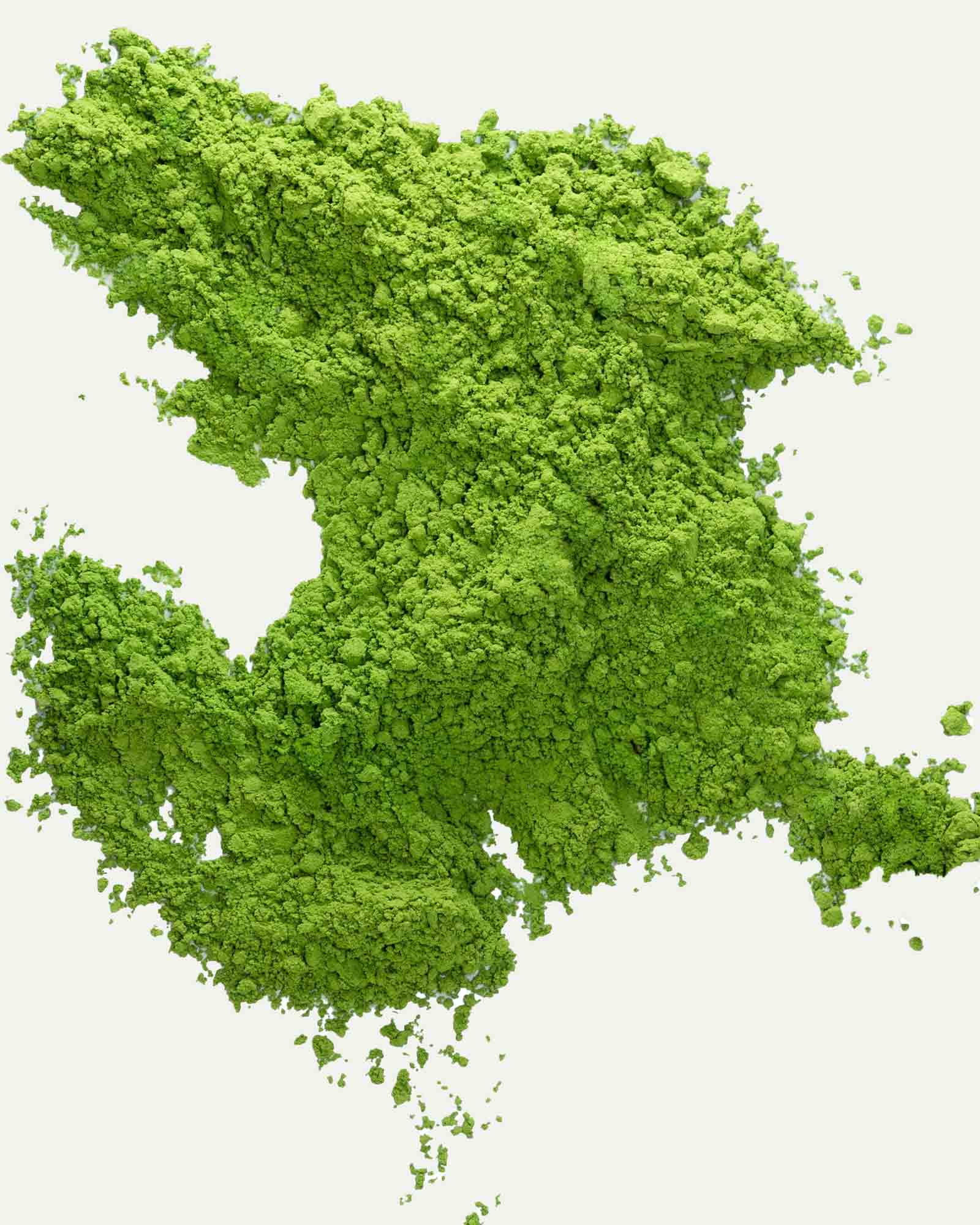
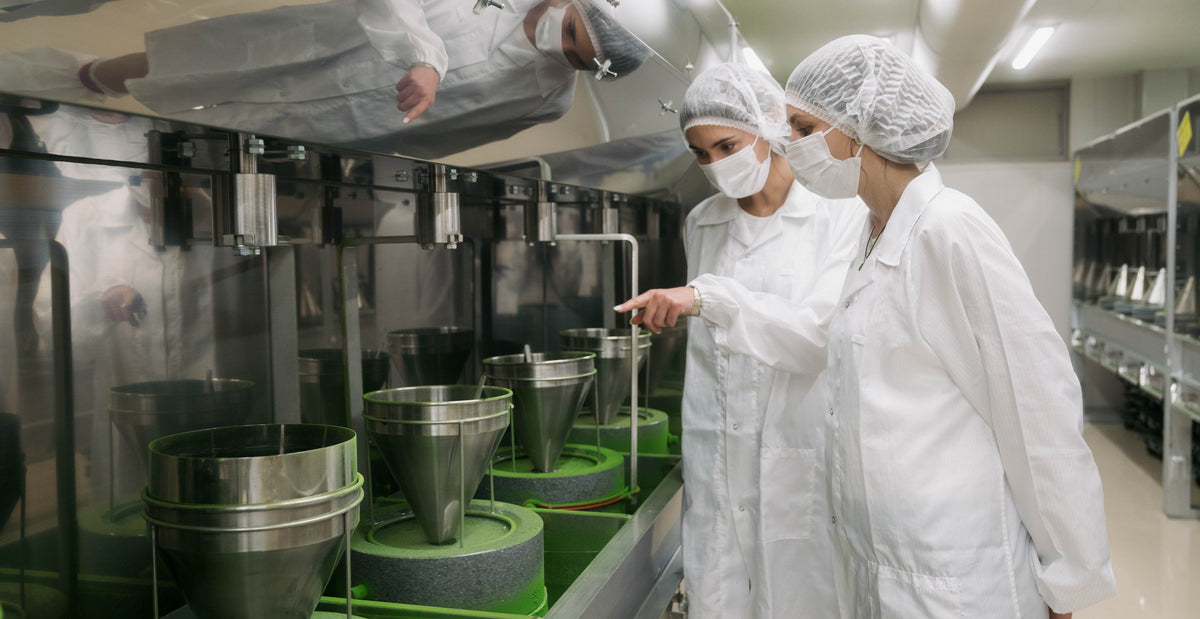
This organic matcha is a finely ground green tea powder from the first spring harvest (First Flush) in Uji, Kyoto, Japan. The tea leaves are shaded for up to 32 days before harvesting to develop a particularly mild, sweet, and umami-rich flavor profile. They are then gently steamed and traditionally ground into a fine powder using granite stone mills.
Origin & Terroir
- Growing region: Uji, Kyoto (Japan)
- Harvest: Spring 2025 (first harvest / first flush)
- Shading: up to 32 days before harvest
- Kultivare: Seamidori, Okumidori, Yabukita
Uji is considered one of the most renowned regions for high-quality Japanese matcha with a long tradition.
product details
Product type: Matcha powder
Quality: 100% First Harvest (Ceremonial Grade)
Cultivar: Oshii Ceremonial Blend consisting of Seamidori, Okumidori and Yabukita
Damping: short (approx. 20 seconds)
Processing: Traditional stone grinding (granite) in Uji
Shading: up to 32 days before harvest
Organic certification: EU Organic, JAS Organic, FSSC Japan
Use: Matcha pure, latte, daily preparation
-
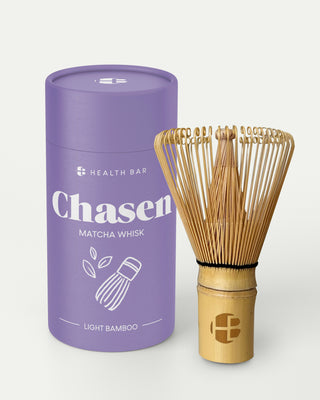 Matcha Whisk (Chasen) Made of Golden Bamboo
-
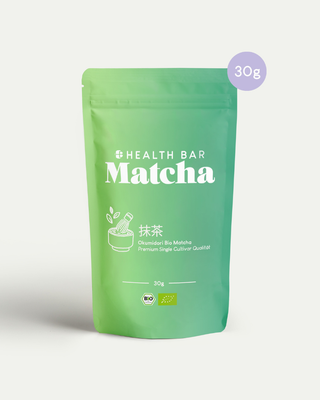 Okumidori Organic Matcha Tea – Single Cultivar – 30g




Woran du guten Matcha erkennst
Fünf Fragen, die auf jeder Packung beantwortet sein sollten – und unsere Antworten.
- Region
- Steht die Anbauregion drauf?Unserer: Uji, Kyoto
- Ernte
- Welche Ernte, welches Jahr?Unserer: 1. Ernte, Frühjahr 2026
- Kultivar
- Welche Teesorten?Unserer: Saemidori, Okumidori, Yabukita
- Bio
- Welche Zertifizierung?Unserer: EU-Bio und JAS Organic
- Labor
- Gibt es Prüfergebnisse?Unsere: Laborbericht ansehen
Mehr dazu: Was ist Ceremonial Matcha? · Matcha-Sorten im Vergleich
-

Organic Certified
Health Bar Matcha is one of the few on the market with organic certification.
-

Vegan
It is part of our philosophy that we do not use animal products
-

Gluten free
Matcha is also safe for people with gluten intolerance
-

Consistent
The environment is important to us, which is why our matcha packaging is recyclable!


HOW-TO
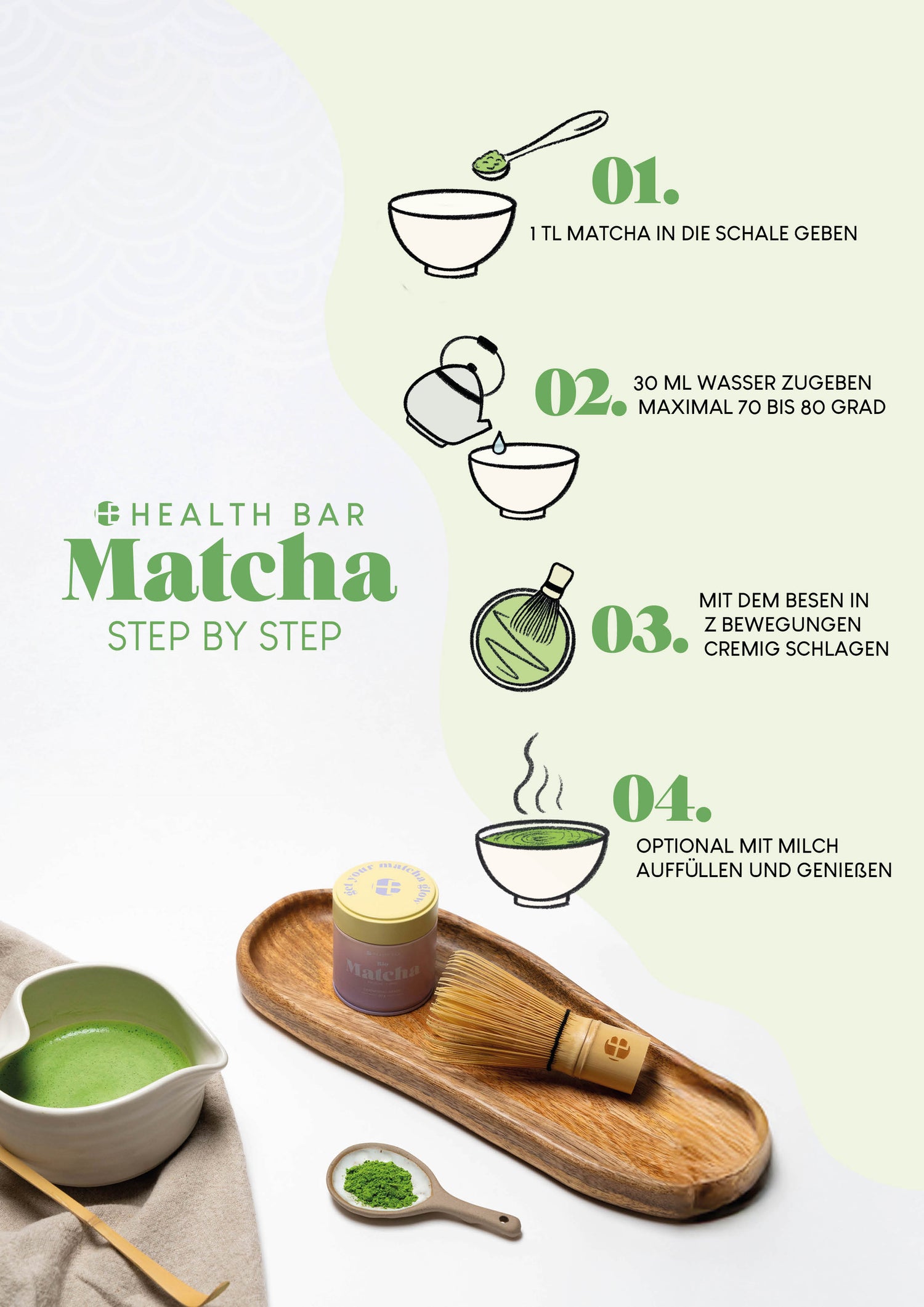
Preparing matcha easily
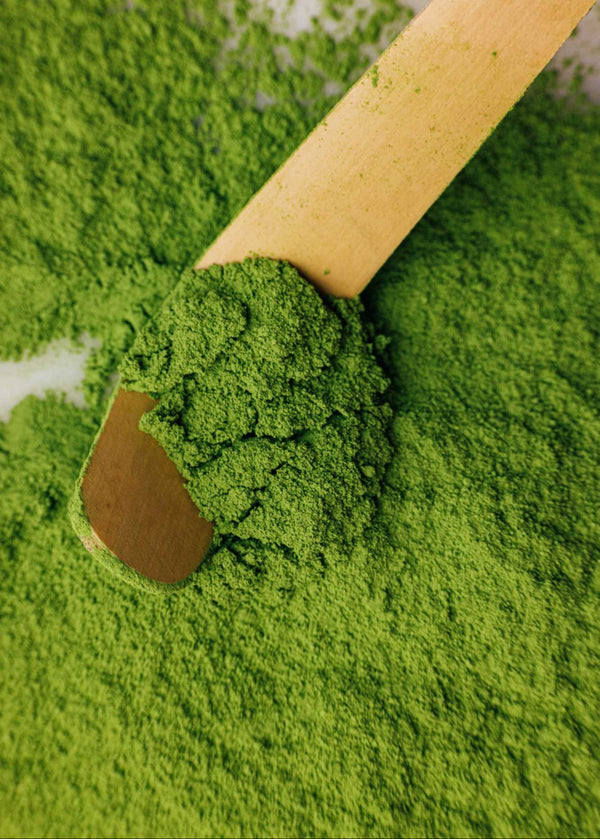
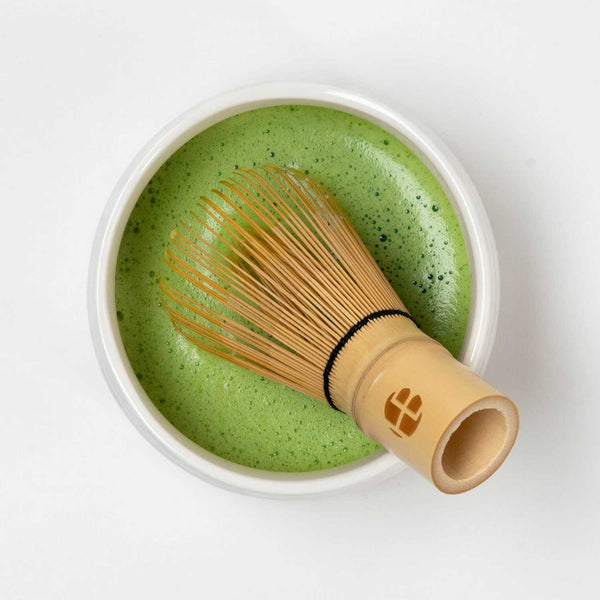
1. Dosage of matcha: Using a bamboo spoon or a teaspoon, add 1-2 slightly heaped teaspoons of matcha to your chawan.
2. Add water: Pour 70–100 ml of water (approx. 80 °C) into the bowl. Make sure the water is not boiling hot, otherwise the matcha will become bitter.
3. Serve: Beat the matcha with the chasen in quick W- or M-movements until a fine, fluffy layer of foam is formed.
4. Enjoy: Take a moment to consciously enjoy the matcha. In Japan, they say: "Itadakimasu" – as a sign of gratitude before drinking.
origin
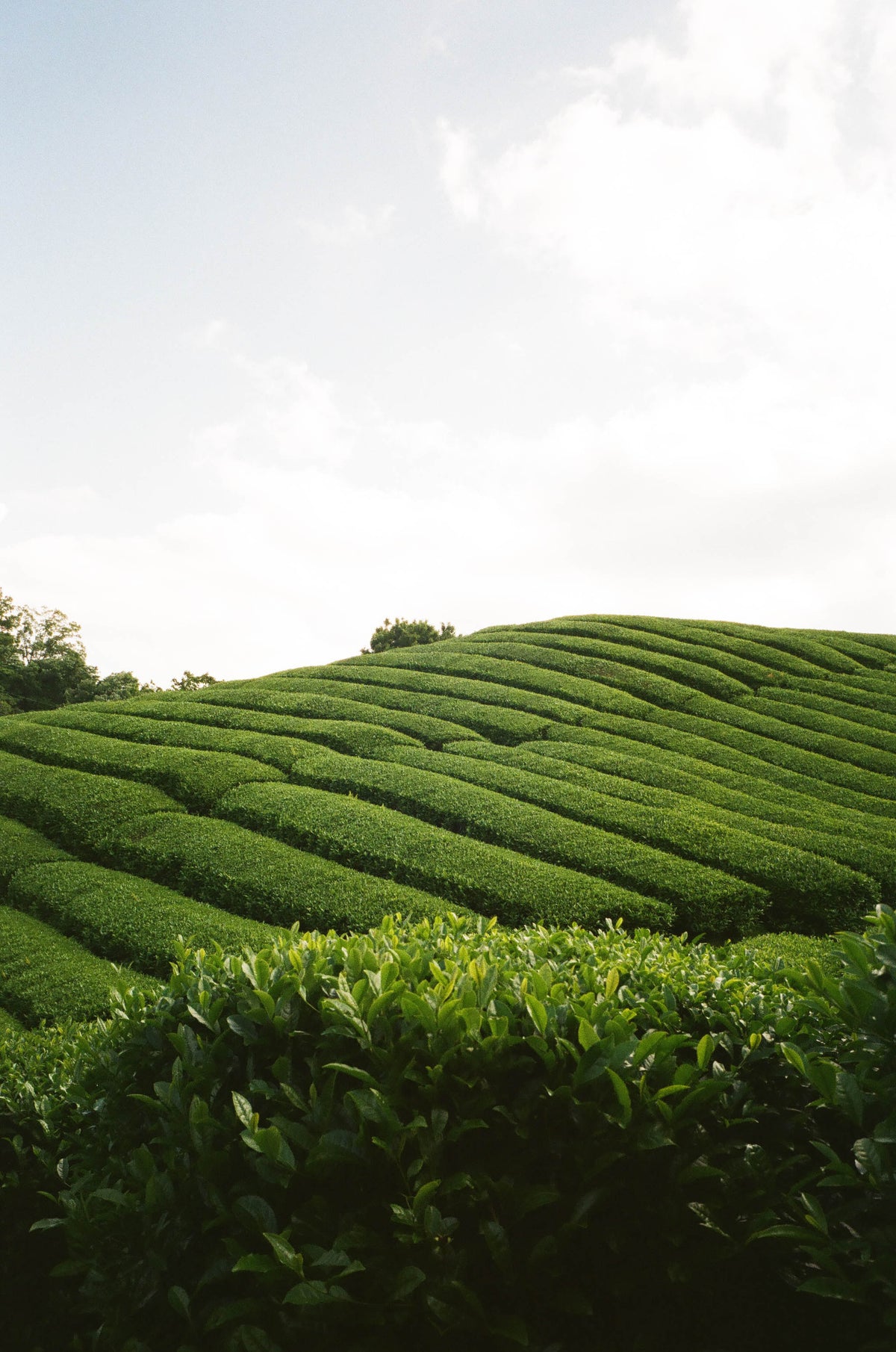
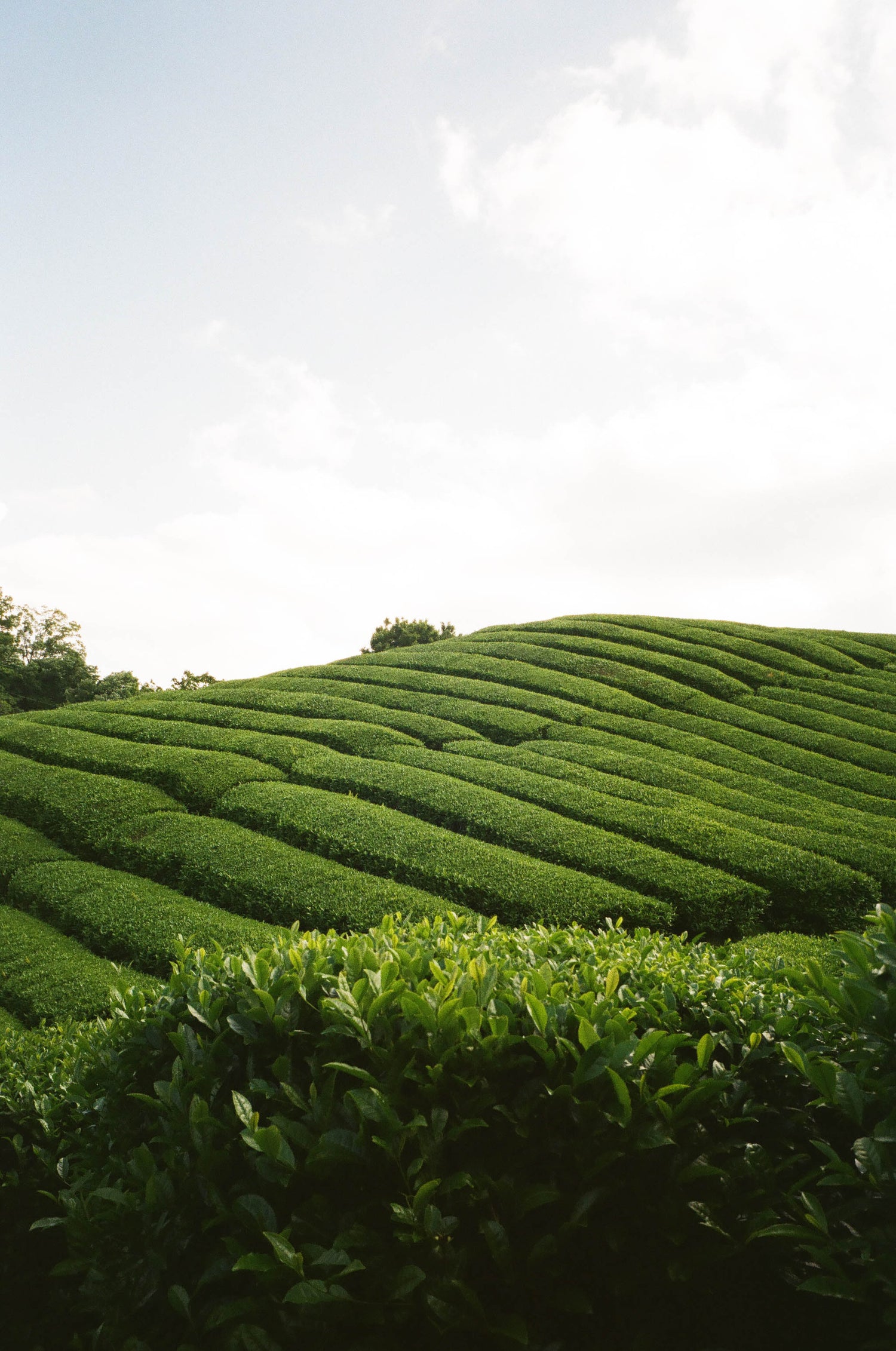
The Matcha tea growing region is one of the best and oldest in Japan: the Uji region, west of Osaka. The region is known for its clean water and nutrient-rich soil, free of pesticides. The climate is ideal: mist from the Uji and Kizu rivers keeps the tea plants moist and reduces the risk of frost damage.
production
Our tea farm is a traditional family business that has been in operation for several generations and has been producing organic matcha for several decades.
Our quality is confirmed by the strict standards of the organic certificate from the Japanese certification body JONA and the German organic certification.
Cultivation
The tea farmers protect the plants from the sun with black textile sheets or, traditionally, straw. This increases the chlorophyll content in the leaves and softens the flavor. Cultivation is carried out without pesticides. Annual soil samples are taken, as well as laboratory tests for heavy metal and radiation contamination, to ensure the highest possible quality. Furthermore, each batch is carefully tested for its mineral content.
Labor-tested
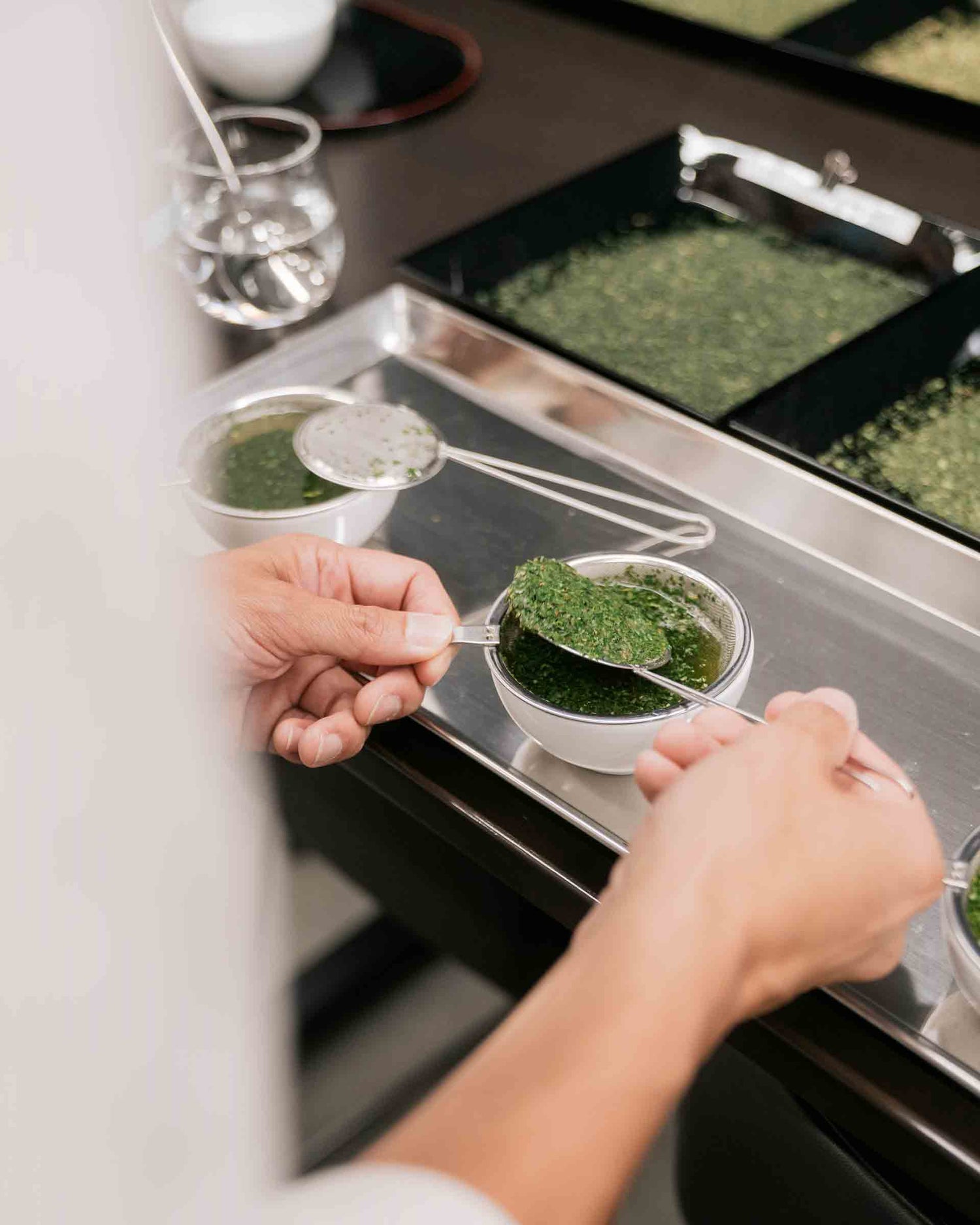
Transparency you can taste: Our organic matcha is regularly tested by independent laboratories.
Why? Because we drink our own matcha every day – and because we want you to know exactly what's in your cup.
The results show:
- No pesticides detected
- Heavy metals significantly below EU limits
- Very good microbiological quality
We make all test reports available here transparently.

FAQ's about Matcha
Why is Uji Matcha of particularly high quality?
Uji is one of Japan's oldest and most renowned tea regions. The climate, soil, and centuries-old processing traditions result in particularly well-balanced, umami-rich matcha.
How much caffeine does matcha contain?
Matcha contains natural caffeine from the whole tea leaf. One serving (1–2 g) contains approximately 30–70 mg of caffeine and has the following effects: L-Theanine is gentler and has a longer-lasting effect than coffee.
What does "Ceremonial Grade" mean?
Ceremonial Grade is the highest quality grade of Matcha and is made from the youngest, most tender leaves of the first harvest.
What does this matcha taste like?
Mild, creamy and slightly sweet with a delicate umami flavor and virtually no bitterness.
Is matcha suitable for lattes?
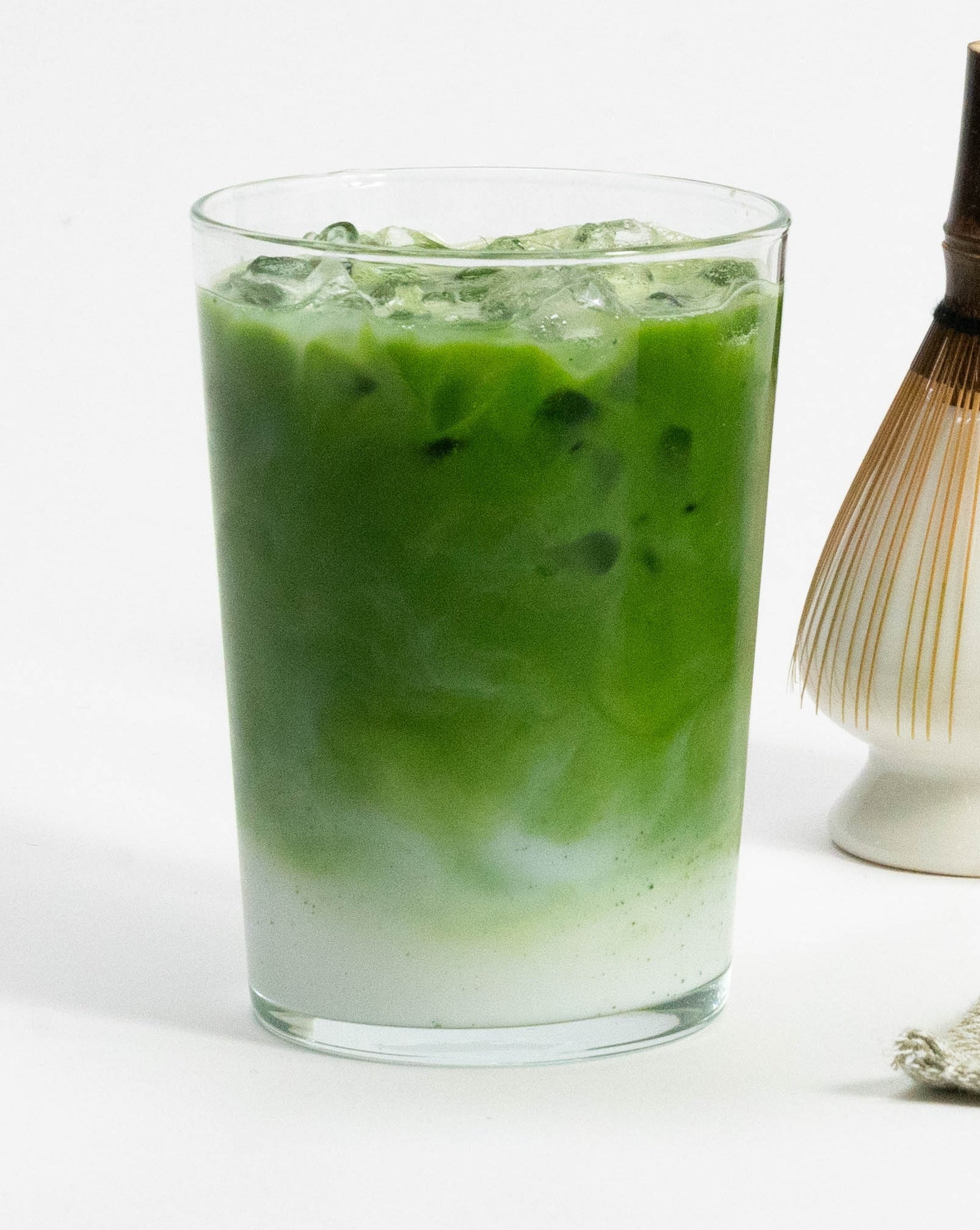
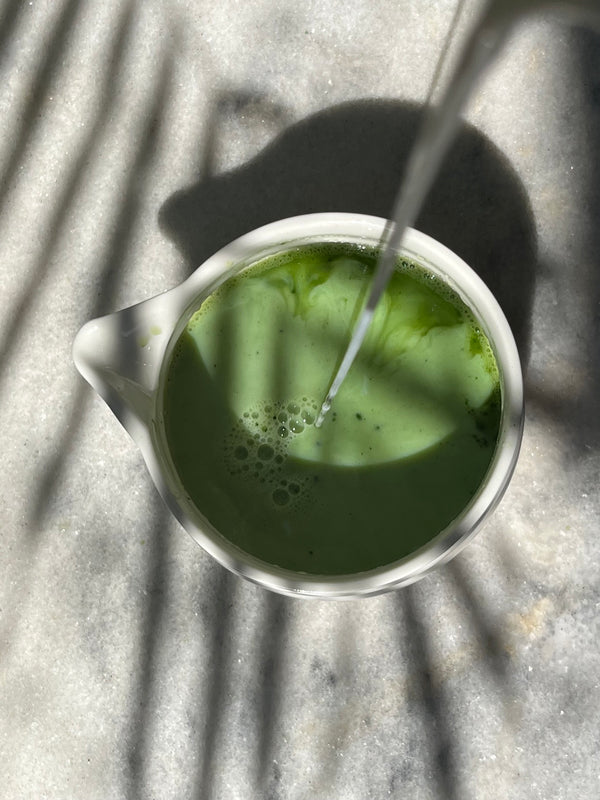
Yes, it is suitable for pure enjoyment as well as being excellent for matcha latte.
Where does matcha come from?
From Uji in Kyoto, one of Japan's most traditional regions for high-quality green tea.
Mein lieblings Matcha! Der Geschmack ist perfekt & der Matcha löst sich im Wasser sehr gut auf & lässt sich gut aufschlagen.
Der beste Matcha den es gibt. Ich Kauf den Matcha Pulver jetzt seit längerem hier und habe auch sehr viele schon getestet und finde den von Health Bar am besten
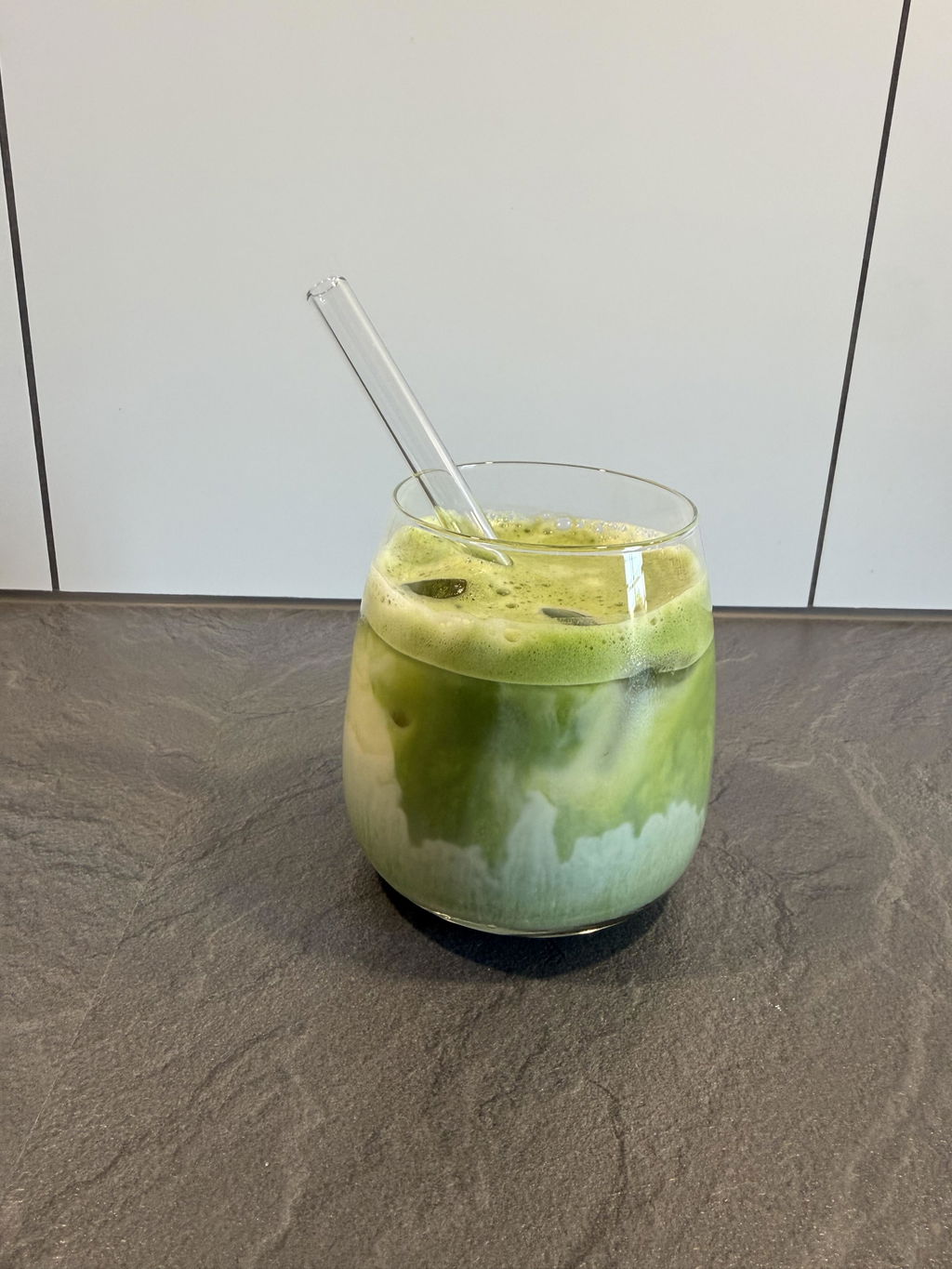
Egal ob als ice Matcha bei warmen Tagen oder als warmer Matcha
Toller Matcha - geschmacklich und qualitativ top!
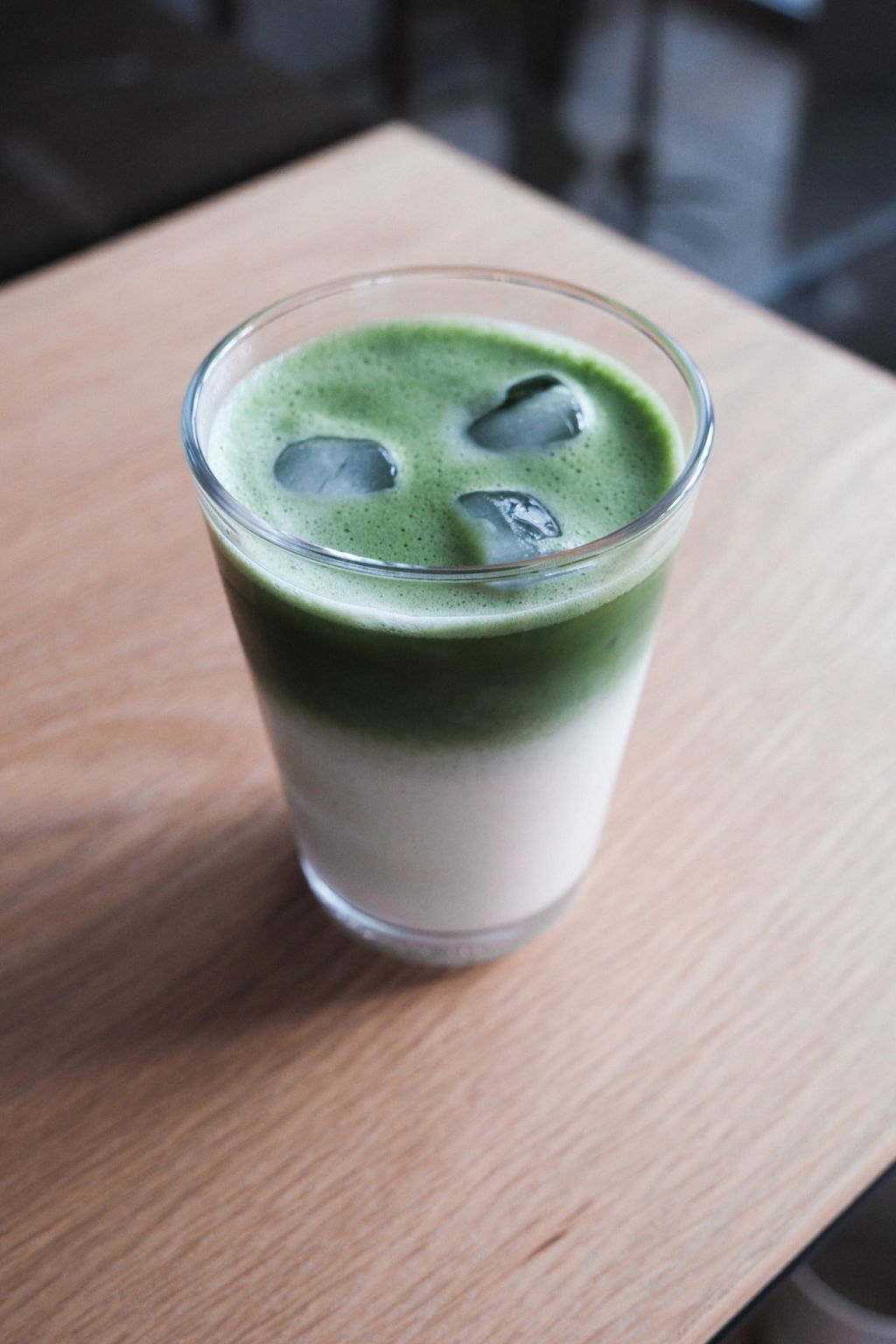
I love the mild taste of this matcha. It has an umami taste and isn’t bitter at all! I would definitely recommend it if you’re looking for an everyday matcha. I always drink mine with coconut milk but you could definitely enjoy this pure.
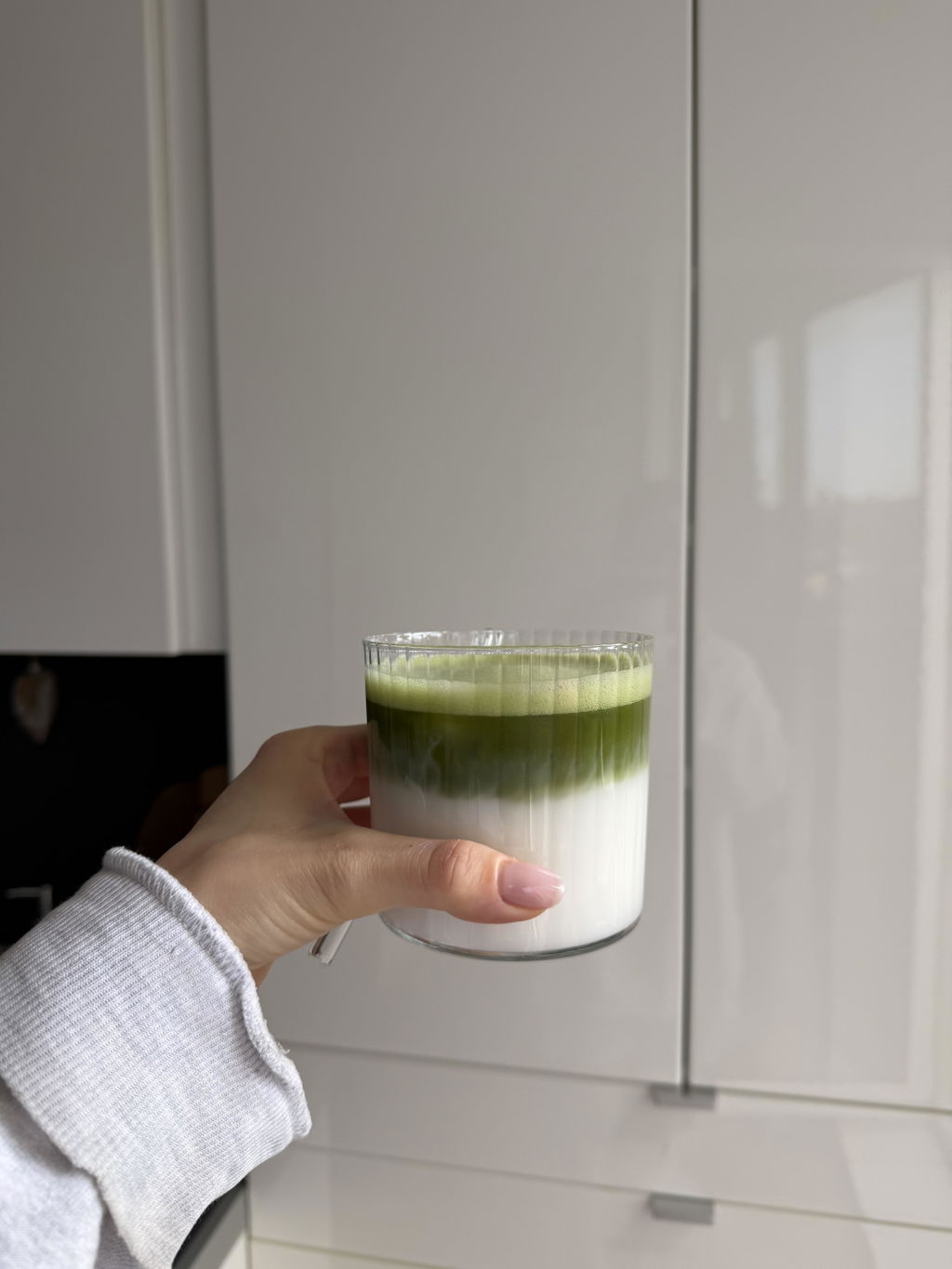
Dieser Matcha schmeckt mir am besten. Insbesondere zusammen mit der alpro Barista Kokosmilch. Kann euch die Kombi sehr empfehlen!
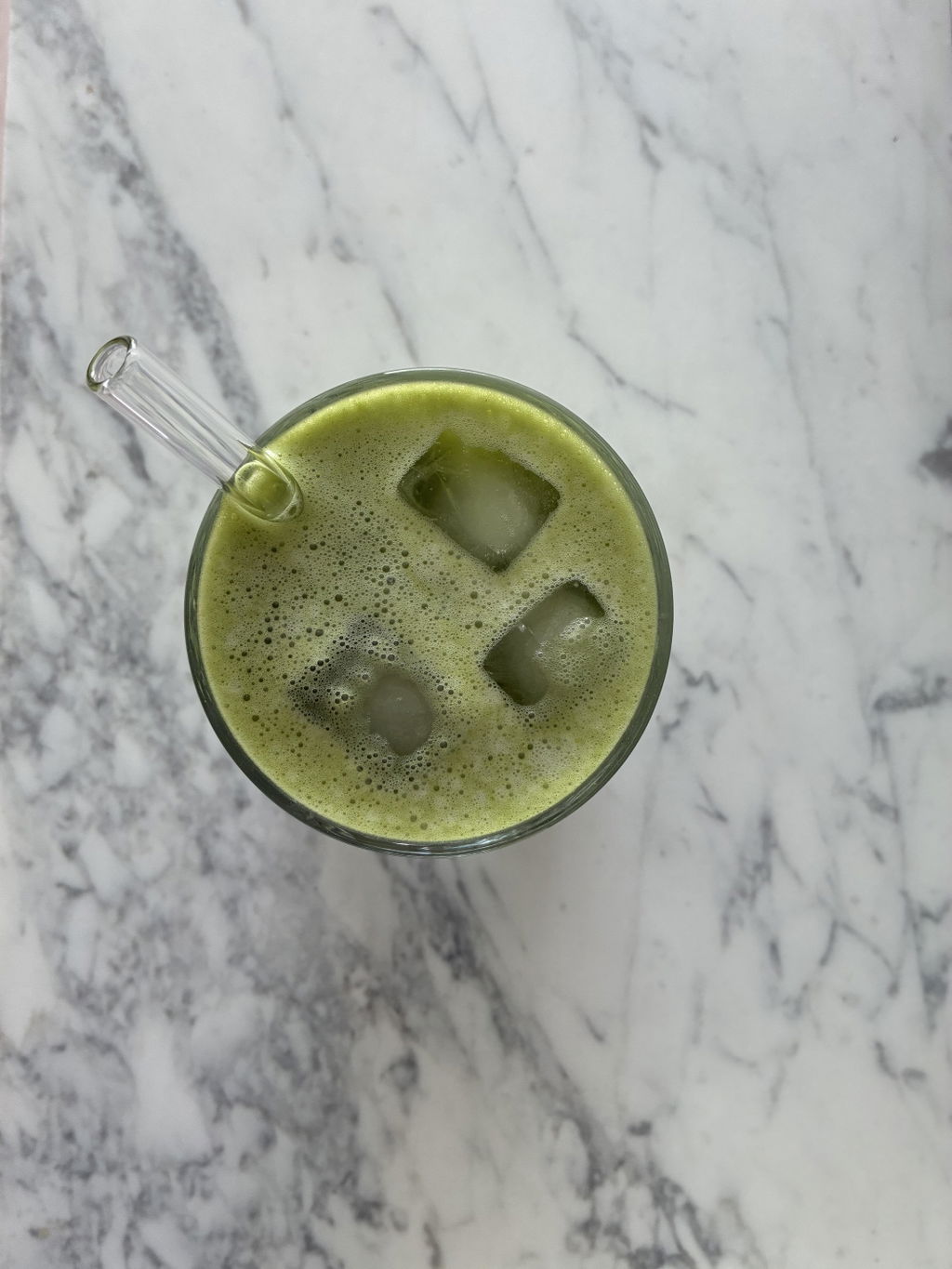
Ich liebe diesen Ceremonial Matcha. Von der Qualität und dem Geschmack her, ist er der beste, den ich bisher getrunken habe. Daher mein all time fave ✨
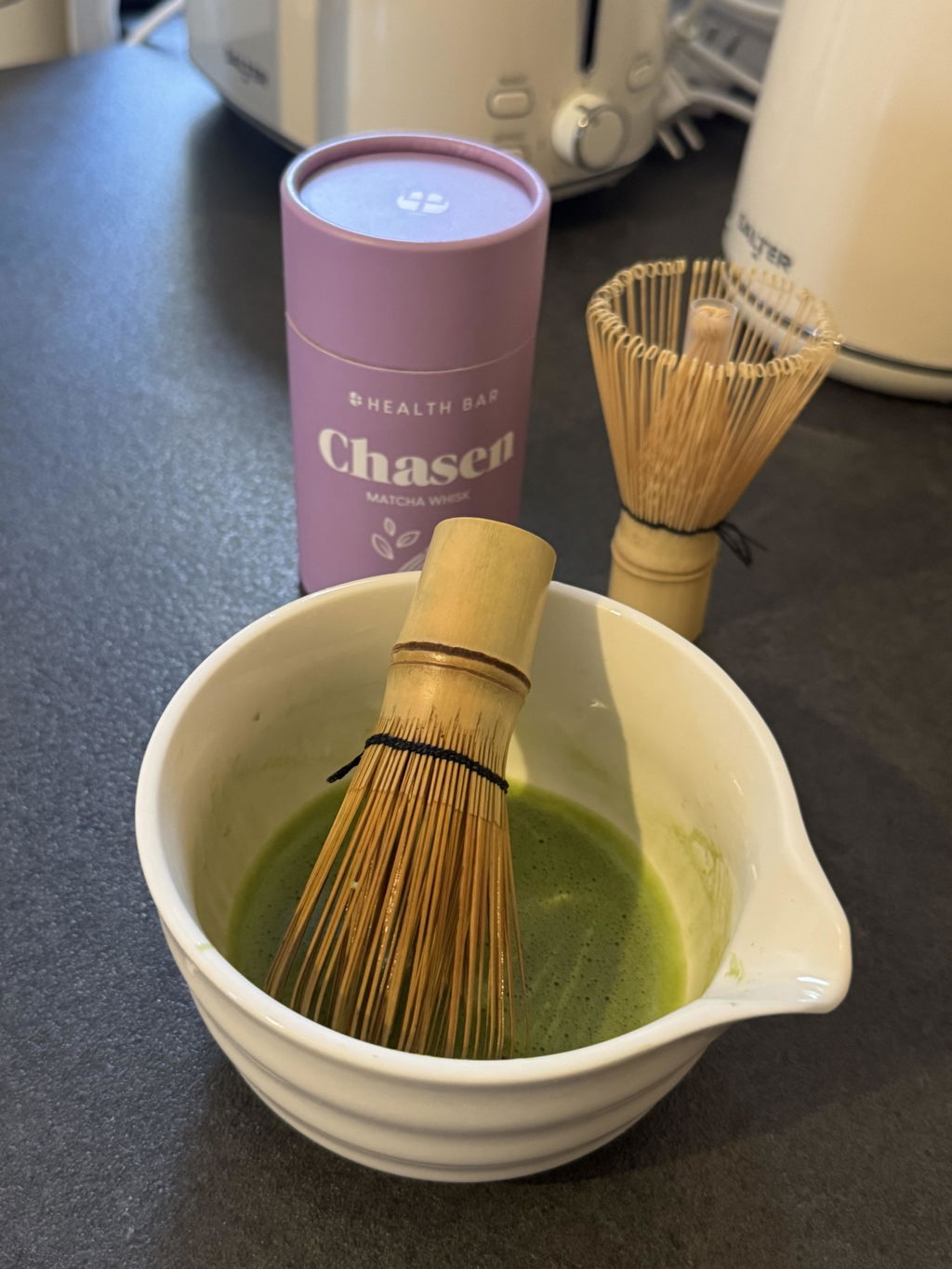
Neuer Favorit. Ich hab den Matcha das erste mal bestellt unr hab direkt die 50g Packung genommen - ZUM GLÜCK! Weil es ist es absolut wert. Bester matcha den ich je (in deutschland) online bestellt habe. Wird jetzt immer wieder nachbestellt <3
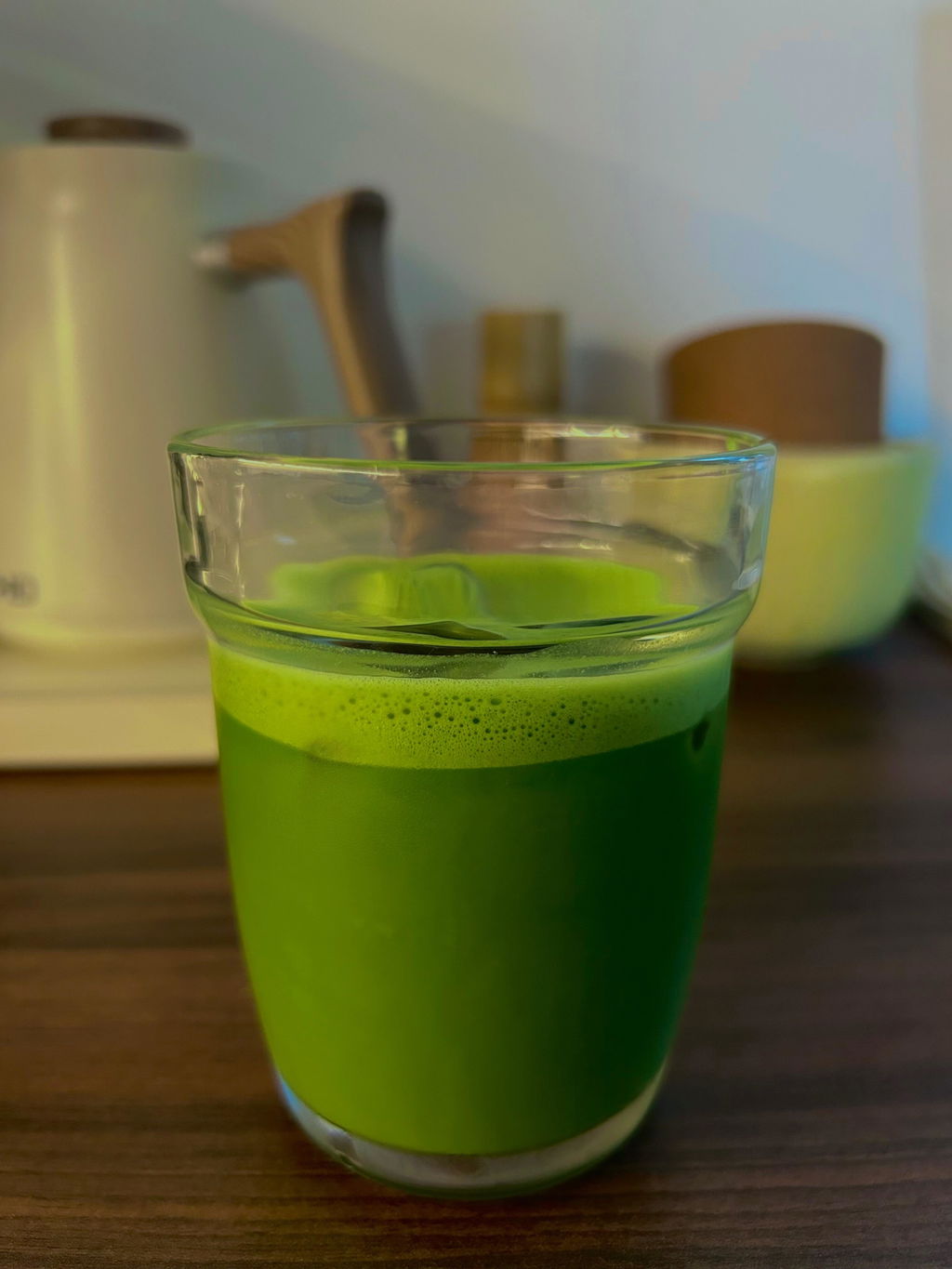
Das ist mein erster Ceremonial Matcha gewesen und ich liebe ihn. Es macht mir super Spaß den zuzubereiten und dann so einen schönen grünen Matcha trinken zu könne
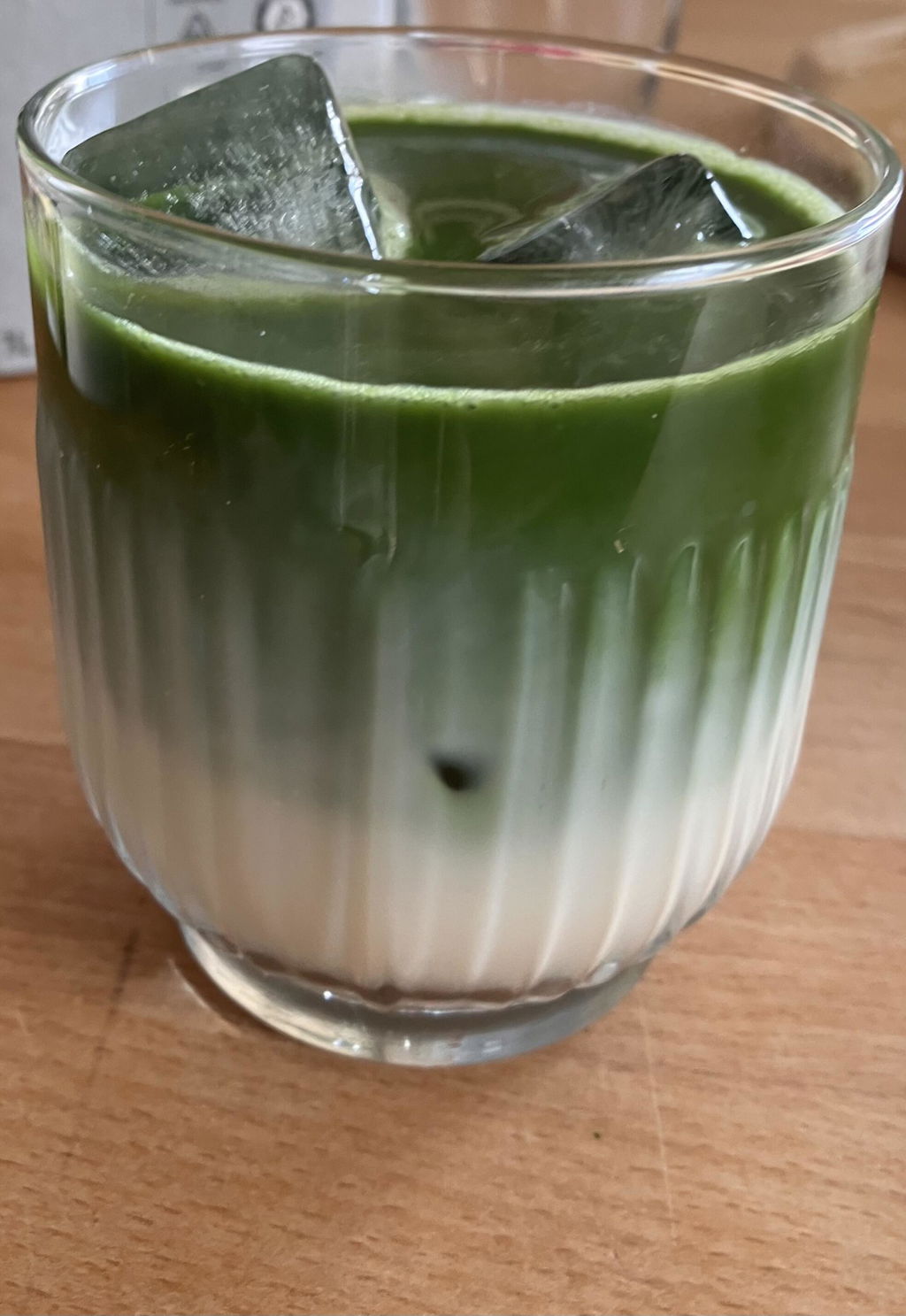
super leckerer Matcha, ich bestelle genau diesen nun schon seit etwa drei Jahren und trinke keinen anderen mehr!
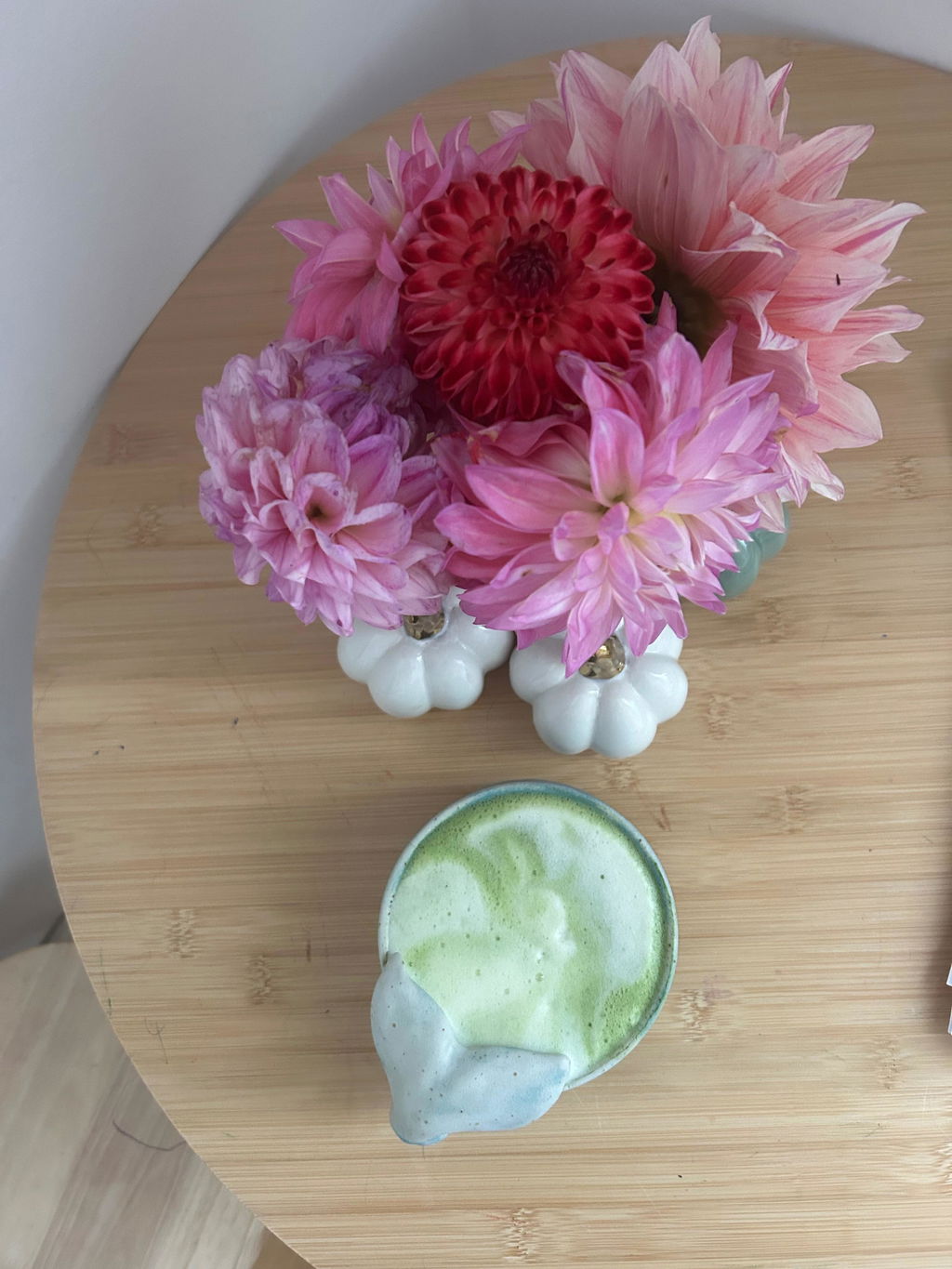
Super Preis-Leistungs-Verhältnis! Der Matcha von Health Bar schmeckt unglaublich lecker! Fast schon eine Warnung wert💚 Ich liebe ihn und finde ihn perfekt für meine täglichen Matcha latte💚🍵

Geschmacklich Top !

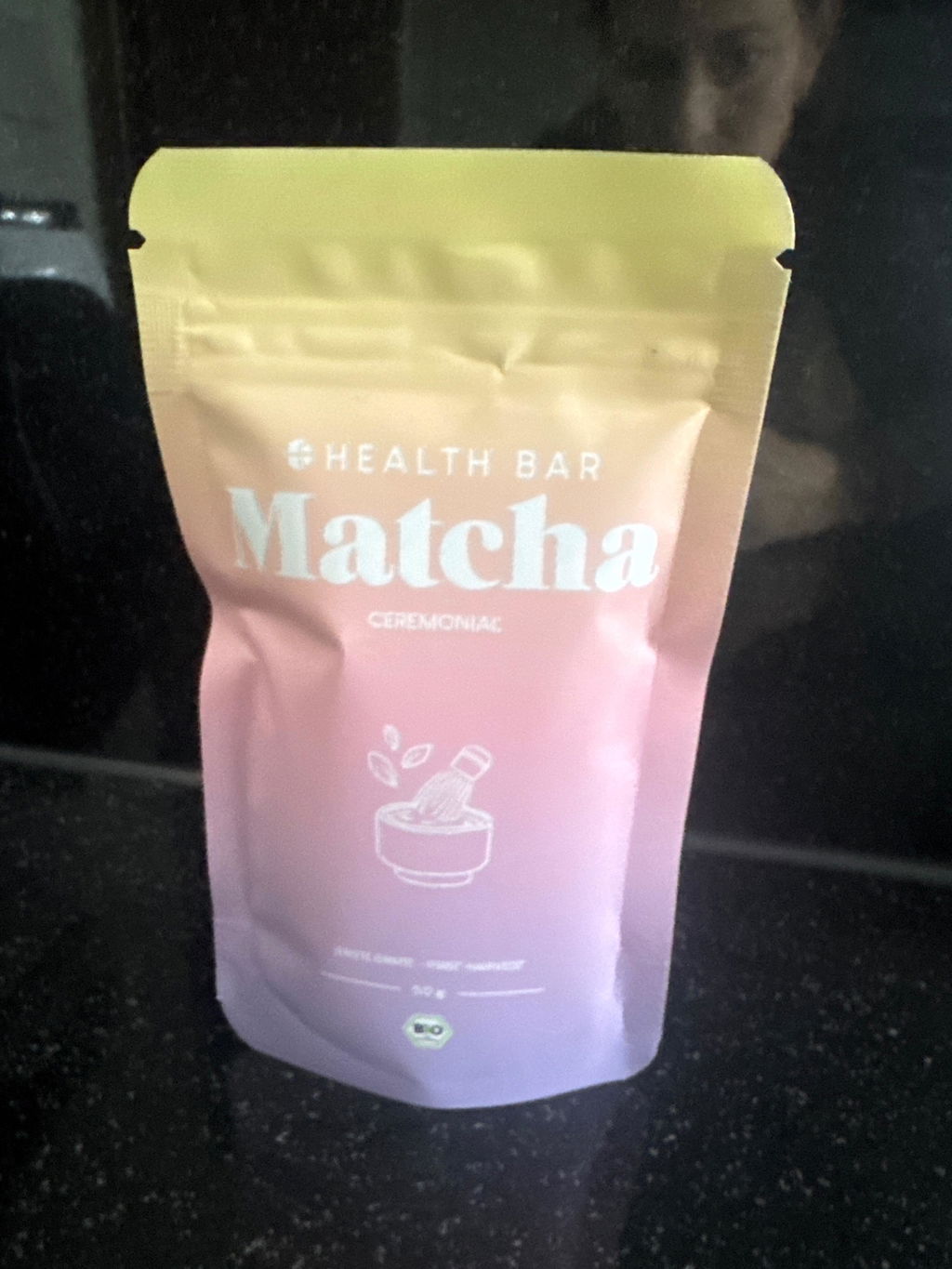
Trinke ihn jeden Tag und finde ihn super!

Seit ich den Matcha von Health Bar zuhause trinke, schmeckt mir ehrlich gesagt keiner aus den Cafés mehr so richtig. Für mich einfach der beste Matcha — und mein Lieblingsritual für zuhause

Ich bin sehr zufrieden mit dem Matcha von Health Bar. Ich habe es schon mehrmals nachbestellt. Es lässt sich sehr einfach zubereiten und schmeckt leckerer als in den meisten Cafes 🍵

Ich lieeebe diesen Matcha! Und die Dose ist super praktisch und cute 🙂↕️

Also für den Preis finde ich den Matcha super hochwertig und echt lecker. Ich kaufe ihn immer wieder nach 🤩

Ich habe einige getestet und keiner ist so gut wie dieser! Habe ihn auch schon mehrfach an Freunde empfohlen und verschenkt!

Schmeckt sehr sehr gut, kann ich nur weiterempfehlen!

Habe schon so viele gekostet, aber der ist einfach perfekt. Gleiche mild und süß und so intensiv

Sehr guter Matcha

nur Liebe liebe liebe für diesen Matcha, er ist so cremig

Ich bin total begeistert von diesem Matcha! Der Geschmack ist wunderbar frisch, leicht süßlich und gleichzeitig angenehm herb – genau wie ich es liebe. Perfekt für meinen Morgenritual oder eine kleine Energiepause zwischendurch. Die Qualität ist wirklich hochwertig, und man merkt, dass es sorgfältig verarbeitet wurde. Absolut empfehlenswert für alle Matcha-Liebhaber! 🍵✨

Sehr, sehr guter Matcha! Schmeckt überhaupt nicht grasig, sondern angenehm mild und richtig lecker. Ich trinke ihn immer wieder gerne - für mich eine klare Empfehlung

Schmeckt sehr sehr gut, kann ich nur weiterempfehlen!


